Last updated November 23, 2026
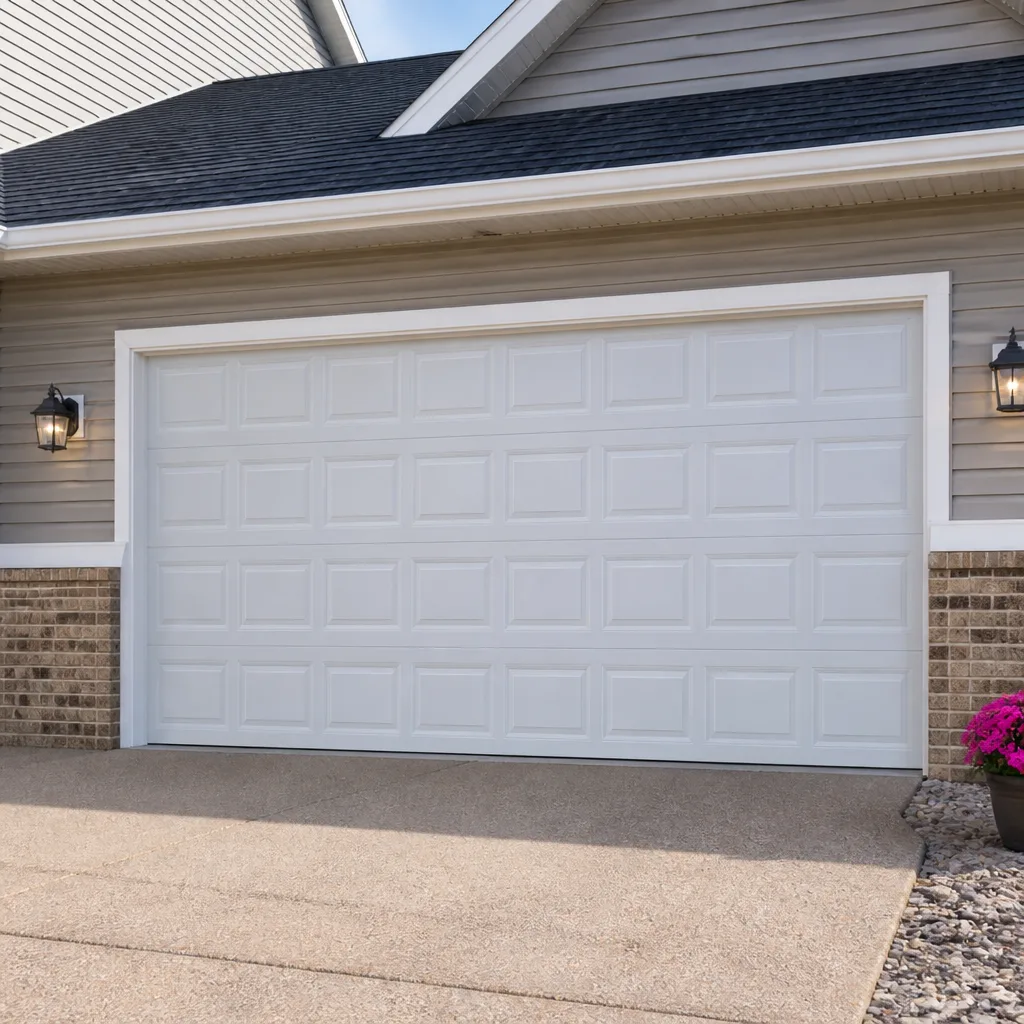 Raised-panel steel
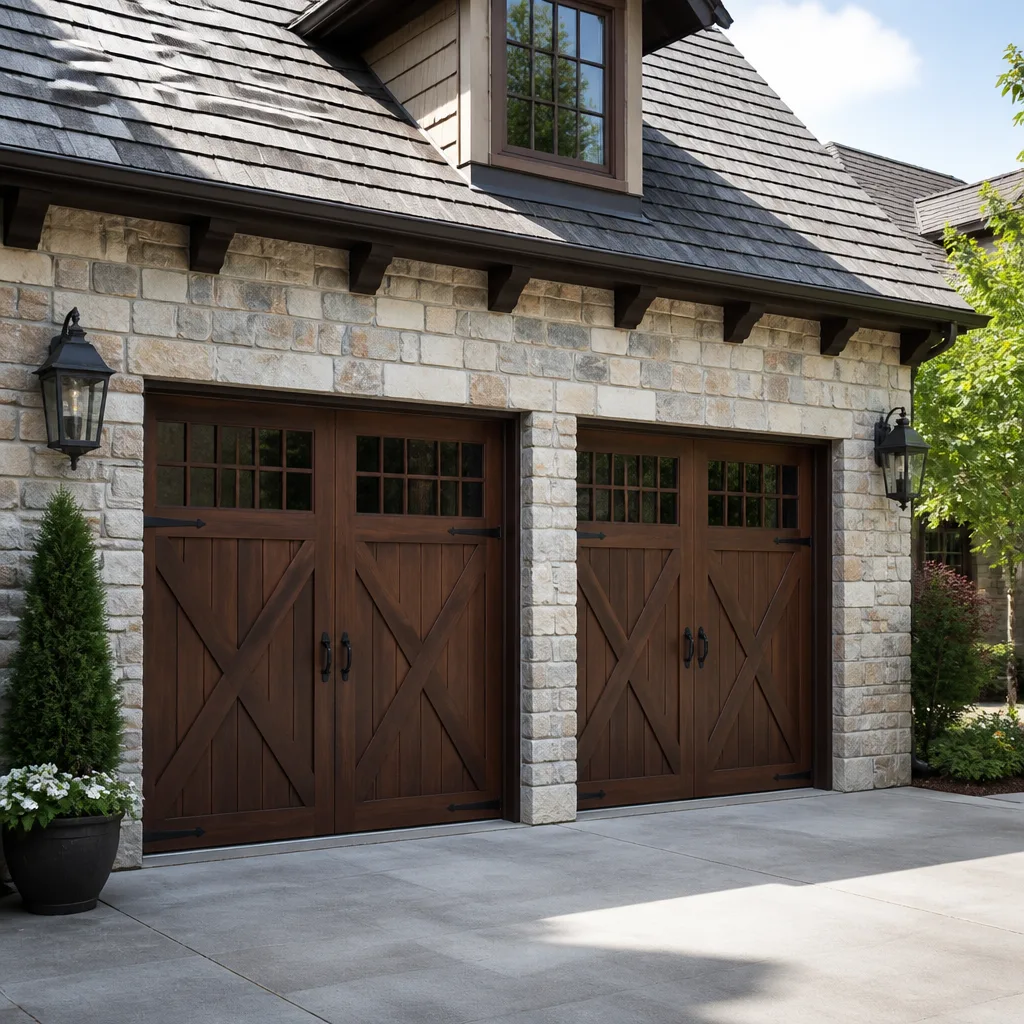 Carriage house
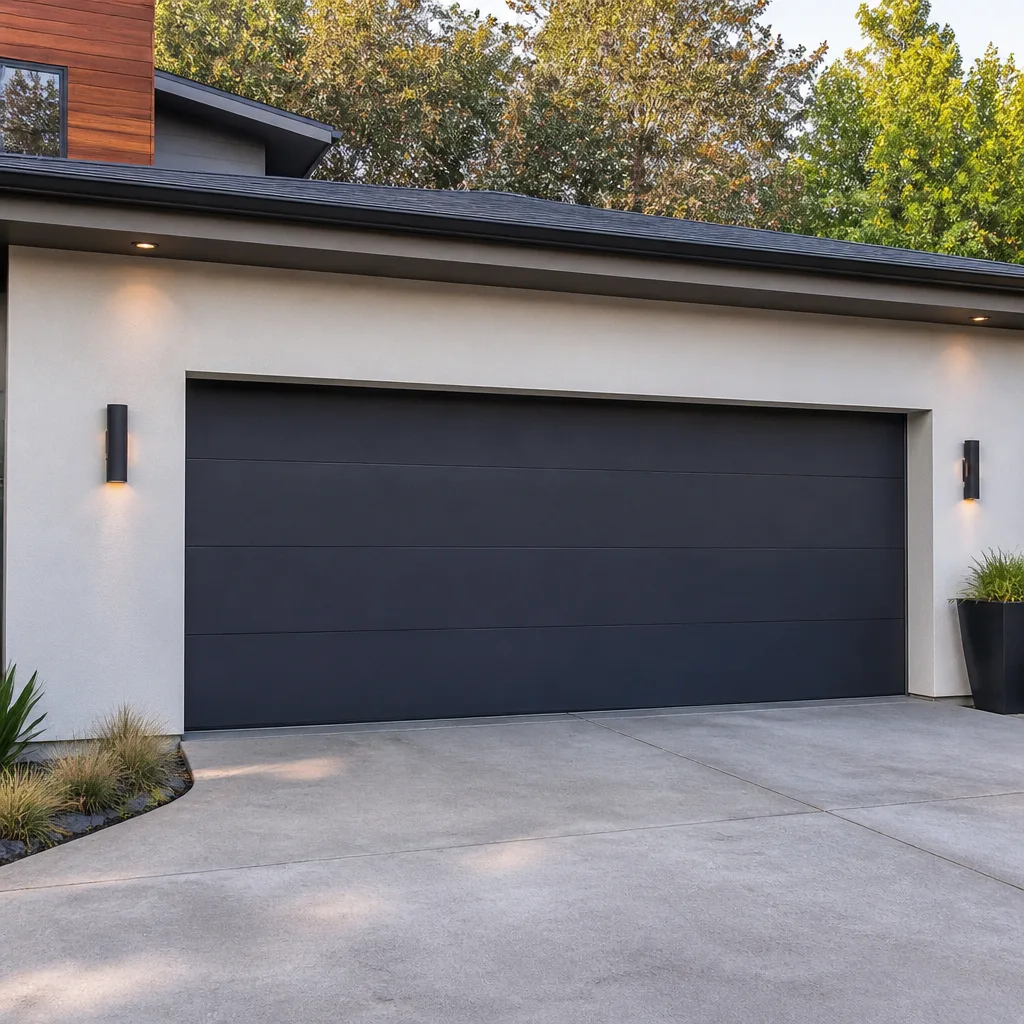 Modern flush
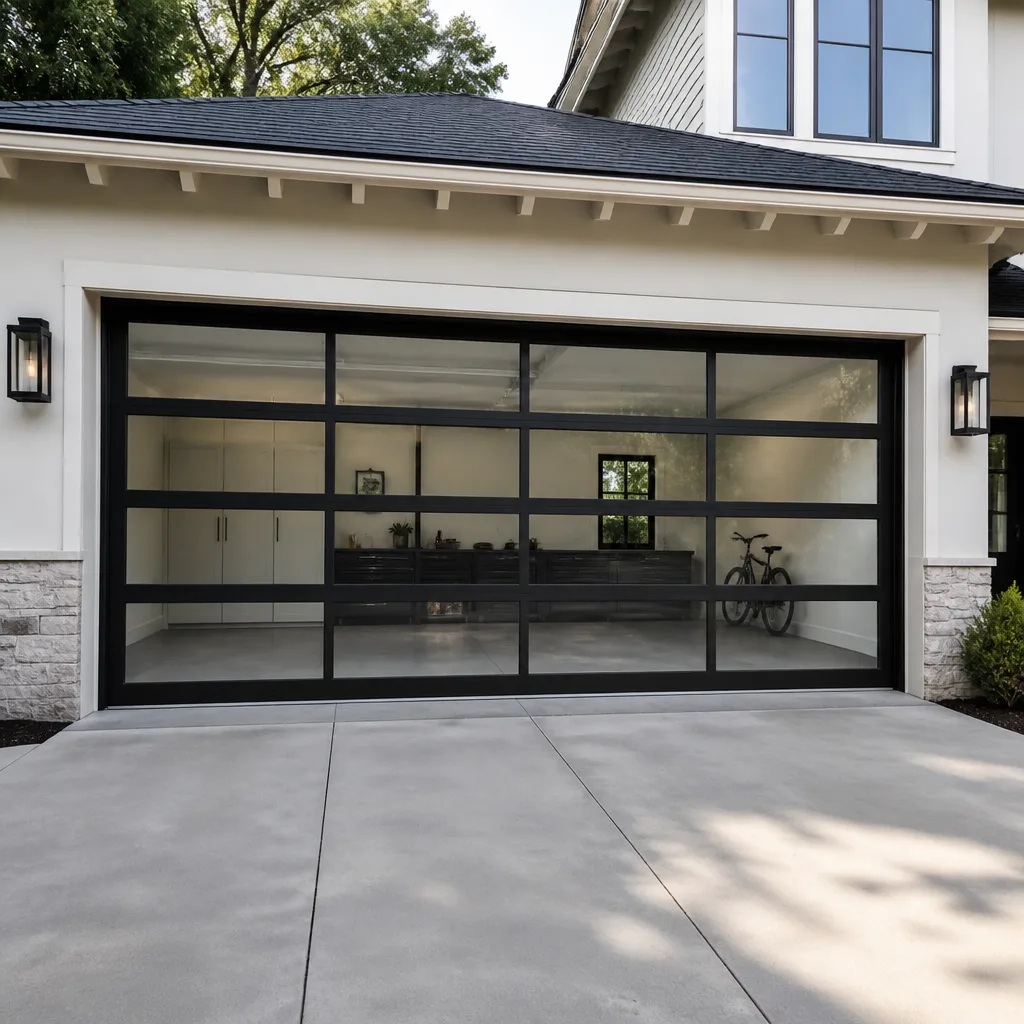 Full-view glass
 LiftMaster openers
 Chamberlain openers
Full 25-point door and opener safety check with every visit - springs, cables, rollers, tracks, and your LiftMaster or Chamberlain opener included
You get a price before we start. It does not change when the pro arrives.
Get your free estimateGarage Door Cost Breakdown: The Brighton Homeowner’s Reference for 2026
Two quotes land in your inbox for the same garage door replacement. One reads $799. The other reads $1,400. Same door model, same size, same neighborhood. The gap isn’t a pricing trick and it isn’t a mistake. It’s the fine print nobody reads: whether the old door gets hauled away, whether the springs are rated for 10,000 cycles or 30,000, whether the hinges are stamped steel or nylon-bushed, and whether a trip charge hides on page two. Brighton homeowners get burned by this gap every week, not because contractors are villains, but because the industry never standardized what belongs in a quote. This guide does. Below is a line-item map of what every dollar buys for the five most common garage door jobs in Brighton, what fair labor looks like in our local market, and how to tell a padded quote from a lean one before you sign anything.
Quick Answer
A typical garage door repair in Brighton runs $150 to $450 depending on the part, while a full door replacement with installation lands between $1,100 and $3,800 for most single-car and double-car residential doors. Spring replacement usually falls between $180 and $340 for one spring, and opener replacement runs $350 to $850 installed. The written estimate you sign is the price you pay, so the real work is understanding what each line item covers before you compare two quotes side by side.
Styles & brands we work with
- Raised-panel steel
- Carriage house
- Modern flush
- Full-view glass
- LiftMaster openers
- Chamberlain openers
Table of Contents
- Line-Item Cost Map: The Five Most Common Brighton Projects
- Spring Cycle Ratings: Why the Cheap Spring Costs More Over Five Years
- The Hardware Quality Tiers Contractors Don’t Volunteer
- Brighton Labor Rate Context: Fair Quote vs. Padded Quote
- Hidden Cost Triggers to Ask About Upfront
- Repair vs. Replace: A Formula, Not a Sales Pitch
- How Your Door Brand Affects the Price
- Common Mistakes to Avoid
Line-Item Cost Map: The Five Most Common Brighton Projects
Most garage door work in Brighton falls into five buckets: spring replacement, opener swap, full door replacement, panel replacement, and cable repair. Each has its own parts cost, labor cost, and adjacent line items that a good quote spells out. Here’s what those five jobs typically look like in typical Brighton residential pricing for 2026.
1. Spring Replacement
- Single torsion spring (standard cycle): $180 – $260 for one spring, installed
- Single torsion spring (high-cycle): $240 – $340 for one spring, installed
- Matched pair (both springs replaced together): approximately twice the single-spring price, since a pair is the standard repair
- Extension spring pair (older doors): $160 – $260 installed
- Safety cable retrofit on extension springs: $40 – $80 added
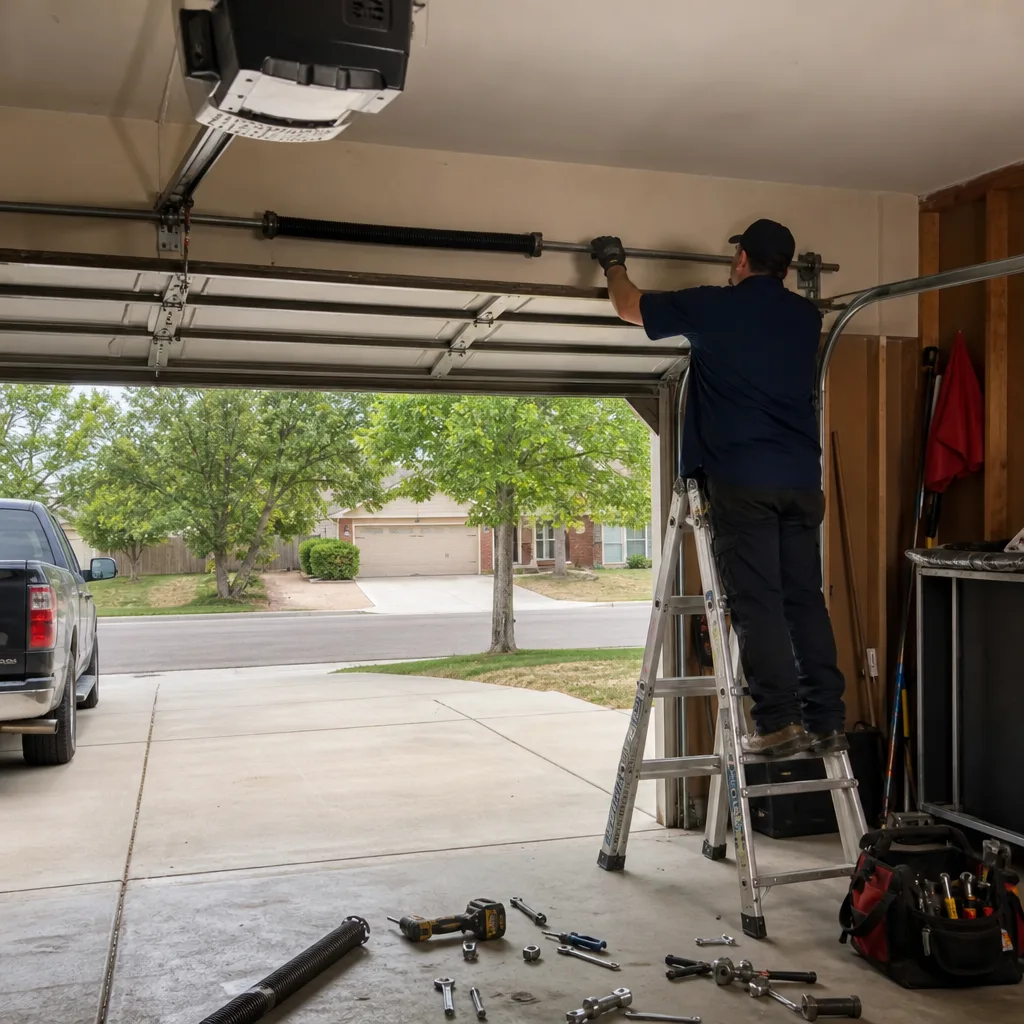
Springs are the most common failure point on any garage door and the most dangerous to touch. A torsion spring under load stores enough energy to cause serious injury, which is why garage door spring repair belongs with a trained technician using winding bars and proper protocol, not a homeowner with a YouTube tutorial. A pair of springs usually fails within months of each other, so replacing both at once is standard practice and the reason a two-spring price looks double a one-spring price.
2. Opener Swap
- Belt-drive opener, standard (LiftMaster, Chamberlain, Genie): $450 – $750 installed
- Chain-drive opener, standard: $350 – $550 installed
- Smart-home-compatible opener with Wi-Fi and app control: $550 – $850 installed
- Battery backup added: $80 – $150
- New remotes or keypad: $30 – $70 each
Opener work straddles the mechanical side and the electronic side of the door, which means a technician who only knows one side will hand off half the job. We’re factory-familiar with LiftMaster, Chamberlain, Genie, and Raynor, so the technician arrives already knowing how your specific head unit is programmed and where the safety reversal sensors sit. That matters more on an opener swap than any other job because the safety sensors have to be aligned, tested, and functioning before the door is safe to leave.
3. Full Door Replacement
- Single-car steel door (basic raised panel, Clopay or Amarr): $1,100 – $1,800 installed
- Double-car steel door (basic raised panel): $1,600 – $2,600 installed
- Insulated double-car door: $2,200 – $3,400 installed
- Upgraded hardware package (nylon rollers, sealed bearings, heavy-duty hinges): $90 – $200
- Old door haul-away and disposal: $50 – $150
- Opener replacement bundled with the new door: $350 – $650
This is where the $799 vs. $1,400 gap lives. A low-bid door quote often leaves out haul-away, uses the cheapest spring the supplier stocks, and installs stamped steel rollers that will rattle in six months. None of those omissions are illegal. They’re buried margin, and they only become visible when you ask.
4. Panel Replacement
- Single panel section (dealer-stock Clopay or Amarr profile): $180 – $400 per section, installed
- Single panel section (discontinued or custom profile): $350 – $700 per section
- Bottom section with new weather seal: $220 – $450 installed
- Color match premium on discontinued finishes: vary widely, ask for the exact number
Panel replacement is cheaper than a full door if and only if the panel is still in production. Discontinued profiles force either a full-door replacement or a fabricated section, which is why the brand and model on your current door matters so much. Clopay and Amarr profiles are usually the easiest to source, but even those have to be checked against the year the door was manufactured.
5. Cable Repair
- Single cable replacement: $150 – $280 installed
- Both cables (recommended when one fails): $250 – $420 installed
- Cable replacement bundled with new springs: add $80 – $150
- Drum replacement if the cable sliced through it: add $60 – $120
Cables and springs fail in pairs. A frayed cable usually means a fatigued spring, and vice versa, so a technician will check both before quoting. If the quote only mentions one, ask about the other.
Spring Cycle Ratings: Why the Cheap Spring Costs More Over Five Years
Every torsion spring is rated in cycles, and a cycle is one full open-and-close movement of the door. A standard residential spring lasts about 10,000 cycles. A high-cycle spring lasts about 20,000 to 30,000 cycles. The price difference between the two is usually $60 to $100 per spring, and the durability difference is double or triple. This is the single most important line item in a garage door quote, and it’s the one contractors leave off most often.
Here’s the math that makes it clear. A typical Brighton household opens and closes the garage door four to six times a day, roughly 1,800 cycles a year. A 10,000-cycle spring lasts about five to six years. A 25,000-cycle spring lasts twelve to fourteen years. If a cheap-spring quote gets you a five-year spring and you replace it twice more over fifteen years, your “cheap” quote has now cost $540 to $780 in springs alone, while the high-cycle upgrade would have cost you $240 to $340 once. That’s the hidden five-year cost of a low bid.
The cycle rating is stamped or printed on the spring cone or on the manufacturer’s tag. Ask the technician to show it to you before they install. Any reputable spring will have a visible rating, and a technician who won’t show it isn’t buying from a supplier you want in your garage.
The Hardware Quality Tiers Contractors Don’t Volunteer
Springs get the attention, but hinges, rollers, bearings, and track thickness all carry a quality tier that quietly changes how long your door lasts and how noisy it is. Here’s what nobody volunteers on a quote.
- Rollers: Stamped steel rollers are $1 – $2 each and last about two to three years before they flat-spot and start rattling. Nylon rollers are $4 – $8 each and last a decade. Sealed-bearing nylon rollers are the top tier and are silent under load.
- Hinges: Stamped steel hinges run $2 – $4 and deform at the joint. Nylon-bushed hinges are $5 – $9 and hold up under repeated cycling without the metal-on-metal wear that loosens the door over time.
- Bearings: A standard center bearing plate is $10 – $20. A sealed bearing plate is $25 – $45. The sealed version is what you want if you’re planning to keep the door for another decade.
- Track gauge: Most residential track is 24-gauge or 26-gauge steel. The thicker 24-gauge is sturdier and usually what’s specified for a double-car door, but a low-bid quote will sometimes substitute 26-gauge because the price difference per foot isn’t visible to the homeowner.
- Weather seal: Standard vinyl bottom seal is $15 – $30 installed. A brush-seal or rubber bulb seal is $30 – $70 installed and lasts longer in Colorado’s freeze-thaw cycle.
None of these upgrades is expensive individually. Bundled, the whole hardware package adds $90 to $200 to a door replacement, and it roughly doubles the usable life of everything except the springs. When you compare a $799 quote to a $1,400 quote for the same door, this is often the difference.
Brighton Labor Rate Context: Fair Quote vs. Padded Quote
Garage door labor in the Brighton area usually runs $85 to $140 an hour for a trained technician, with a service-call minimum of $80 to $120 that covers the first 30 to 45 minutes. Spring jobs and opener swaps are usually quoted flat rather than hourly because the work is standardized. Door replacements are quoted per job with labor built in. This local rate is the reference point you should use when judging a quote.
Here’s how to read the three common patterns you’ll see from Brighton contractors:
- Fair quote: Flat-rate pricing tied to the specific job, with a line-item breakdown that separates parts, labor, disposal, and any trip charge. The written estimate is what you’ll pay.
- Lean quote: Below-market on labor but missing key line items (no disposal, no haul-away, basic-grade hardware). It’s not dishonest, it’s incomplete, and the missing line items will come back as add-ons.
- Padded quote: Above-market labor plus a diagnostic fee that isn’t credited toward the work, plus a hardware markup that pushes the effective hourly rate past $180. The upper end of a fair spring quote sits around $340 per spring. If a quote for one standard spring crosses $400, ask why.
Brighton’s garage door market is competitive enough that a fair quote is easy to find. The tell is transparency: a reputable contractor will happily itemize parts and labor on the written estimate before any work starts. If the estimate is a single number with no breakdown, ask for the breakdown and see how the conversation goes. That answer tells you more than the number itself.
Hidden Cost Triggers to Ask About Upfront
These are the line items that turn a $450 quote into an $850 invoice, and none of them are visible until you ask. Ask every contractor directly, before the work is scheduled.
- Disposal and haul-away fees: $50 – $150 for a full door replacement. Old doors don’t fit in a standard dumpster and often require a dedicated haul-off. If a quote doesn’t mention it, the fee is probably still coming.
- Trip charges: $0 – $80. A “free estimate” quote is often free only on paper. Ask whether a trip charge applies if you decline the work after the technician arrives.
- After-hours rates: typically 1.5x to 2x the standard rate. This matters when your door fails on a Sunday afternoon. Ask what the after-hours rate is before you call, not after.
- Warranty terms on parts vs. labor: parts warranties on springs and openers are usually 1 to 5 years depending on the tier. Labor warranties are often 30 to 90 days. Ask for both in writing, separately, because a “5-year warranty” that only covers the spring coil and not the labor to replace it is not the same as a full warranty.
- Opener programming and remote setup: usually included, sometimes $25 – $50 extra. Ask.
- Sensor realignment after a panel replacement: included in a good quote, sometimes an add-on. Ask.
The rule is simple: any line item that appears on the invoice but not on the estimate is a line item you didn’t ask about. Get the list upfront, in writing, and the surprise goes away.
Repair vs. Replace: A Formula, Not a Sales Pitch
Contractors have a self-interest in whichever answer makes them more money. You don’t need to trust that. You need a rule. Here’s the one we use: add the age of the door in years to the cost of the repair, and compare that sum to the cost of a full replacement divided by ten. If the sum is lower, repair. If it’s higher, replace.
Example: a door that’s 12 years old needs a $280 spring replacement. 12 + 280 = 292. A replacement door for that same opening runs $1,800. 1,800 ÷ 10 = 180. The repair sum (292) is higher than the replacement threshold (180), which suggests the repair is at the edge of sensible. A cheaper repair on a newer door, or a more expensive repair on an older one, will skew the opposite direction. The formula isn’t magic, but it takes the contractor’s incentive out of the decision.
Beyond the formula, here are the situations where replacement almost always wins:
- The door is 15 years or older and needs both springs plus a cable plus a panel. At that point the parts total approaches half the cost of a new door.
- The door is visibly warped, rusted through, or sagging at the bottom panel. Structural damage on the door itself is not repairable without replacing the panel, and at that age the panel is often discontinued.
- The opener is original to a door from the 1990s. Old openers lack modern safety reversal and won’t take new safety sensors, which puts new parts on an obsolete platform.
- You’re planning to stay in the home for five or more years. The long-term cost of repairs on an aging door usually eclipses the cost of a replacement that resets the clock.
When the answer points toward replacement, Brighton Garage Door Repair Co handles both the mechanical and installation side, so you’re not left finding a separate installer after a repair quote tells you the door is done. One call covers the whole lifecycle.
How Your Door Brand Affects the Price
Brand matters twice in garage door pricing: it affects the parts cost, and it affects whether a technician has to guess at the system when they arrive. The brands we work with regularly – LiftMaster, Chamberlain, Genie, Clopay, Amarr, Wayne Dalton, Craftsman, and Raynor – cover the vast majority of residential doors in Brighton, and factory familiarity with any of them saves time on the job, which usually saves money on the quote.
A few brand-specific cost patterns are worth knowing:
- LiftMaster and Chamberlain openers share engineering lineage, so parts and remotes are cross-compatible up to a point. This usually means a lower parts cost on an opener repair or swap. Smart-home integration and MyQ compatibility come built in on most current models.
- Genie openers use a different drive geometry and often need brand-specific replacement parts. Techs who work Genie regularly carry the correct parts; techs who don’t will order and come back, which means a second trip and a second trip charge.
- Raynor doors use proprietary panel profiles on some models, which makes panel replacement a matter of checking the manufacturer’s current production list before scheduling.
- Clopay and Amarr doors are the easiest panel replacements to source because their profiles are widely stocked, which usually means a lower per-panel price.
- Wayne Dalton and Craftsman doors are common enough on Brighton homes that most technicians recognize the vintage immediately, which shortens the diagnostic step.
Whatever brand is on your door, we know it. That’s not a slogan, it’s a cost factor: the less time a technician spends identifying the system, the less of your bill is diagnostic labor.
Common Mistakes to Avoid
- Comparing two quotes without comparing line items. Two contractors can both quote $1,200 and one can be $300 cheaper in real terms because it includes disposal, upgraded hardware, and a labor warranty. Put the quotes side by side and check every line.
- Assuming a cheaper spring is a cheaper repair. A 10,000-cycle spring at $180 will fail in five years. A 25,000-cycle spring at $340 lasts twelve or more. Over fifteen years, the “cheap” spring costs more than twice as much.
- Letting a technician replace one spring when both have failed or are about to. Springs are matched and wear together. Replacing one is a false economy that costs more when the second one fails a few months later.
- Not asking about the labor warranty. A parts warranty that covers the spring but not the labor to install it means you’ll pay another $100 to $150 in labor when that spring fails inside its warranty window. Get both warranties in writing.
- Forgetting the disposal fee on a door replacement. Budget $50 to $150 for haul-away and ask explicitly whether it’s included. A quote that doesn’t mention disposal is a quote that’s still priced at $0 for a service that costs real money.
- Paying a diagnostic fee that isn’t credited to the work. A fair diagnostic fee on a garage door call typically rolls into the repair cost. Ask before the technician gets out of the vehicle.
- Hiring for the door and forgetting the opener. When one part of a door system is replaced, the others come under new load. A new high-cycle spring on an aging opener wears the opener faster. Ask whether the opener is rated for the new door’s weight before you leave.
See the difference
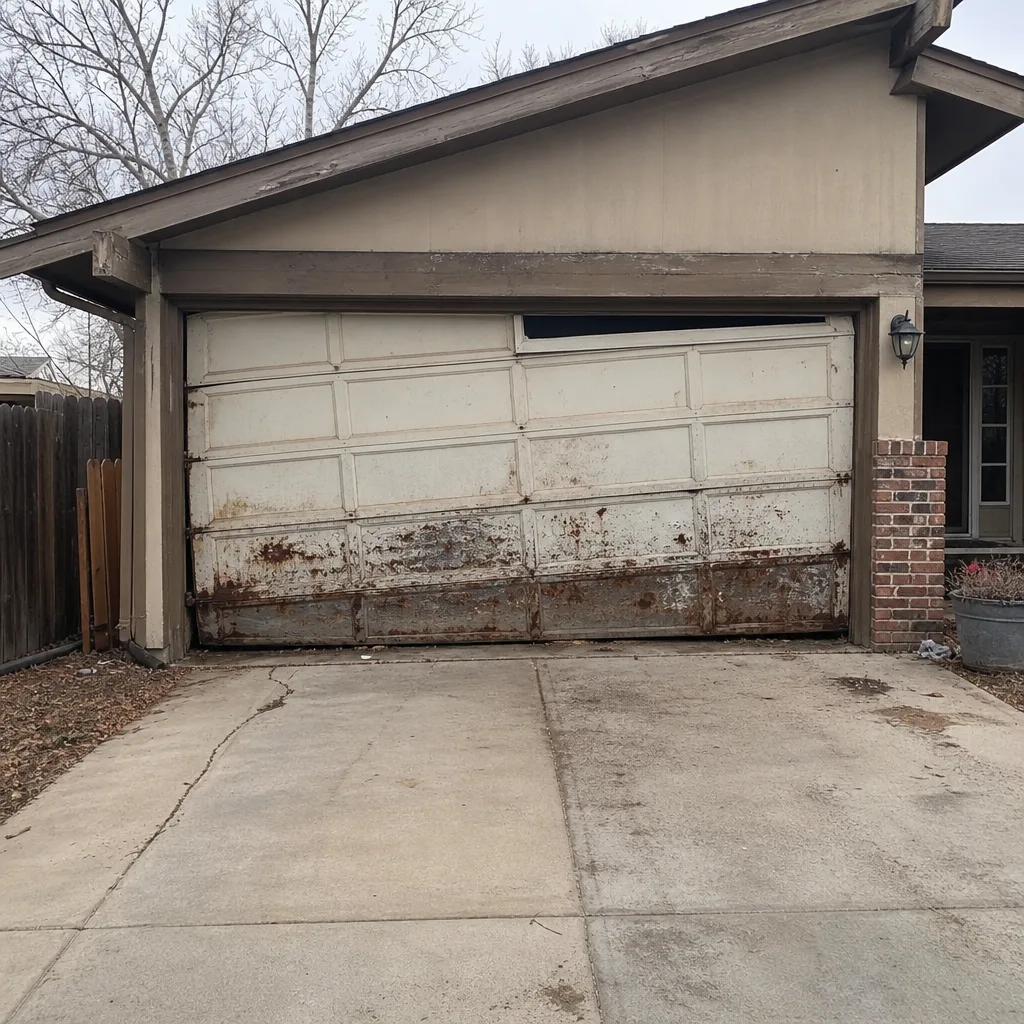 Before
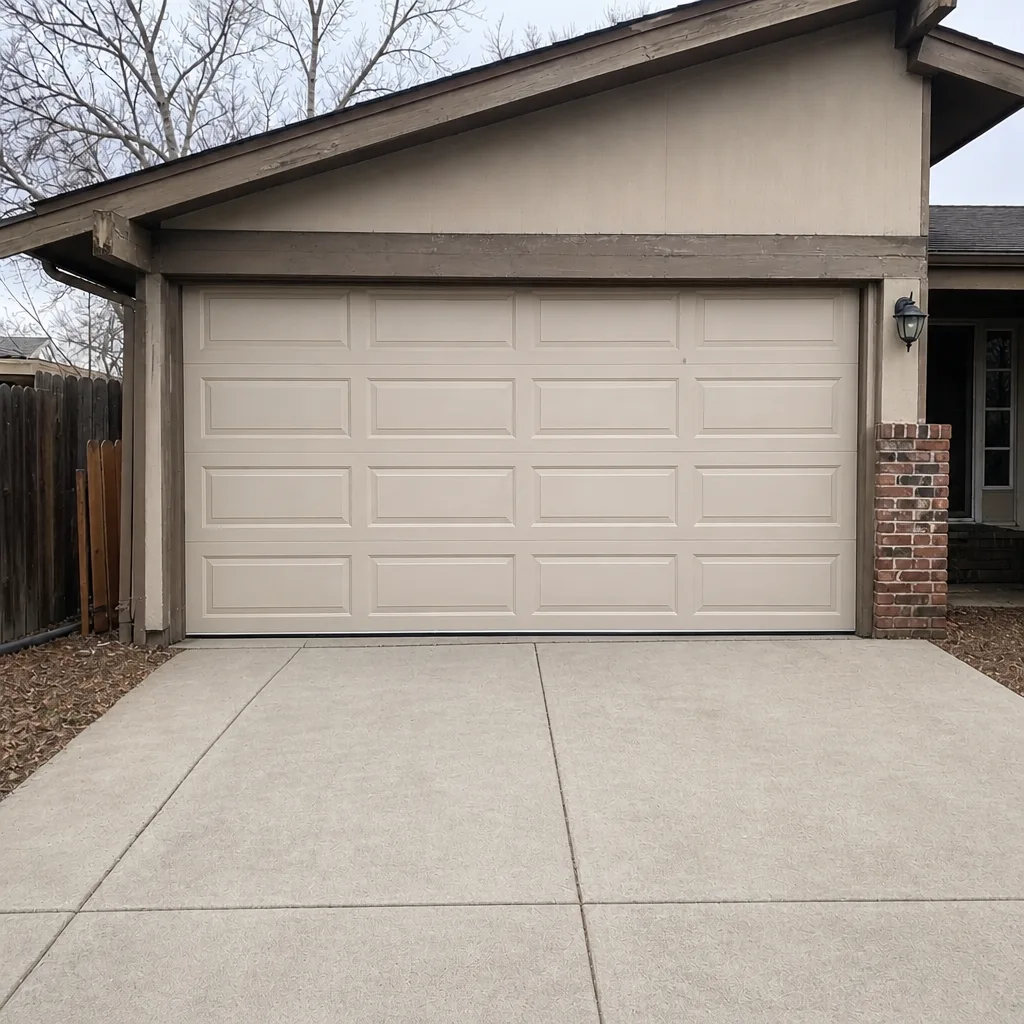 After
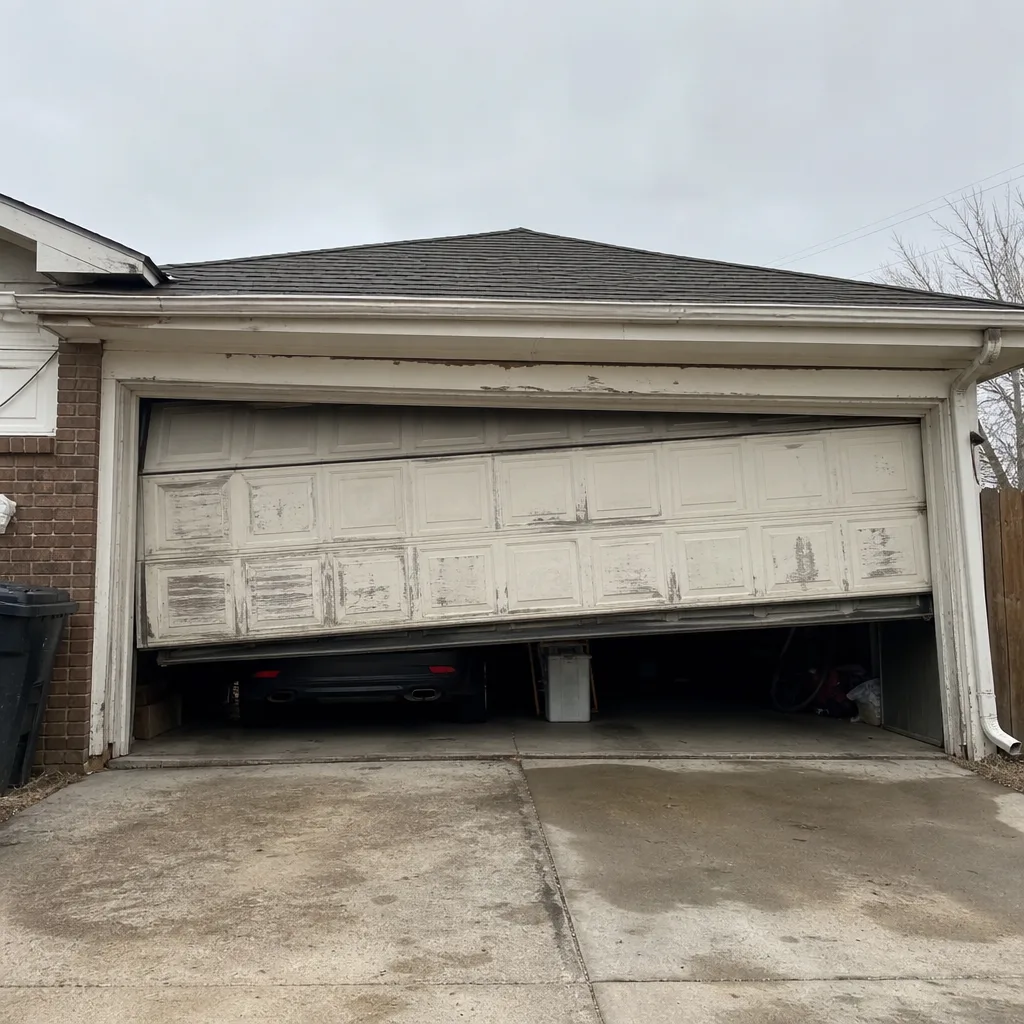 Before
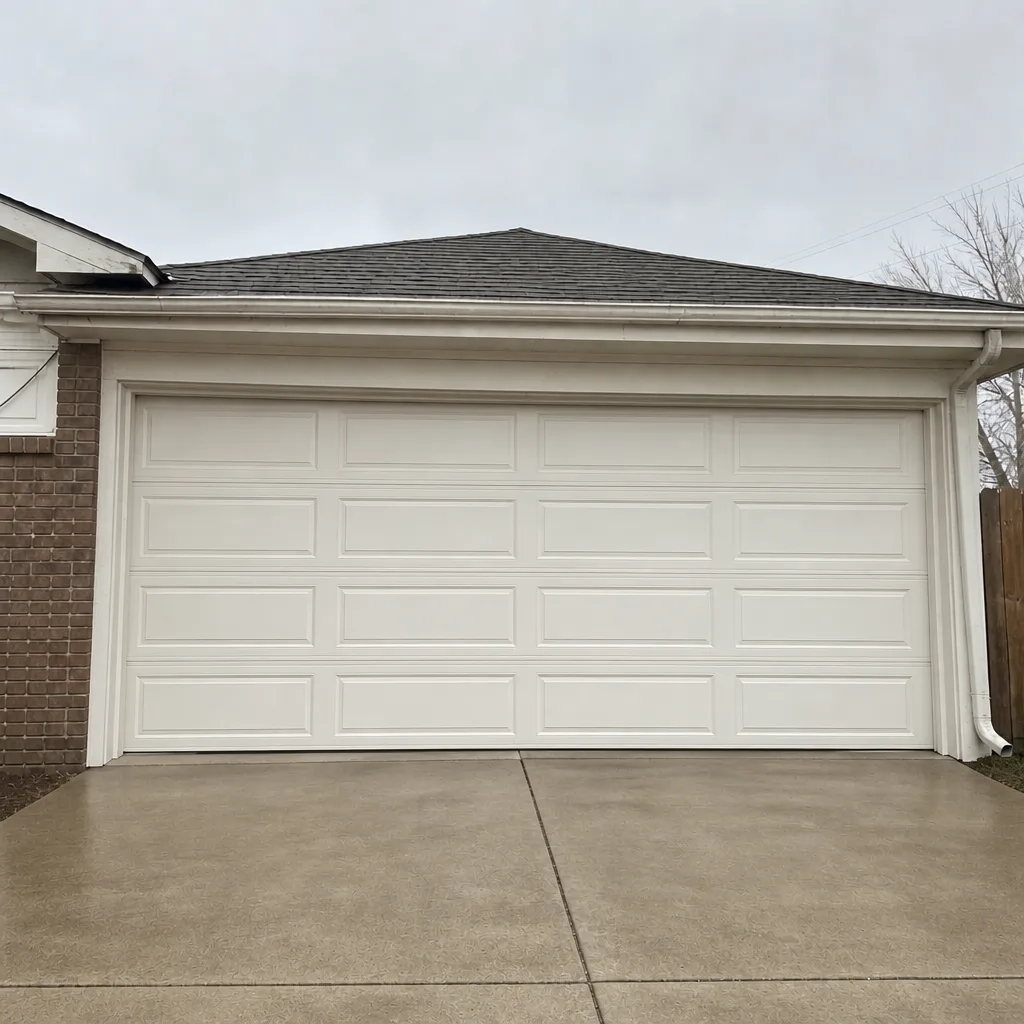 After
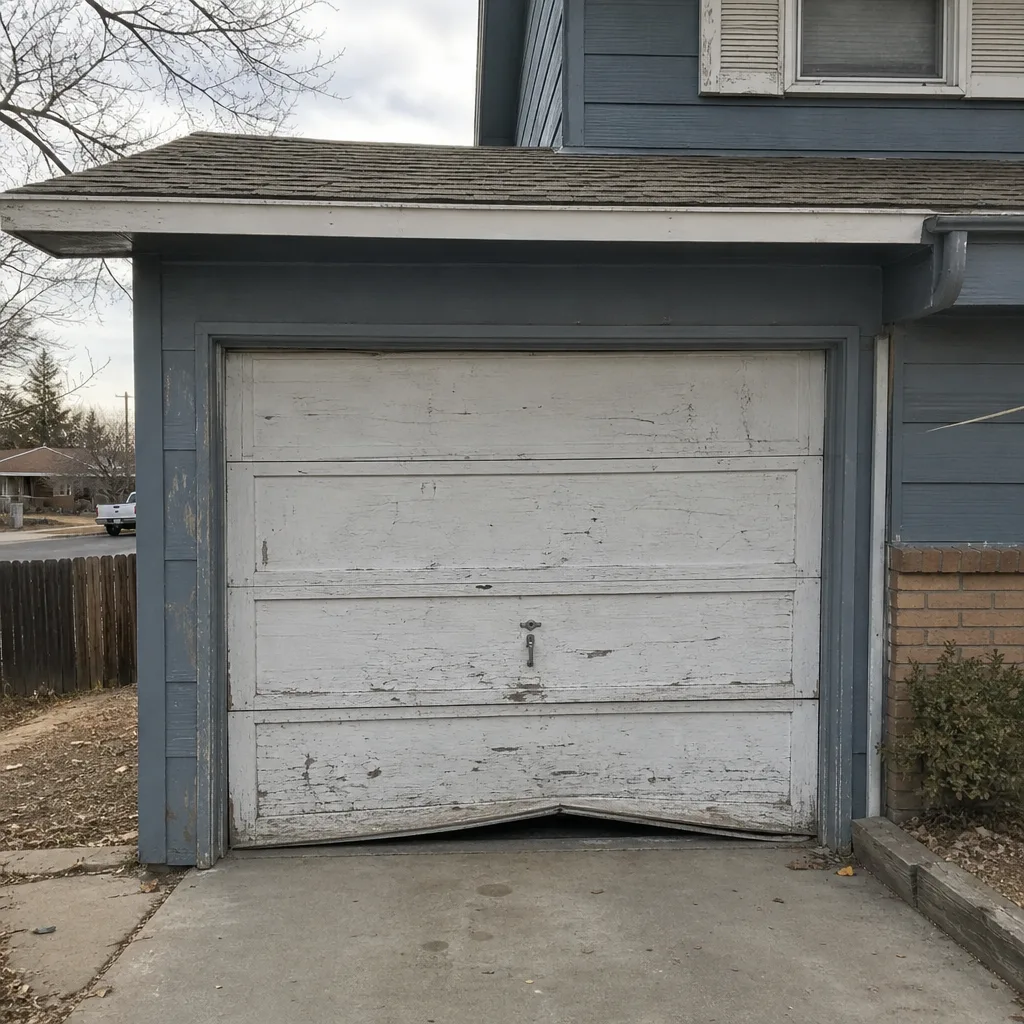 Before
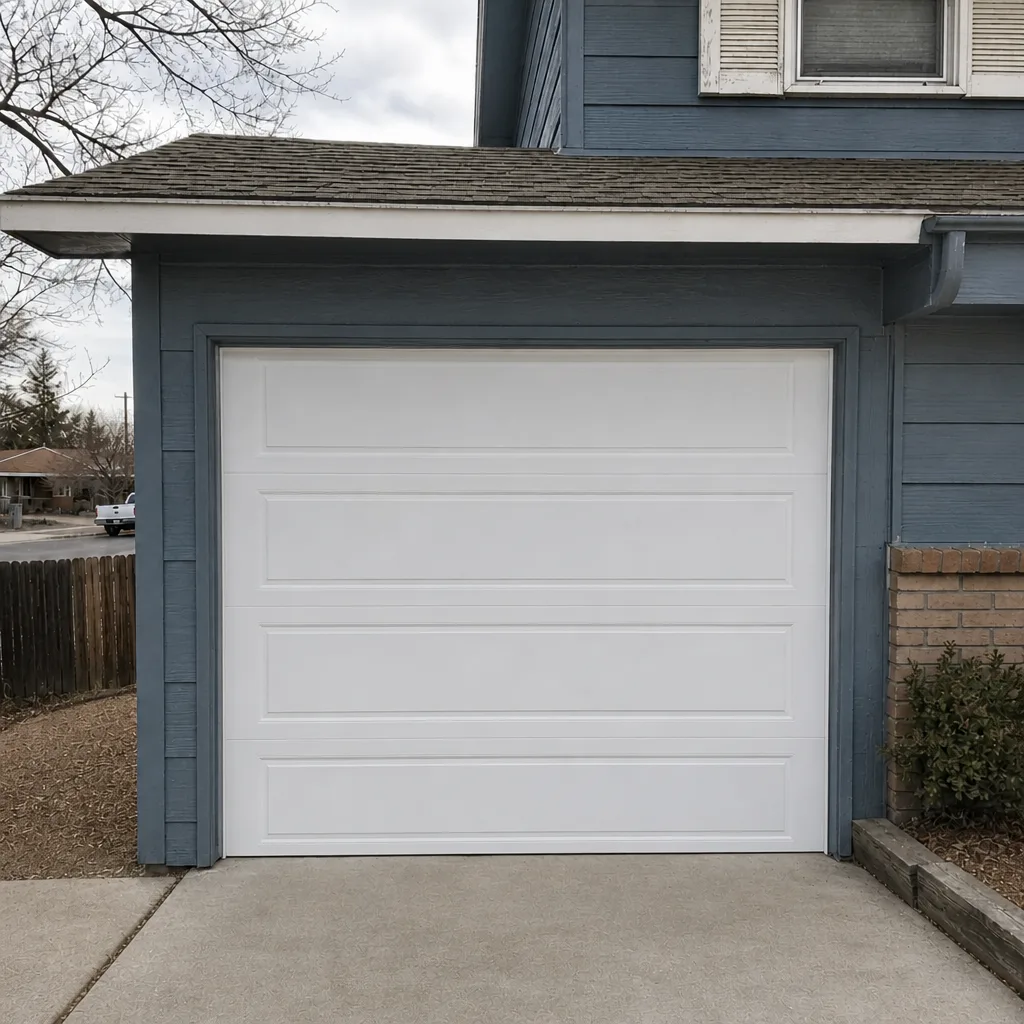 After
When to Call a Professional
Some jobs are homeowner-safe, and some are not. Coil springs, torsion cables, and the brackets that hold both under tension are the parts of a garage door that carry enough stored energy to cause serious injury, and they’re the parts you shouldn’t touch. Call a professional for any of the following: a snapped torsion spring (the door becomes extremely heavy and can drop without warning), a frayed or visibly damaged cable, a bent or detached track after a vehicle strike, a door that’s come off one or both rollers, a broken hinge that holds the door panel to the track, or an opener that runs but doesn’t lift the door. Also call if the door has become a security issue – stuck open, stuck closed with a vehicle trapped inside, or the bottom section damaged so the door no longer seals. Brighton Garage Door Repair Co offers free estimates in Brighton and can often be reached for emergency garage door service when a door failure leaves you stuck or exposed. Call (866) 754-4750.
Frequently Asked Questions
Typical garage door repair in Brighton runs $150 to $450 depending on the part, with spring replacement at roughly $180 to $340 per spring, cable repair at $150 to $280, and opener repair at $150 to $400 depending on the failure. Full door replacement ranges $1,100 to $3,800 for most single-car and double-car residential doors. Call (866) 754-4750 for an exact quote – estimates are free.
In many cases, yes. Spring failures are one of the calls we prioritize because a door with a broken torsion spring is heavy enough to be unsafe and can fail to open entirely. Call (866) 754-4750 and we’ll tell you the soonest available window – same-day is often possible on spring and cable work.
No. The written estimate is the price you pay. We quote the job after looking at the actual door, not over the phone, and the number on the estimate is what we’ll invoice. If a technician finds something the estimate missed, we stop and re-quote before doing any work, never after. Call (866) 754-4750 for a free estimate.
Yes. The local professional we connect you with is licensed and insured as Colorado requires for this trade, and our technicians have up to 13 years of experience. We work on all major residential brands, including LiftMaster, Chamberlain, Genie, Clopay, Amarr, Wayne Dalton, Craftsman, and Raynor. Call (866) 754-4750 to schedule.
A standard pair of garage door springs is rated for roughly 10,000 cycles, while a high-cycle pair runs 20,000 to 30,000. The cost difference is usually $60 to $100 per spring, and the lifespan difference is roughly double or triple. For a Brighton household opening the door four to six times a day, that’s the difference between replacing springs every five years versus every twelve. Call (866) 754-4750 for a spring quote – estimates are free.
A standard single-car steel door installed runs $1,100 to $1,800, and a double-car door runs $1,600 to $2,600, with insulated upgrades pushing the upper end to $3,400. That pricing assumes a standard opening and a dealer-stock profile from Clopay, Amarr, or a comparable line. Disposal, hardware upgrades, and an opener swap are separate line items worth asking about upfront. Call (866) 754-4750 for a free measurement and written quote.
The Bottom Line
The number a Brighton contractor quotes for a garage door repair or replacement means nothing until you know what’s inside it. Spring cycle ratings, hardware grade, disposal fees, trip charges, and parts-vs-labor warranties are the line items that make a $799 quote cheaper than the $1,400 quote on paper and more expensive over five years. Use the repair-vs-replace formula instead of a contractor’s recommendation. Ask for the written breakdown before you sign, and get the price confirmed before work starts. When your door needs attention, one call handles it, whatever the brand. Call (866) 754-4750 for a free estimate on any garage door job in Brighton.
Written by the team at Brighton Garage Door Repair Co.