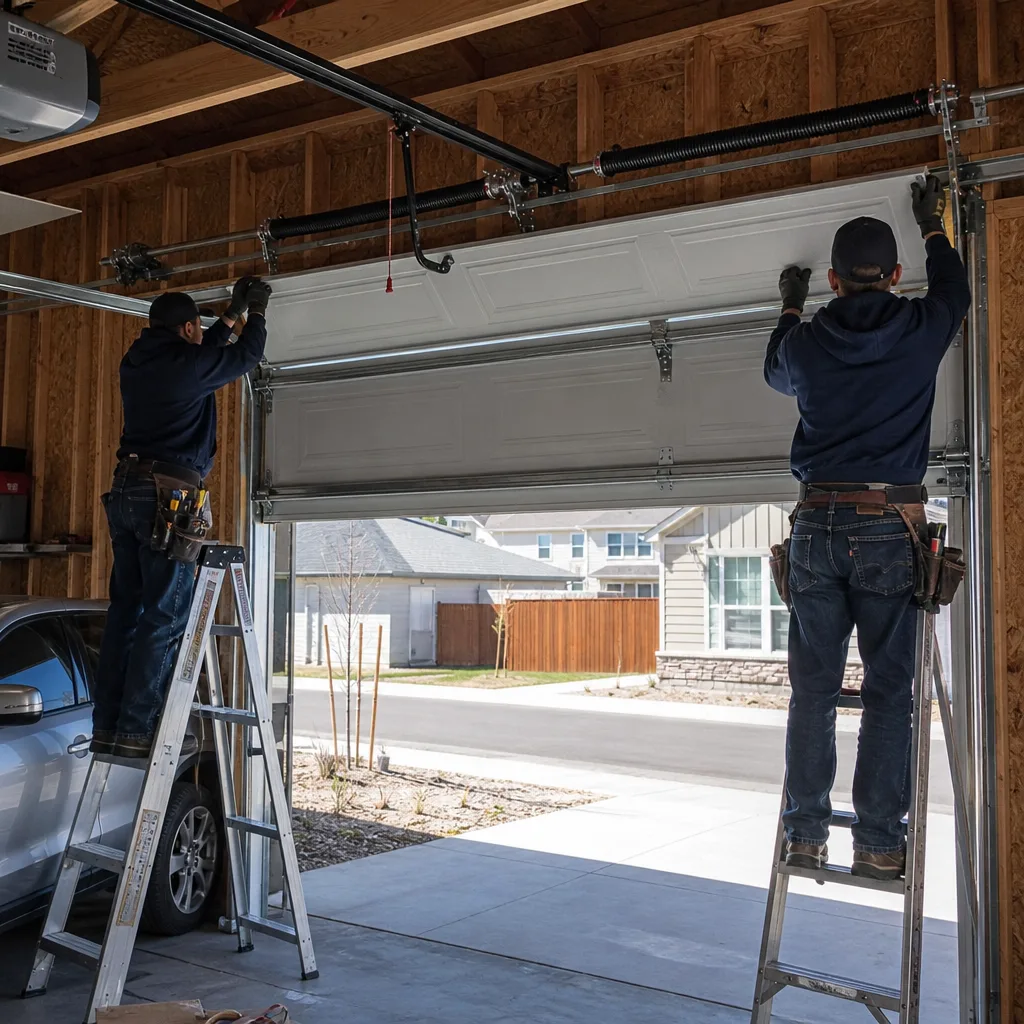
Last updated November 23, 2026
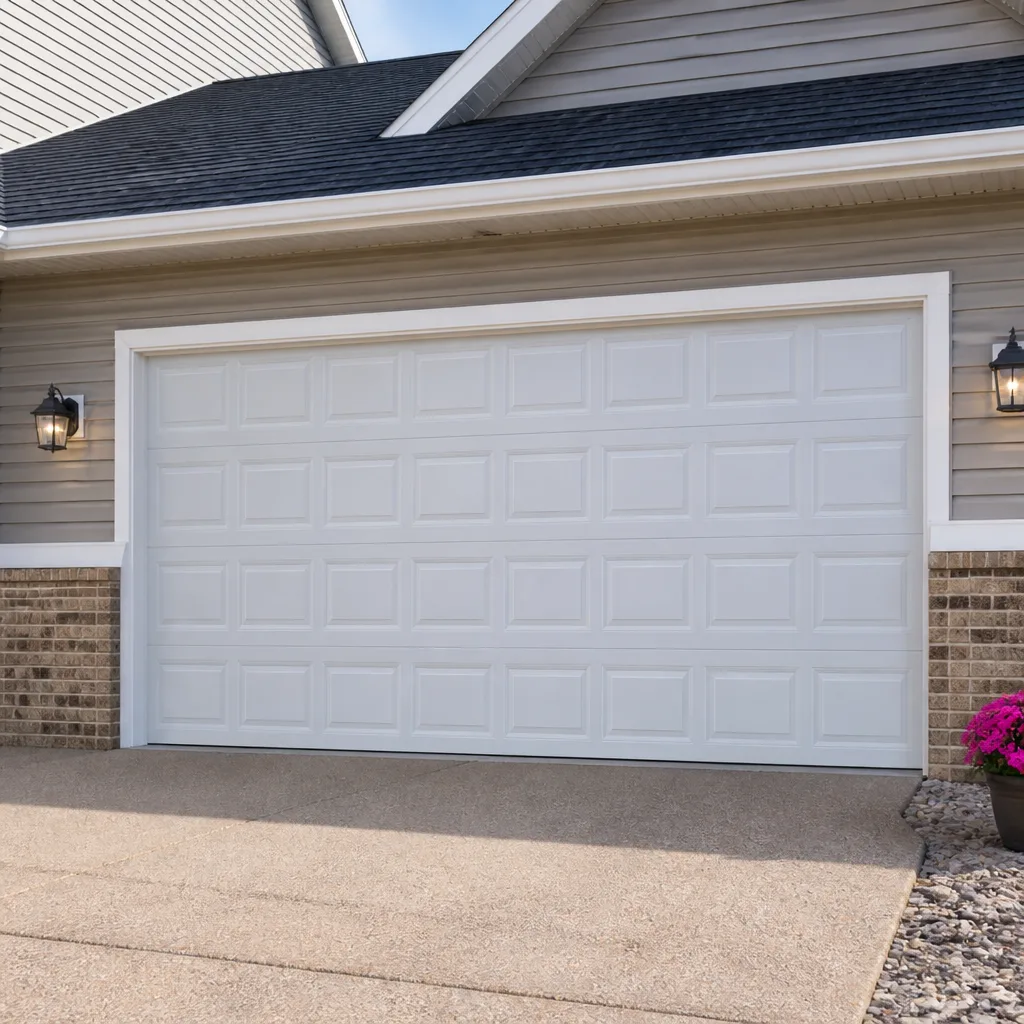 Raised-panel steel
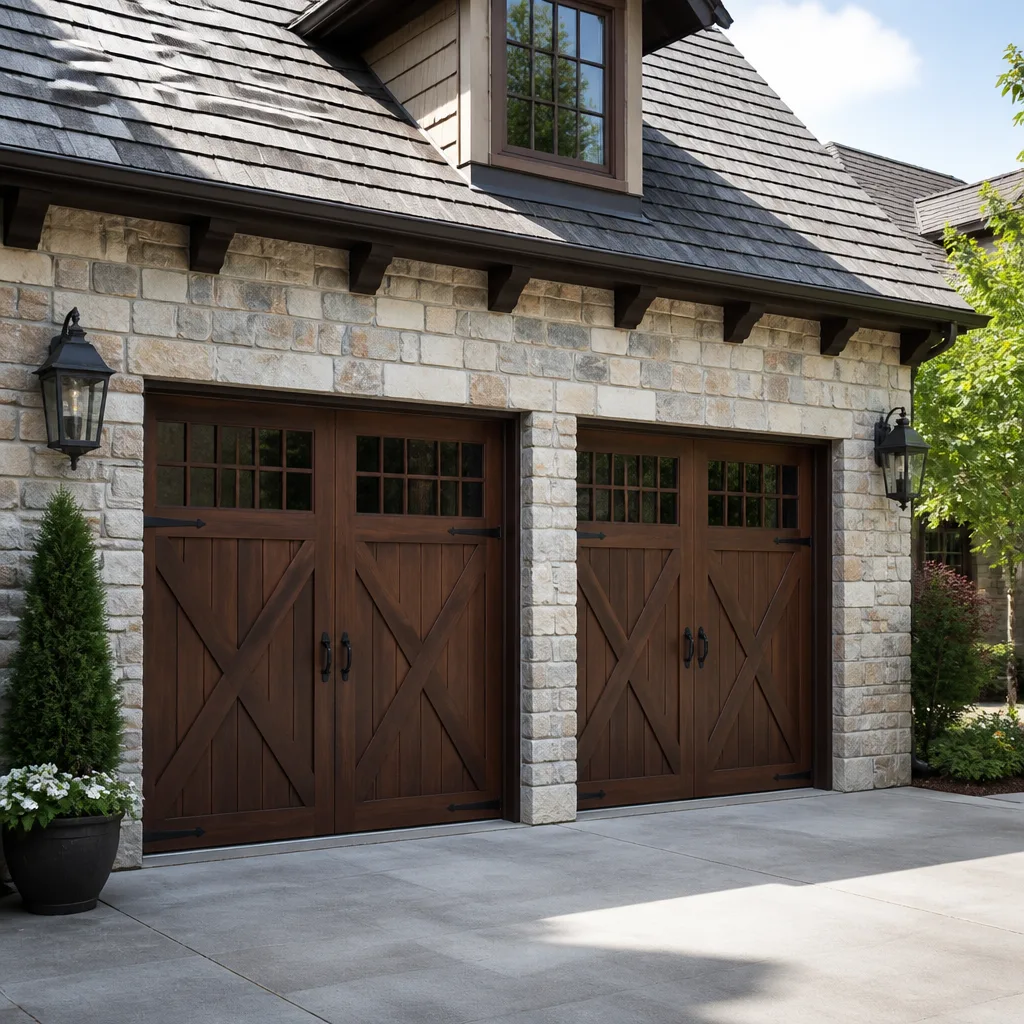 Carriage house
 Modern flush
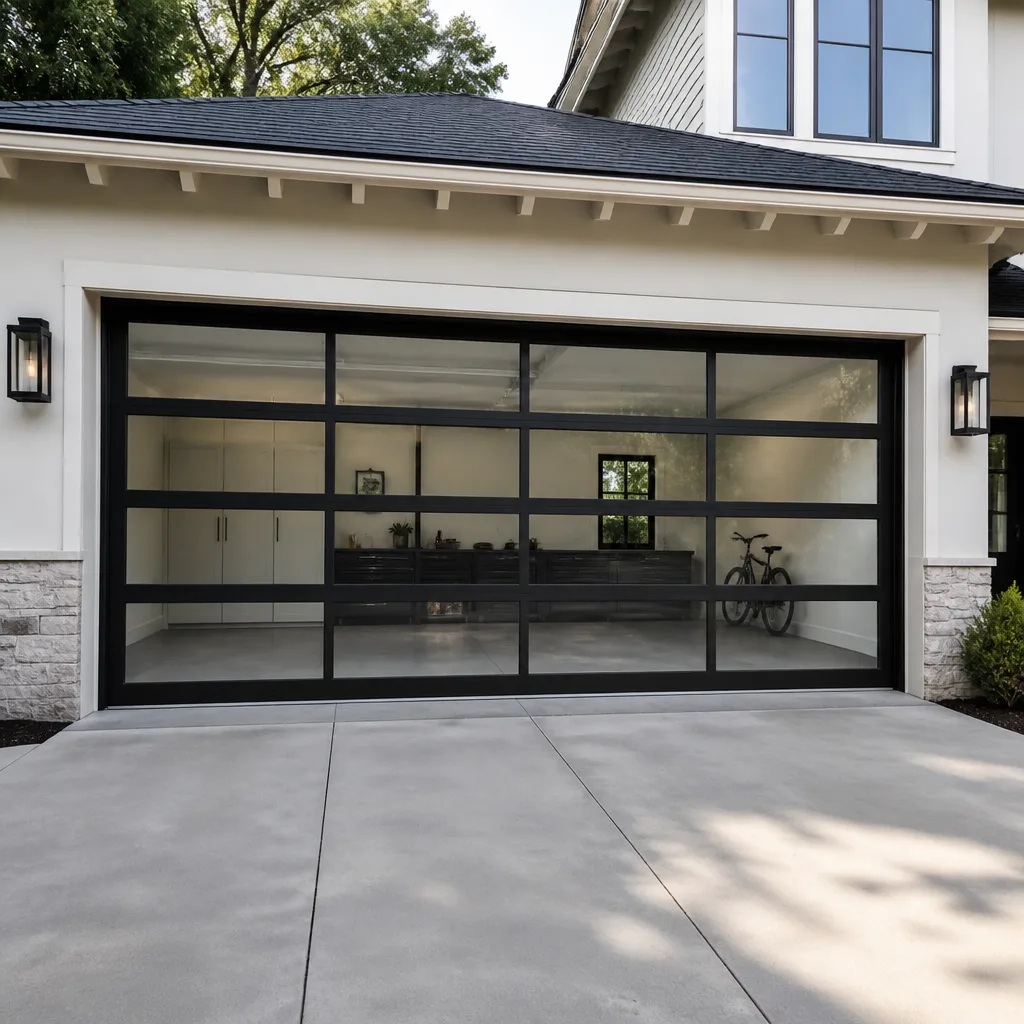 Full-view glass
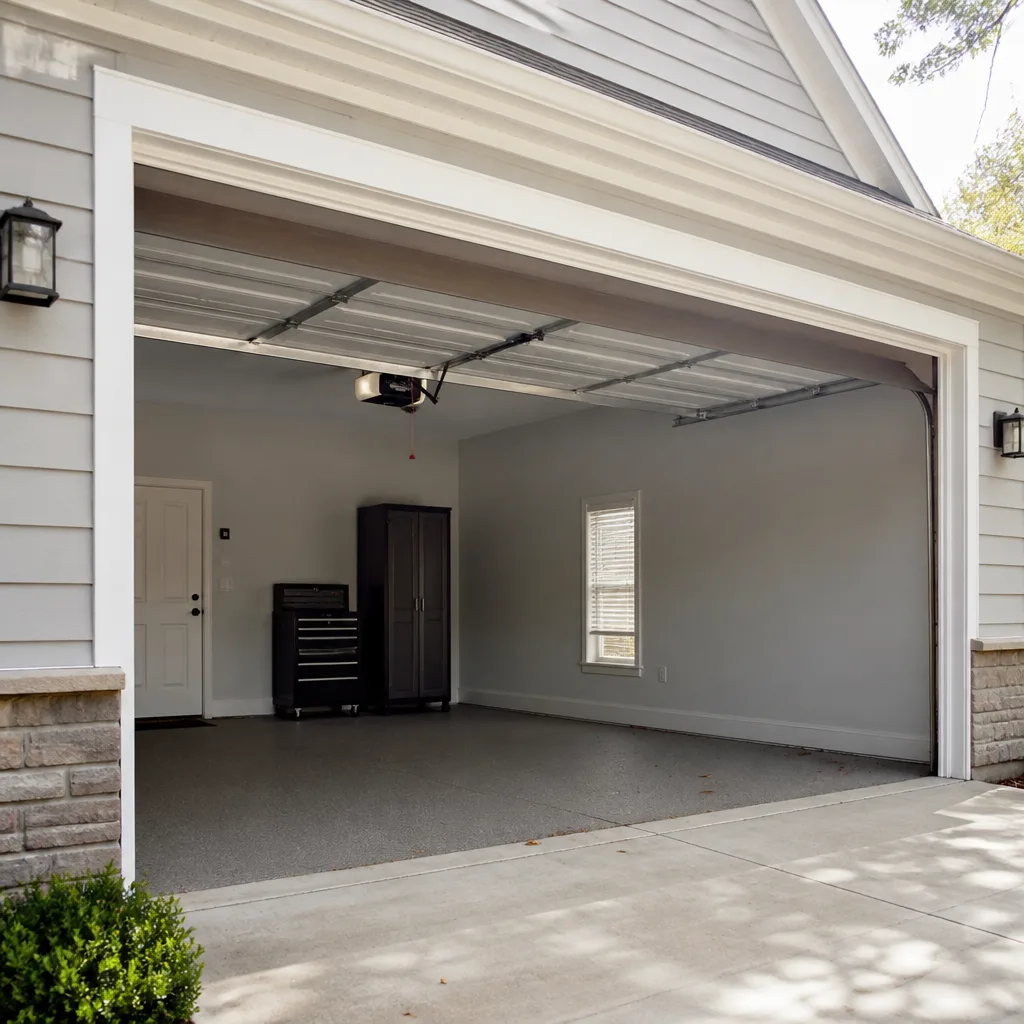 LiftMaster openers
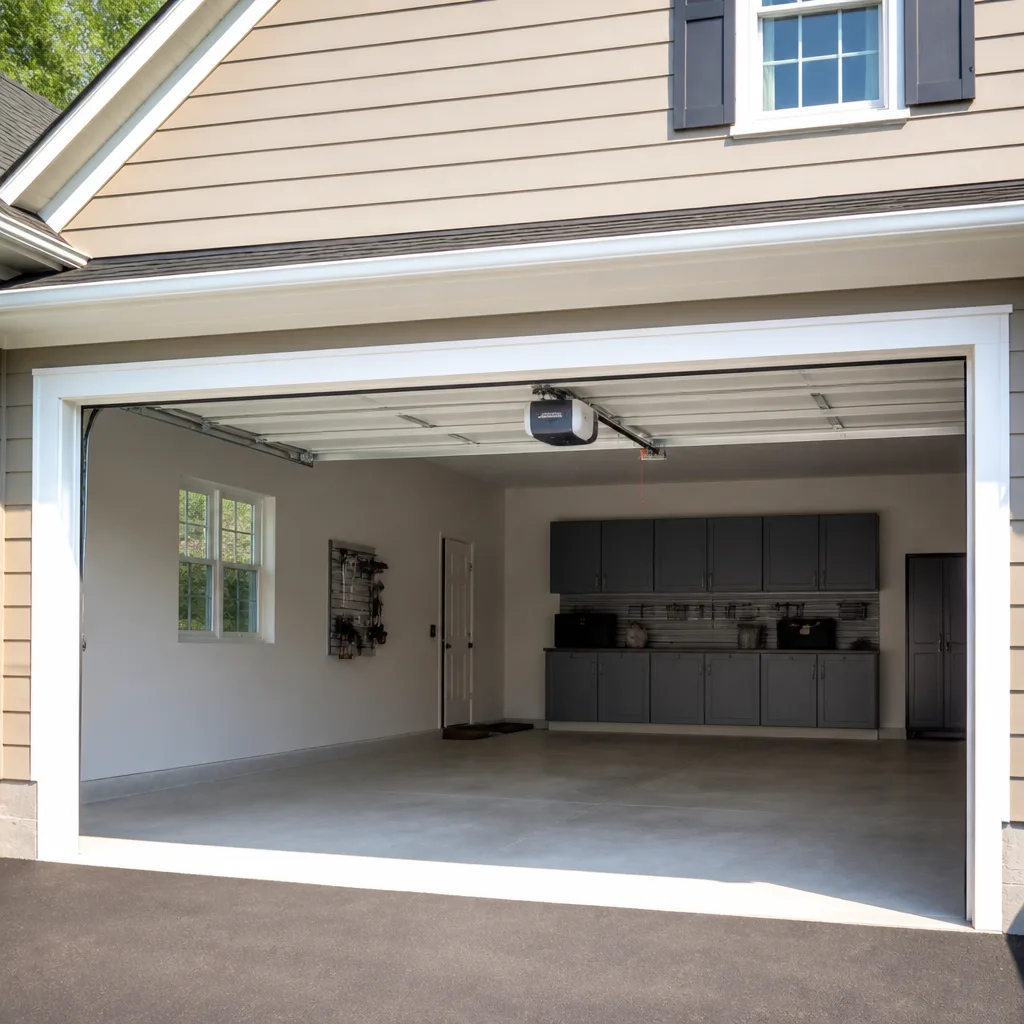 Chamberlain openers
Full 25-point door and opener safety check with every visit - springs, cables, rollers, tracks, and your LiftMaster or Chamberlain opener included
You get a price before we start. It does not change when the pro arrives.
Get your free estimateGarage Door Permits, Codes & Inspections in Brighton, CO: What You Need to Know
Here’s the part that surprises most homeowners: a like-for-like garage door swap usually doesn’t need a permit, but the moment the job involves the structural opening above the door, you’ve crossed into permit territory, and the paper trail starts to matter. Skip it and the problem tends to stay quiet until a claim or a sale. The insurance adjuster asks for the inspection record. The title company flags the open permit. The buyer’s lender wants it cleared before closing. This guide walks through which garage door projects in Brighton need a permit, what the building department actually looks at, how the state energy code shapes the door you buy, and what unpermitted work does to your Certificate of Occupancy and your title. Brighton sits in Adams County, so we’ll be specific about local jurisdiction and climate.
Quick Answer
In Brighton, CO, a straight replacement of a garage door of the same size, same opening, and no structural change typically does not require a building permit, but any work that alters the header, framing, opening dimensions, or adds a new door where none existed does. All new or replaced doors must still meet the Colorado Energy Code (which adopts the IECC), and that means a minimum insulation R-value for the door. The City of Brighton and Adams County each handle their own permits depending on where the property sits, and the surest answer for your address comes from the city’s building department before any work is ordered.
Styles & brands we work with
- Raised-panel steel
- Carriage house
- Modern flush
- Full-view glass
- LiftMaster openers
- Chamberlain openers
Table of Contents
- Which garage door projects need a permit in Brighton?
- How the Colorado Energy Code affects your replacement door
- The inspection process from permit to final sign-off
- Unpermitted work, your Certificate of Occupancy, and title
- How a qualified contractor handles the permit for you
- Why repair and spring work sit outside the permit question
- Brighton neighborhoods and how property type changes the answer
- When to call a professional
Which garage door projects need a permit in Brighton?
The dividing line is structure. If you change the door but not the opening, you’re generally in the clear. If you change the opening, alter the framing, or change whether the opening is enclosed at all, plan on a permit. This is the most common thing homeowners get wrong, and it cuts both ways: people pull permits for swaps that don’t need one, and people skip permits for structural jobs that absolutely require them.
Here’s how we break down the typical projects:
- Same-size replacement, same style of door: usually no permit. The size stays, the opening stays, and nothing structural moves. You still have to meet the energy code for a replaced door, so the door’s R-value matters even though the paperwork is lighter.
- Opening the framing to fit a wider or taller door: permit required. Cutting or reinforcing the header above the opening is structural work, and once a header is touched, an inspector needs to see how it was handled.
- Converting a wall or opening into a new garage door: permit required. This creates a new structural opening and affects the load path.
- Replacing a door with a solid wall, or converting a garage to living space: definitely permit territory, and it usually pulls in other disciplines too. Ask the building department early.
- Track, spring, opener, or panel repair: no permit. These are repairs on the existing assembly, not changes to the structure or opening.
Brighton property sits under more than one jurisdiction. A home inside the City of Brighton typically goes through the city’s building department, while unincorporated Adams County addresses go through the county. Before we measure or order anything, we ask for the address and confirm which jurisdiction applies, because the process and the forms differ. If you want the definitive answer for your specific property, call the city’s building department; they’ll tell you in minutes whether your project is on the permit side of the line.
How the Colorado Energy Code affects your replacement door
Colorado has adopted energy codes through the IECC family, and those codes set a minimum insulation level for a garage door that’s part of the building’s thermal envelope. In plain terms: a replaced door has to insulate to a defined level, and “code minimum” means exactly that – a floor, not a benchmark to brag about. When you buy a replacement door, its R-value has to clear the minimum or the inspector can fail it.
What that looks like in day-to-day practice:
- Insulated vs. non-insulated. Uninsulated doors are usually sold as maintenance or storage doors and typically don’t meet envelope requirements. For an attached garage in a home, an insulated door is the safe choice.
- The R-value number matters, not the brand’s marketing. Manufacturers publish R-values per model, and we compare the number for your model against what the code requires for your address. Some builders try to buy cheap and hope nobody checks. We don’t.
- Clopay and Amarr publish per-model R-values and keep the documentation accessible, which makes them straightforward to submit when the inspector asks. That’s a small reason those doors show up on a lot of budget-conscious Brighton replacements, alongside fit and availability.
- The garage’s thermal role. A garage attached to a house with a room above it acts differently than a free-standing garage. The code treats it differently too, so the minimum R-value may shift.
Brighton’s climate makes this more than a formality. The city sits on the eastern edge of the Denver basin where winter tempos between cold nights and mild afternoons, so an insulated door earns its keep on comfort and on drafts into any neighboring rooms. Summer heat on west- and south-facing doors matters too, and the same insulation reduces the heat load. The practical takeaway: the door you choose is a code question first, a comfort question second, and only then a style question.
If your current door is failing, is undermanaged, or is performing poorly thermally, our garage door installation cannot legally or well be swapped for a non-complying model – so the R-value conversation starts early, not at the point the new door arrives.
The inspection process from permit to final sign-off
If your project needs a permit, here’s the general timeline so you know what to expect between the day you submit and the day you’re signed off. Exact timing varies by the jurisdiction’s workload, so treat this as the sequence, not a guarantee.
- Pull the permit. Either the homeowner or the contractor can pull it in most cases. Get this done before any materials are ordered or work begins.
- Submit the plan. A brief drawing showing the opening, header, and door specs usually suffices for a garage door change. The energy-code documentation for the door model goes with it.
- Frame and prep. The structural work on the opening happens first, if any. This is the part the inspector wants to see in progress or immediately after.
- Rough inspection. On projects with framing changes, an inspector often checks the header and opening before the door goes in. The exact inspection points are set by the building department, so confirm with them.
- Install the door. Once rough work passes, the door and hardware go in.
- Final inspection and sign-off. The inspector confirms the door, attachment, and energy-code compliance, then closes the permit.
When a permit has been issued and the rough inspection isn’t ready, work stops until it’s clear – so plan for that wait. In our experience, the projects that drag on are the ones where the permit was skipped and the inspector has to be brought back to look at finished work.
If you’re handling a repair and want the full picture of the less-paperwork path, our garage door repair page covers the difference between a repair and a replacement, and where the line falls in practice.
Unpermitted work, your Certificate of Occupancy, and title
Your Certificate of Occupancy is the document that says the building is legally usable for its intended purpose. When work that required a permit is done without one, the building’s records and the building itself fall out of sync. The gap tends to stay buried until someone looks. Then it shows up in two places that hurt.
The insurance side. If a later claim is connected to structural work that was never permitted or inspected, your homeowner’s insurance can push back, question whether the work was done to code, and in some cases deny the related portion of a claim. That’s not a scare tactic. It’s how the claims process works when there’s no inspection record to stand behind the work. For garage door work specifically, the exposure is concentrated in header and opening changes. A spring or opener failure sits outside that risk entirely.
The title side. When you sell, the title company runs a search. An open permit on a property shows up, and the title company will typically flag it and want it cleared before closing. Depending on the case, that can mean retroactive inspection, a corrected permit, or a disclosure that changes the negotiation. Retroactive permits are usually harder and more expensive than a permit pulled upfront, because the building department may require opening up and re-inspecting finished work to confirm it’s sound. Some municipalities also levy a fee for work done without a permit – call your building department to ask how they handle it, because policies differ.
The fix is straightforward when you know what you’re looking at: match the building’s records to the building, pull any missing permit and get it inspected. If you’re buying a Brighton home and the seller can’t produce a permit for a garage door or opening change, ask for the inspection record or a credit to clear it. If you’re selling, clear it before the title search finds it.
How a qualified contractor handles the permit for you
When a contractor pulls the permit, the process stays in one pair of hands from first call to final sign-off. That’s the real difference between a qualified job and one where the homeowner ends up the general contractor by accident. Here’s what that looks like in practice.
A contractor handling the paperwork end-to-end does the following:
- Confirms your address falls under the City of Brighton or Adams County jurisdiction, then pulls the permit under their license before ordering the door.
- Selects a door model whose published R-value meets the Colorado Energy Code for your address, and keeps the manufacturer’s documentation ready for the inspector.
- Coordinates the inspection schedule so the rough and final visits happen in the right order.
- Corrects any inspection findings before the job is called done.
- Hands you the closed permit and inspection record, which is exactly what the title company will ask for later.
An unpermitted operator does the opposite. They skip the permit to save time, leave the structural header work uninspected, and the homeowner is left holding the liability. On a spring repair or a garage door opener repair job the permit question doesn’t come up at all, so the operator’s habits don’t get tested. On a structural replacement, they do.
Our technicians have up to 13 years of experience, and we’ve worked with every major residential system: LiftMaster, Chamberlain, Genie, Clopay, Amarr, Wayne Dalton, Craftsman, and Raynor. Whatever brand is on your door, we know it, and that matters when the inspector wants to see how the door is anchored and how the energy-code documentation matches the model.
There’s also the sequence problem. A door can’t be ordered until the size and specs are confirmed, and the specs can’t be confirmed until the permit scope is known. Running the permit process in parallel with the measure is fine; skipping it and hoping isn’t. If you’re not sure whether your project needs a permit, call Brighton Garage Door Repair Co and we’ll help you figure out which jurisdiction and which threshold applies before anyone touches the opening.
Why repair and spring work sit outside the permit question
Most garage door work doesn’t need a permit at all, because it doesn’t touch the structure or the opening. Spring replacement, track repair, panel swap on an existing opening, opener repair, sensor and remote work: these are repairs to an existing assembly. They fall outside the permit question entirely. That’s worth knowing, because it means you don’t need to put off a needed repair while you sort out paperwork.
Here’s the breakdown of where a repair sits relative to a permit:
- Springs: no permit. Spring replacement is repair, and it’s the most dangerous repair in the trade.
- Openers and sensors: no permit. Electronics and mechanical drive systems on an existing door.
- Panels, rollers, hinges, cables, tracks: no permit, as long as the opening and framing don’t change.
- New door in an existing, unaltered opening: often no permit, but the energy-code minimum for a replaced door still applies.
- Structural changes to the opening, or a new opening: permit required.
The spring case deserves a specific caution. Torsion springs and cables are under high tension, and working on them without the right winding bars and technique can cause serious injury. This isn’t a job to try at home. Even a technician with years on the job approaches a loaded spring with respect, because the stored energy is enormous. If a spring lets go, don’t try to open the door manually to “see what happened” – call us and we’ll come look. Our garage door spring repair is the part of the trade where the gap between a trained technician and a homeowner with a YouTube video is widest, and the consequences are worst.
Panels and cosmetic refresh work often get grouped under the same “repair” umbrella, and if you’re just swapping a damaged panel without touching the opening, there’s usually no permit involved. Our garage door panel repair is a good example of work that keeps the structure intact.
Brighton neighborhoods and how property type changes the answer
Brighton isn’t uniform. The answer to “does this need a permit?” depends on the property, and the property varies a lot across the city. Here’s how we think about the local landscape.
The older core of Brighton, around downtown and the established blocks near the South Platte and the historic corridors, has a lot of detached garages and older door systems. A detached garage isn’t part of the home’s thermal envelope in the same way an attached garage is, and its structural opening may be older and less standard. On these properties, the question usually isn’t “do I want a permit?” but “does the framing support the door I want, and does the building department want to see it?” The answer depends on the age and condition of the opening, so the only reliable move is a measure followed by a call to the building department.
Newer development on the east and north edges of Brighton, and the newer subdivisions that have sprouted along the major corridors, tends to have attached garages, standard opening sizes, and builder-installed doors that are still within their useful life. Here, replacement usually means a same-size swap, which often sits below the permit question entirely – but the energy-code minimum still applies to the door. That’s where a door with a published R-value and a matching record becomes a small advantage at inspection time.
Between those two, a lot of Brighton homes are in the middle: 1990s and 2000s construction with attached garages, doors that have started to sag or whose springs are tired, and openers that may be Genie or Chamberlain on borrowed time. On those, the work often splits into two conversations. Repair side: springs, openers, panels, tracks, no permit. Replacement side: same-size, usually no permit, energy code applies. Structural change: permit.
Weather in this part of Adams County pushes hard on the hardware. Summer heat on a west- or south-facing door, combined with freeze-thaw cycles in winter, is tough on torsion springs and openers. That’s why spring and opener repair come up so often on Brighton doors, and why a door that’s been poorly installed tends to fail in the first cold snap. None of that changes the permit question, but it does mean the repair-versus-replace decision usually comes up sooner than homeowners expect. If the opening itself is sound and the door is plainly at the end of its life, that decision lands on the replacement side.
See the difference
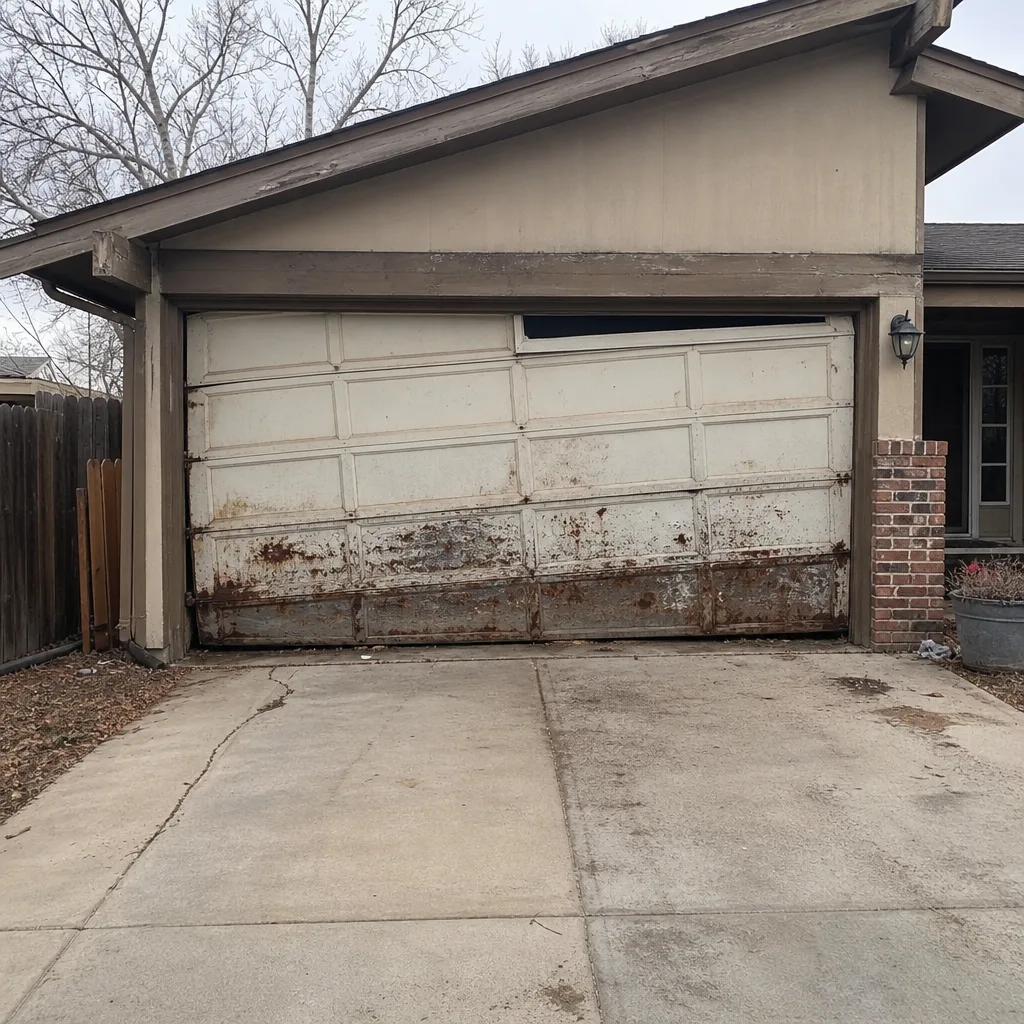 Before
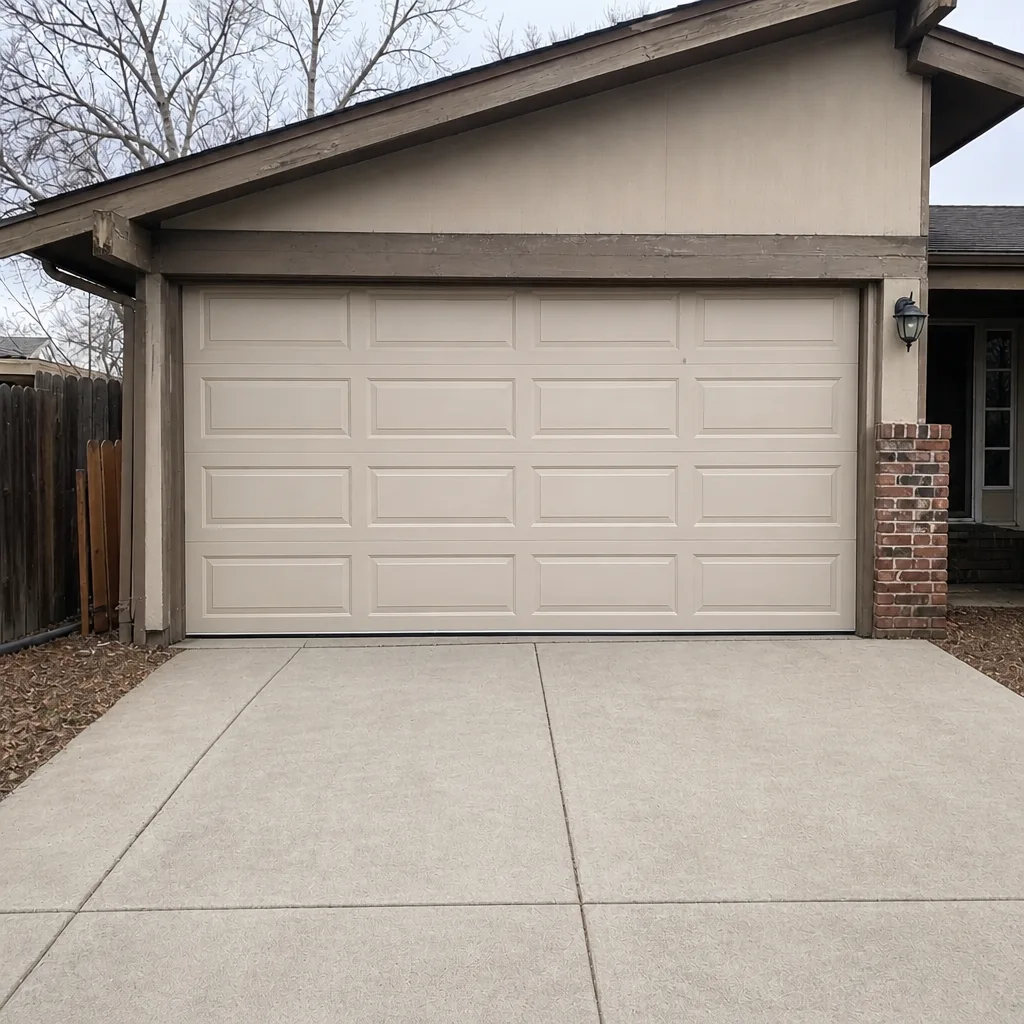 After
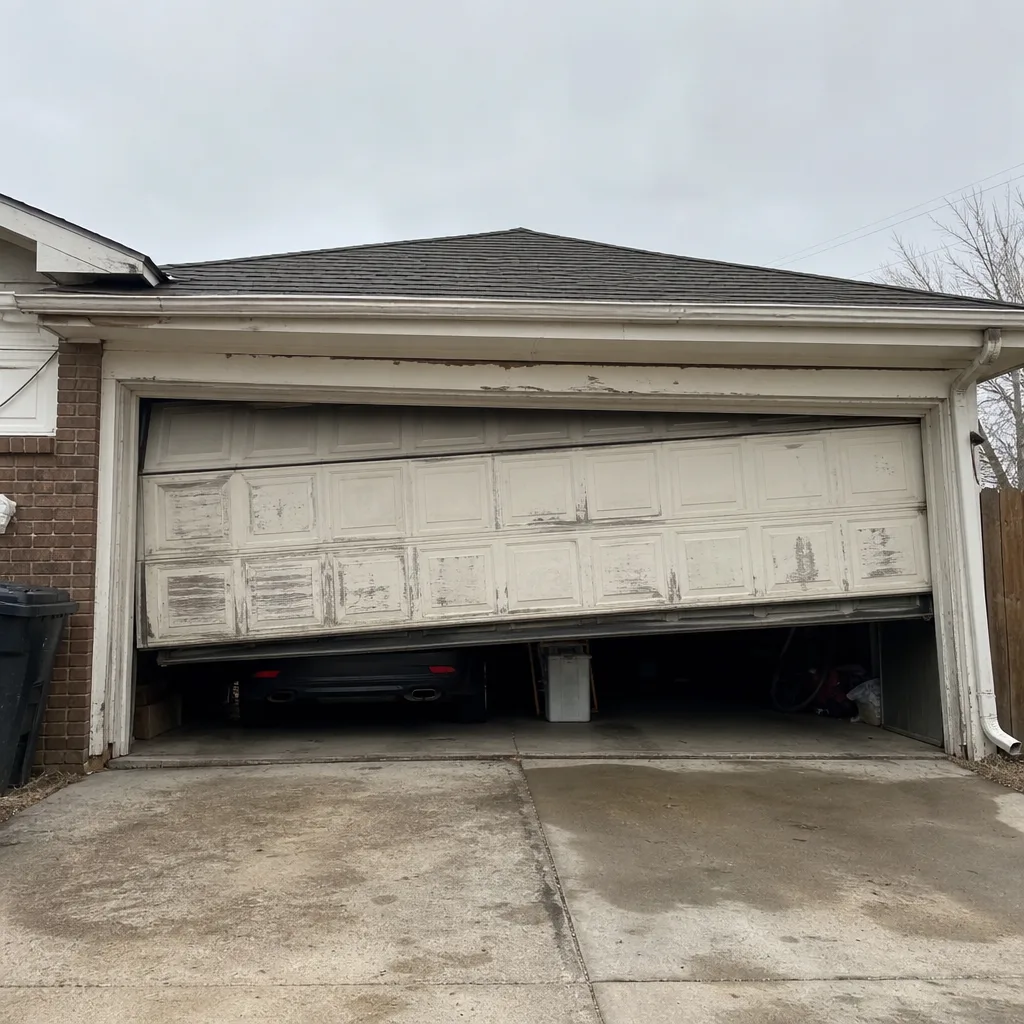 Before
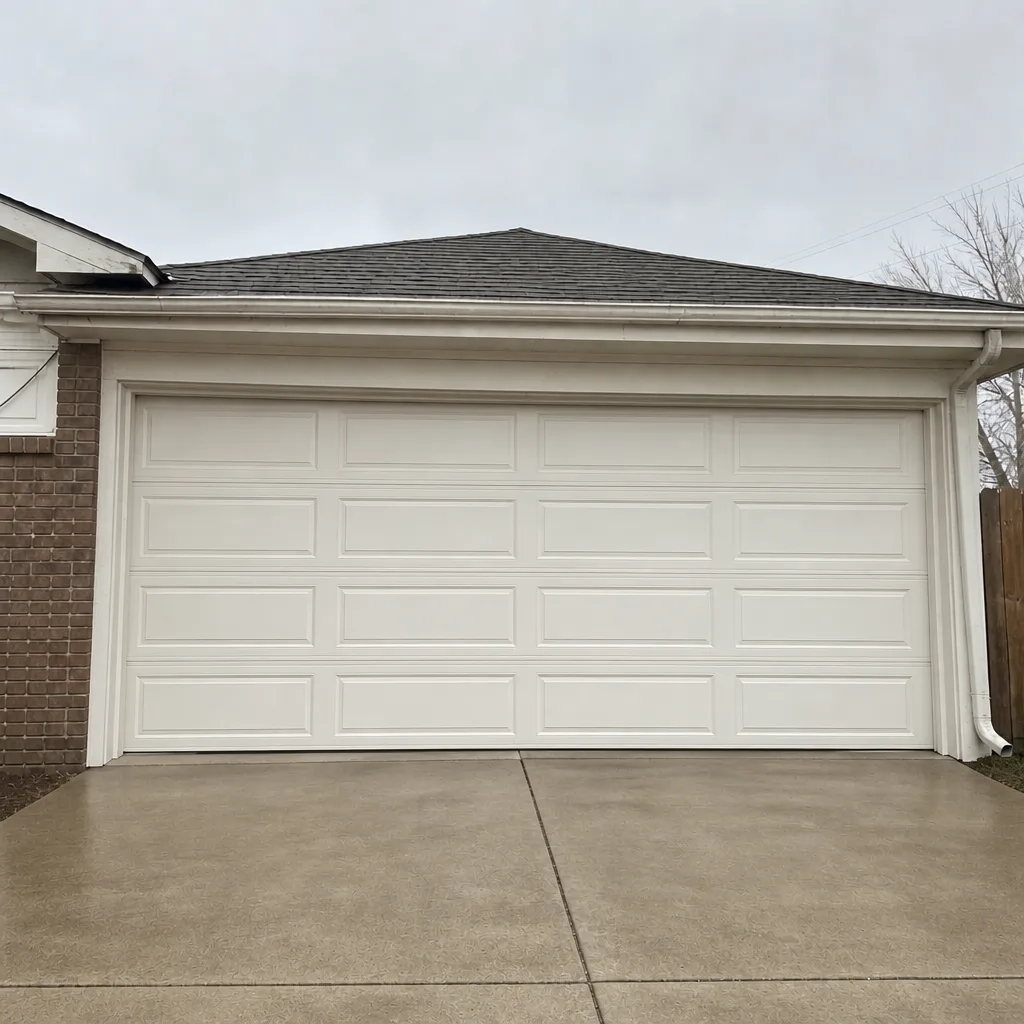 After
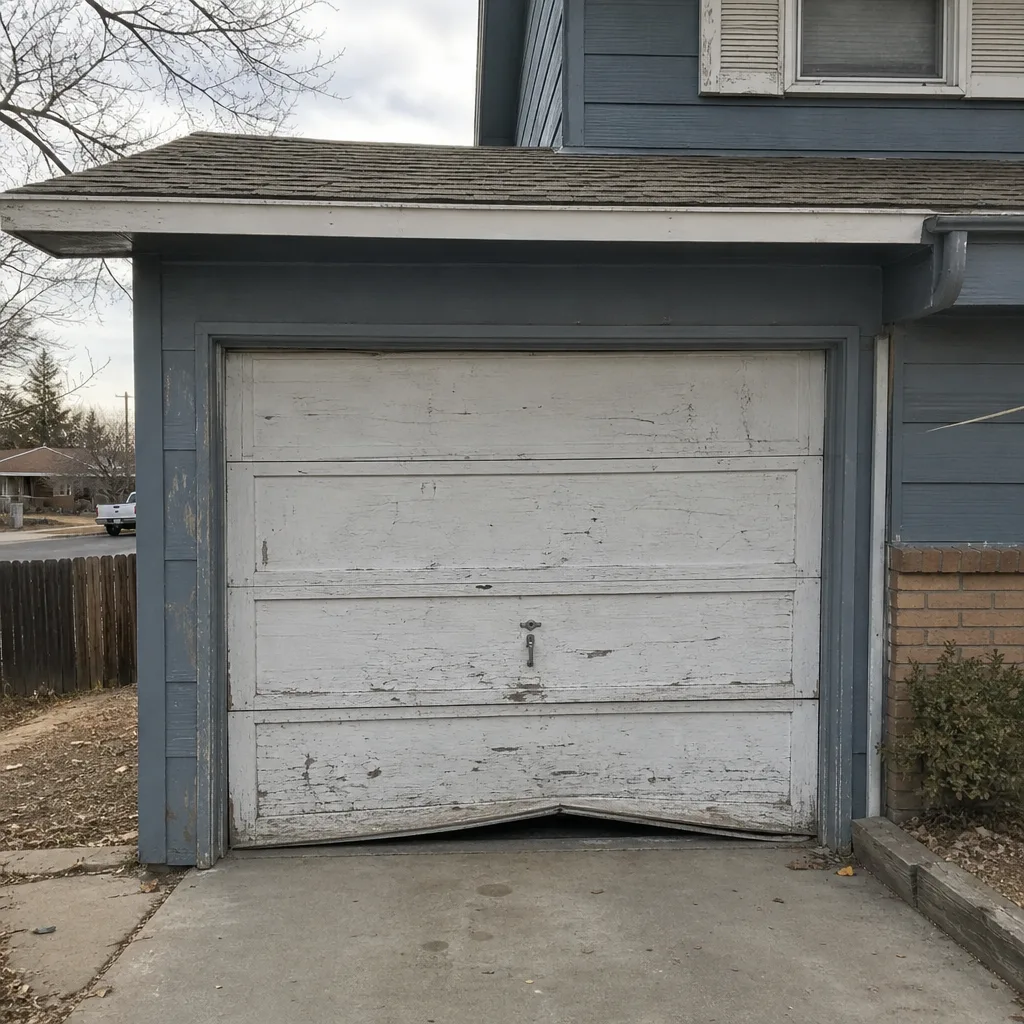 Before
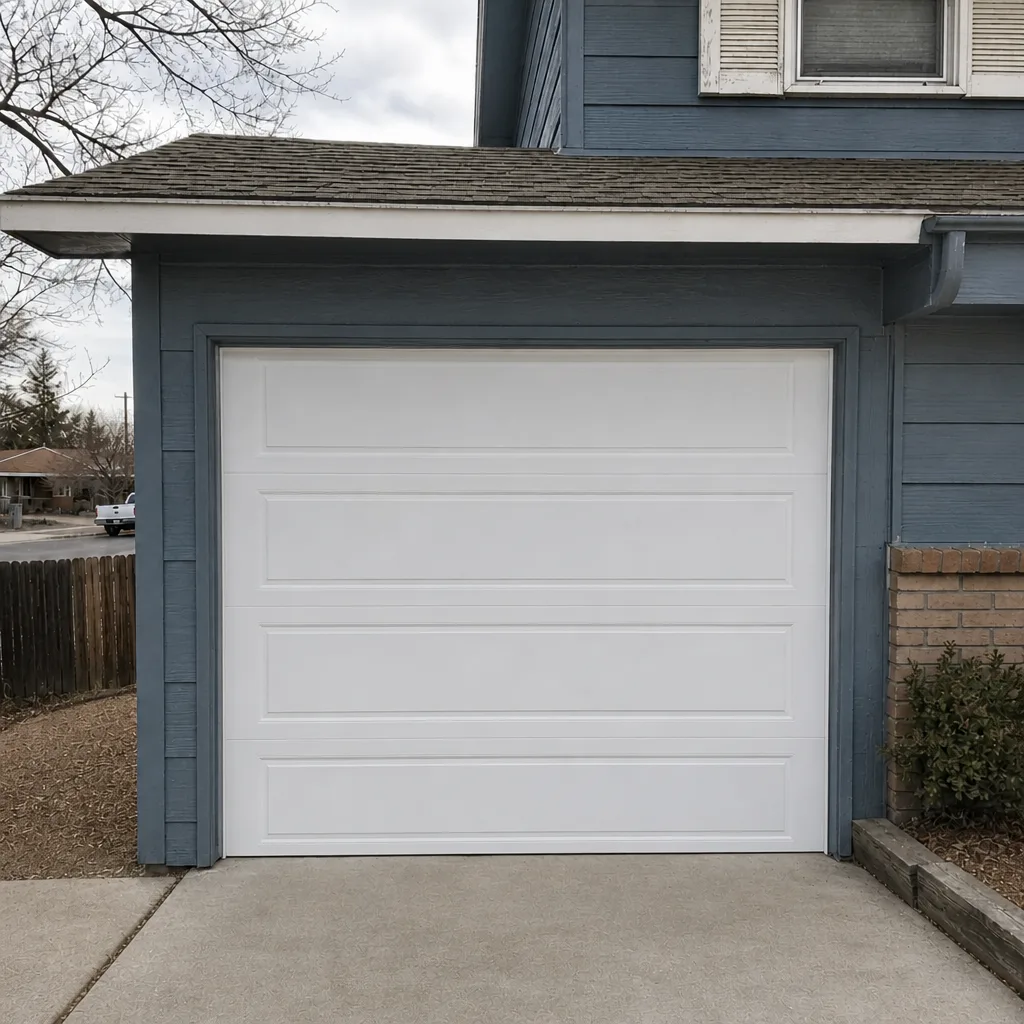 After
Common Mistakes to Avoid
- Skipping the permit on structural work. The most expensive mistake, and the most common. If the header above the opening is being modified, get the permit and get it inspected. The insurance exposure is concentrated precisely here.
- Pulling a permit for a job that doesn’t need one. Less expensive, but still a waste. Same-size replacement usually doesn’t need a permit. Ask before you pay.
- Buying a door that doesn’t meet the energy code. A bargain uninsulated door that can’t meet the minimum R-value will fail inspection. Check the R-value for your model and address before you order.
- Assuming the city and the county are the same. Brighton property straddles both jurisdictions. An address inside city limits and one in unincorporated Adams County follow different processes. Confirm which one applies before you pull anything.
- Letting the contractor skip the permit and “handle it later.” Later tends to mean a retroactive permit, a harder inspection, and a hit to the property’s paper trail. If a contractor waves off the question, that’s a warning sign.
- Not keeping the inspection record. When you sell, the title company will want it. Keep the closed permit and inspection paperwork where you can find it, not in the “sort later” pile.
- Treating a spring failure as a do-it-yourself job to save the permit question. Springs don’t need permits, and they still shouldn’t be a DIY project. High tension and stored energy make this the wrong place to test your limit.
When to call a professional
Call a professional when the work touches the door’s springs or cables, when the opener has stopped responding or behaves erratically, when a panel or track is damaged enough that the door won’t sit straight, or when the door leaves you stuck with the car inside. Call when the opening itself is being changed and you need help sorting out the permit question before you order a door. And call when you want the job done in one pass instead of chasing separate contractors for the mechanical side and the electronic side. Brighton Garage Door Repair Co offers free estimates in Brighton – call (866) 754-4750. A technician with up to 13 years of experience will look at the door, the opening, and the system, and tell you what’s actually in scope.
Frequently Asked Questions
Usually not, if the replacement is the same size and same opening with no structural change. If the work alters the header, framing, or opening dimensions, or adds a new door where none existed, a permit is typically required. Confirm with the City of Brighton’s building department or Adams County depending on your address before ordering the door.
The jurisdiction depends on your address. Homes inside Brighton city limits are typically regulated by the City of Brighton’s building department, while unincorporated Adams County addresses go through the county. Ask which one applies to your property, and call them before the work starts – they’ll tell you the process for your address. For a free estimate and help sorting out jurisdiction, call (866) 754-4750.
Colorado has adopted energy codes through the IECC family, which set a minimum insulation level for a garage door that’s part of the building’s thermal envelope. The exact minimum can vary with the address and the garage’s role, so the door’s published R-value needs to be checked against the code for your property before you buy. Ask the building department and match it to the manufacturer’s documentation.
Yes. If a later claim is connected to structural work that was never permitted or inspected, your insurer can question whether the work was done to code and may deny the related portion of a claim. The exposure is concentrated in header and opening changes, not in spring or opener work. Getting the permit and inspection record upfront is the defense.
The title company runs a search during the sale, and an open permit on the property will typically be flagged and needs to be cleared before closing. That can mean a retroactive permit, a corrective inspection, or a disclosure that affects the negotiation. Clearing it before the search happens is the smoother path.
No. Spring replacement, opener repair, cable and roller repair, and panel swaps on an existing opening are repairs to the existing assembly, not changes to the structure or opening, so the permit question doesn’t apply. Spring work is still dangerous and should always be handled by a trained technician – call (866) 754-4750 if a spring has let go.
The Bottom Line
The permit question on a garage door comes down to one thing: does the work touch the structure or the opening? Same-size replacement usually doesn’t need a permit, but the energy-code minimum for the door still applies. Structural changes, new openings, and header work do need a permit, and skipping it puts your insurance claim and your title at risk when the record catches up. A qualified contractor pulls the permit, matches the door to the code, coordinates the inspections, and hands you the closed permit when the job is done. That’s the paper trail that stands up at a sale. Brighton Garage Door Repair Co handles the door, the opener, the springs, the install, and the paperwork question in one call. Call (866) 754-4750 for a free estimate.
Written by the team at Brighton Garage Door Repair Co.