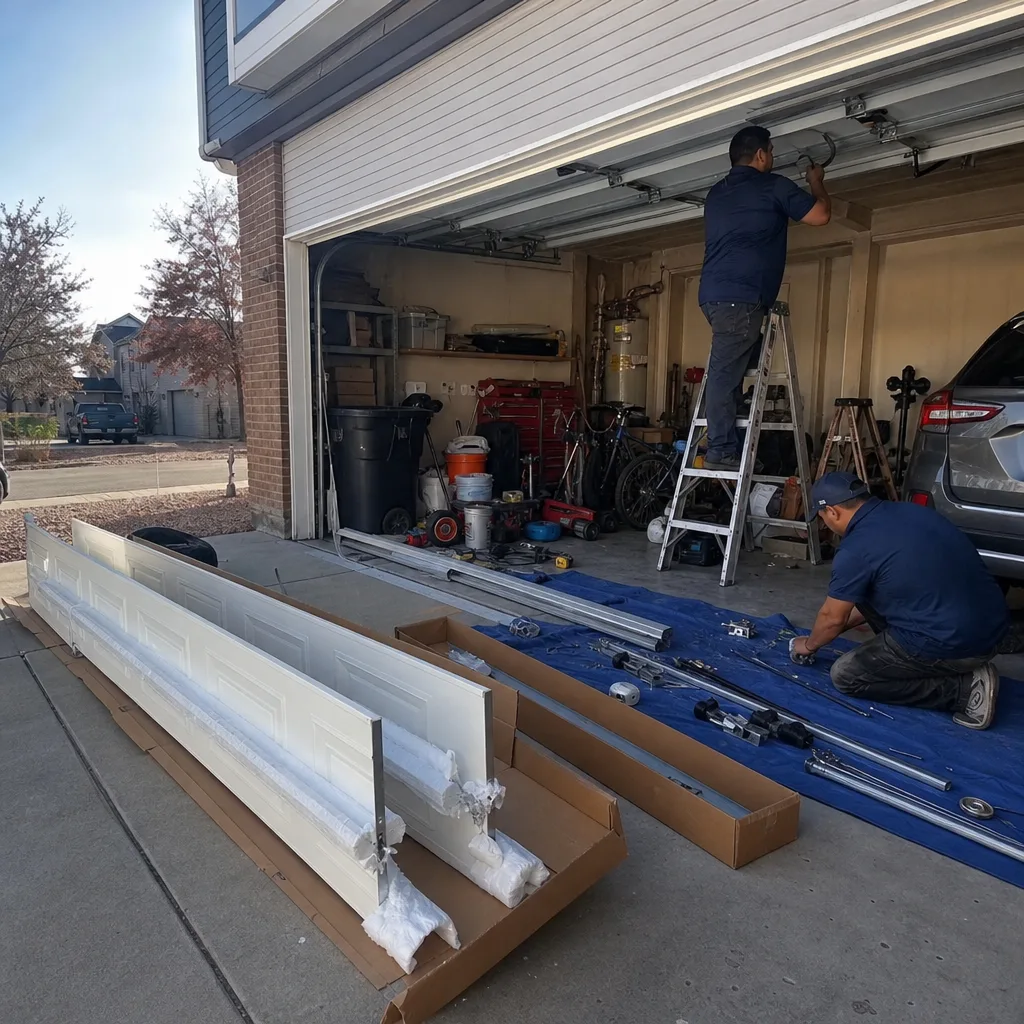
Last updated November 23, 2026
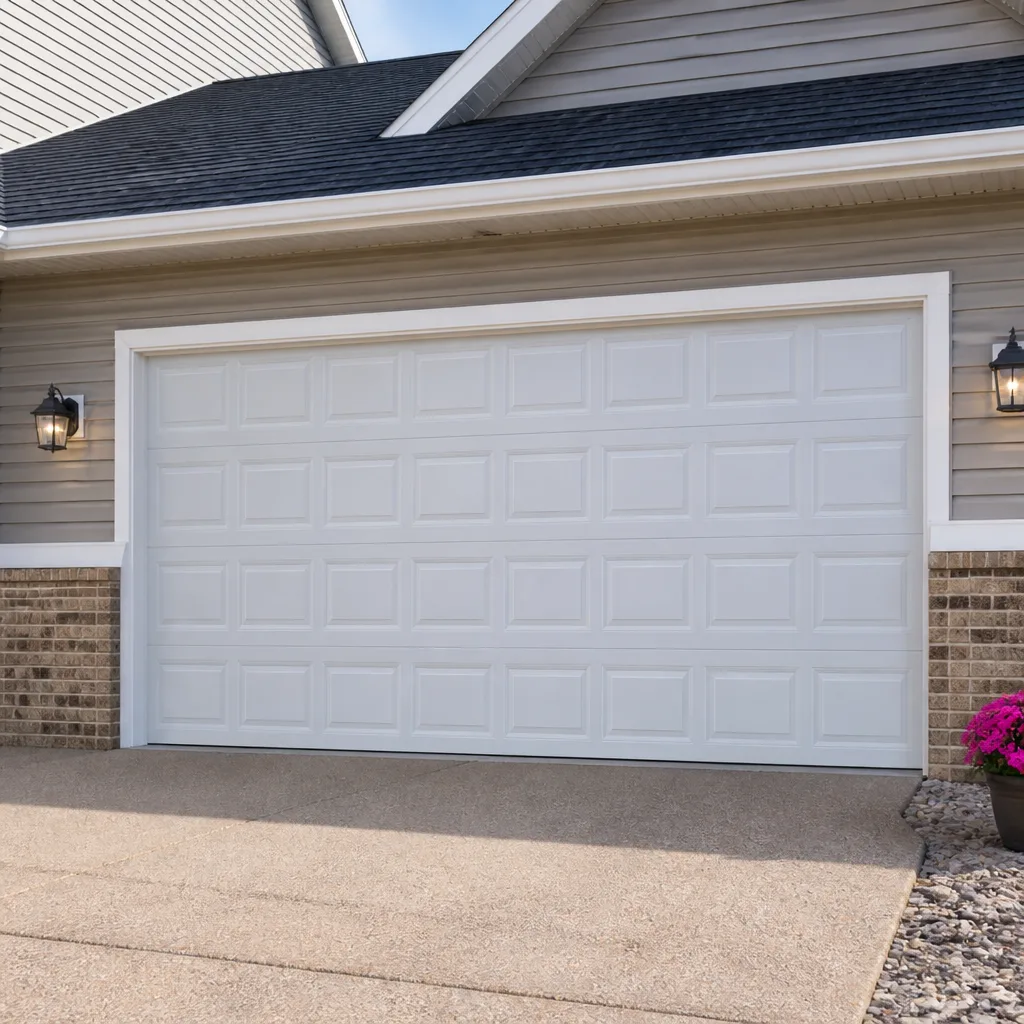 Raised-panel steel
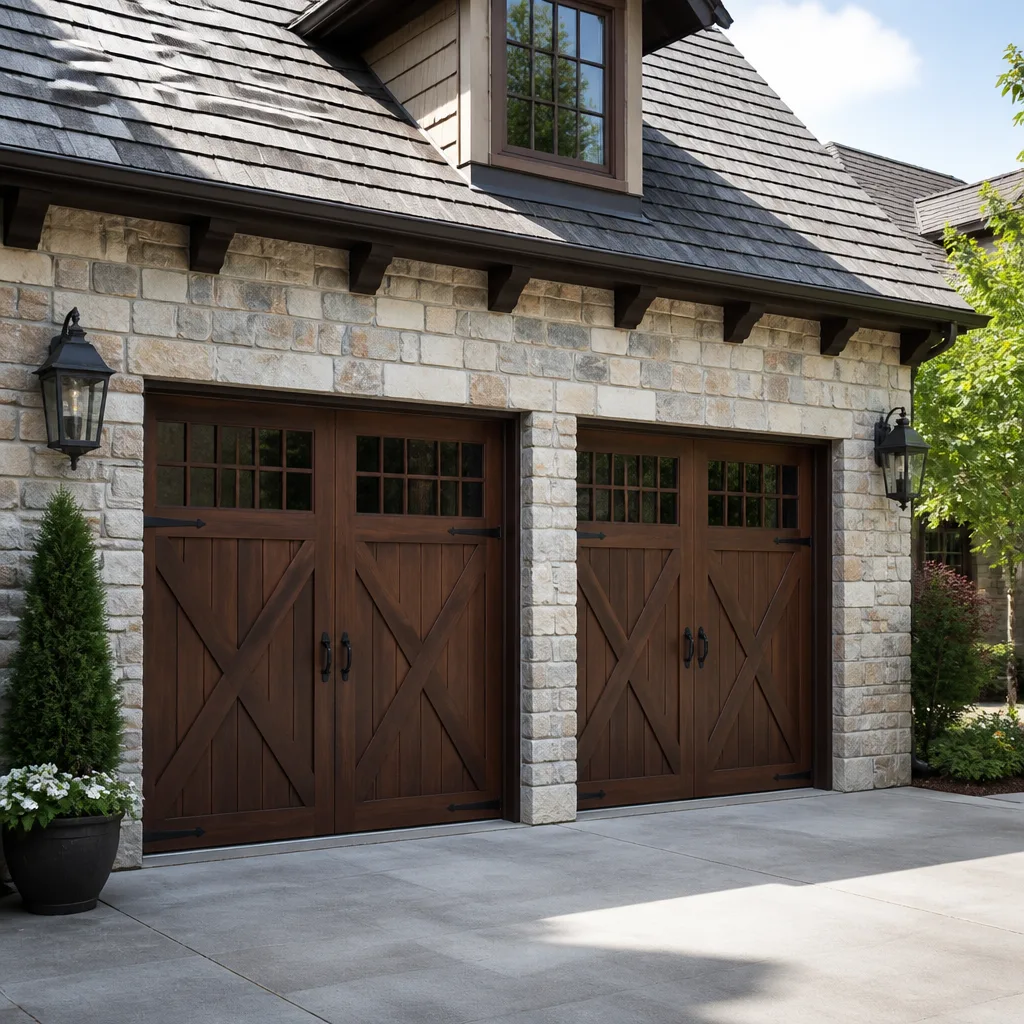 Carriage house
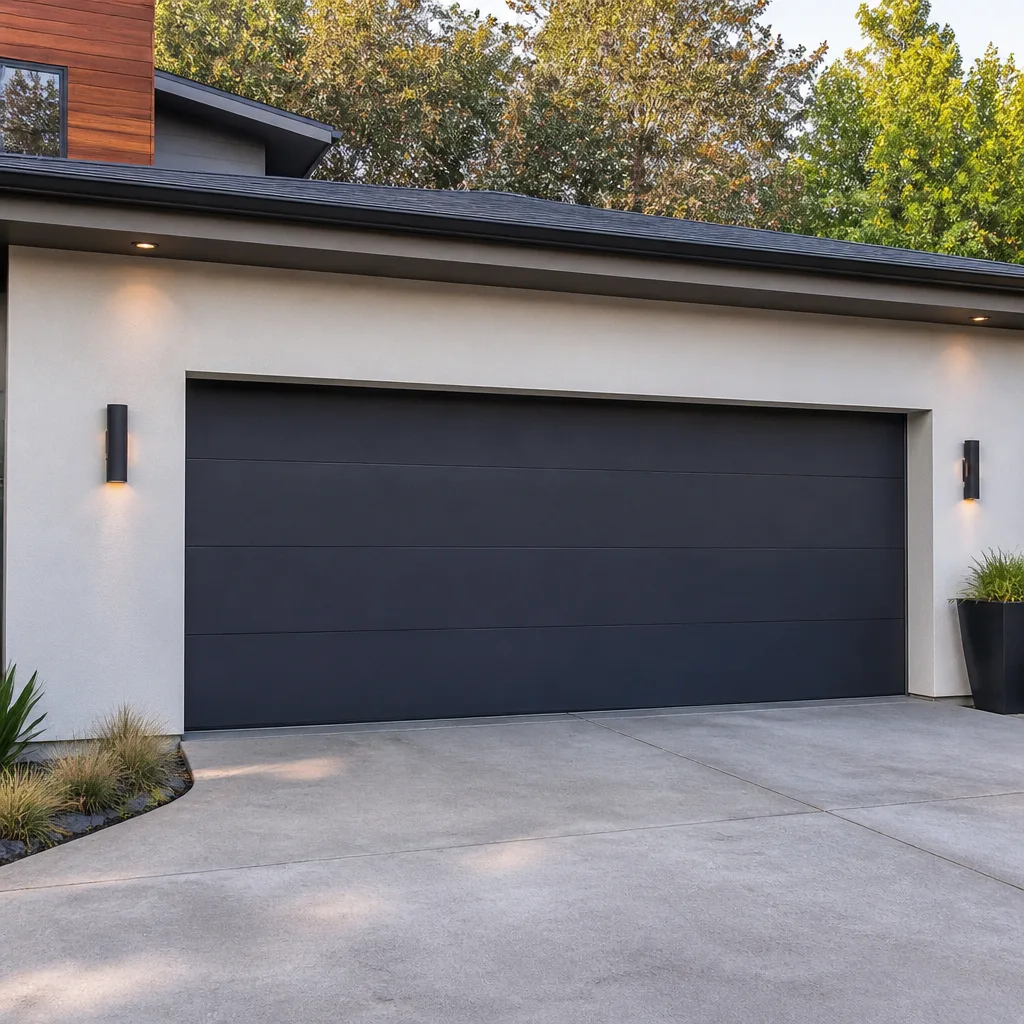 Modern flush
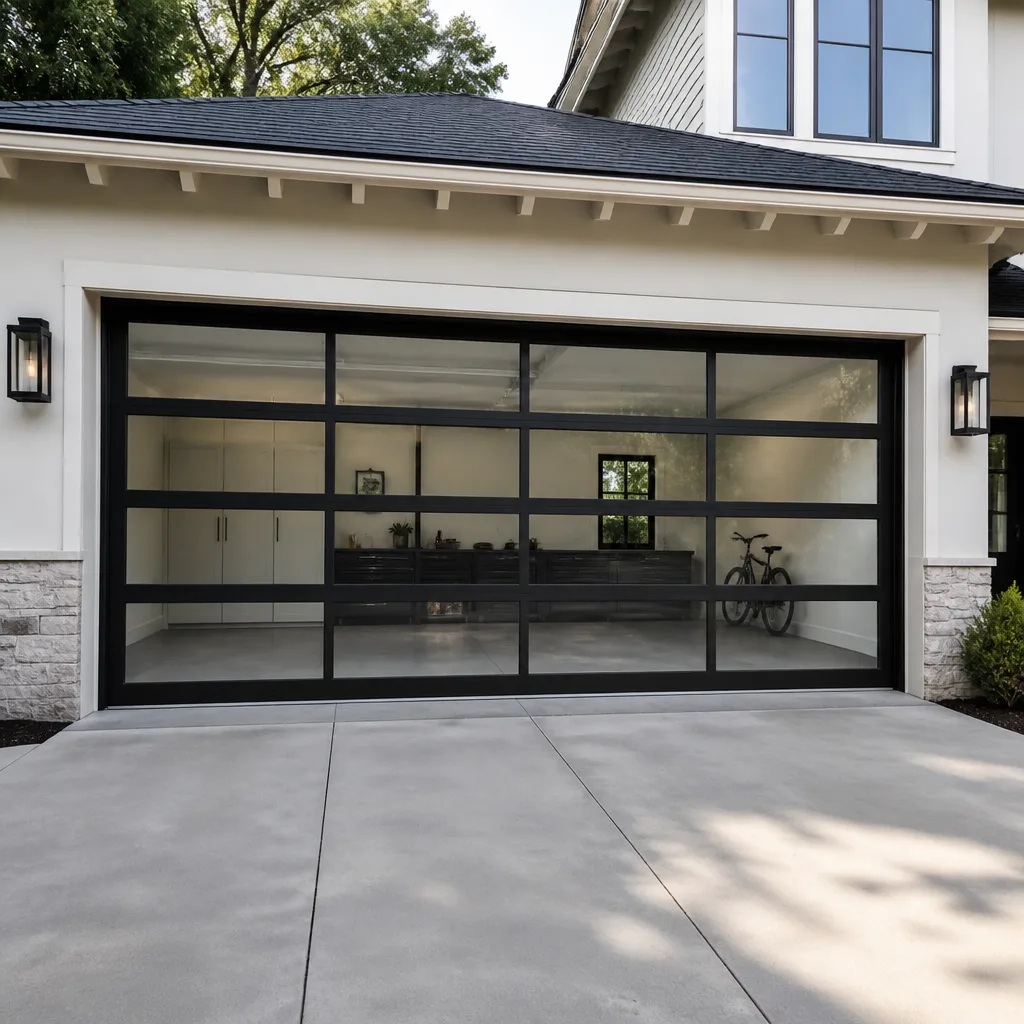 Full-view glass
 LiftMaster openers
 Chamberlain openers
Full 25-point door and opener safety check with every visit - springs, cables, rollers, tracks, and your LiftMaster or Chamberlain opener included
You get a price before we start. It does not change when the pro arrives.
Get your free estimateGarage Door Repair Maintenance Schedule: What to Do and When
The industry-standard “annual tune-up” advice was written for average climates. Brighton sits at 5,000 feet with 300 days of sun and hard freeze cycles, and a door that ages under those conditions follows a different clock than one in Phoenix or Portland. Springs don’t wear out on a calendar; they wear out on cycles. Weatherstripping doesn’t fail by the year; it fails after a summer of UV and a winter of freeze-thaw. This guide lays out a maintenance schedule built around how your door actually ages in Brighton, what to check each month, what to leave to a technician, and how to log it all so the paperwork counts when you need it.
Quick Answer
A working garage door maintenance schedule has three layers: a five-point owner check once a month, a lubrication and adjustment pass twice a year timed to Brighton’s freeze season, and a professional inspection that follows spring cycles rather than the calendar. Most doors in Brighton need that professional visit every 12 to 24 months depending on daily use, and the springs themselves should be assessed against their rated cycle count. The owner check takes under four minutes; the rest is about knowing when to schedule rather than guessing.
Styles & brands we work with
- Raised-panel steel
- Carriage house
- Modern flush
- Full-view glass
- LiftMaster openers
- Chamberlain openers
Table of Contents
- Cycle-Based vs. Calendar-Based Maintenance: Why It Matters
- The Five-Point Monthly Check That Takes Under Four Minutes
- Brighton Seasonal Tasks: Pre-Winter and Post-Freeze
- Which Lubricants Hold Up in Colorado’s Dry, UV-Intense Climate
- Springs: Understanding Wear Cycles and When to Schedule an Inspection
- Opener Care Without Voiding Your Warranty
- How to Log Maintenance for Warranty Claims and Resale
- Building Your Professional Service Calendar
Cycle-Based vs. Calendar-Based Maintenance: Why It Matters
A torsion spring is rated in cycles, not years. One cycle is one full open-and-close. Manufacturers publish a rated cycle count for every spring they make, and the spring is expected to reach that number before it fails. A door that opens twice a day accumulates roughly 730 cycles a year. A door on a busy household, or one used by a property manager with multiple tenants, can burn through cycles two or three times faster. Two identical doors on the same street in Brighton can have wildly different spring life simply because of how often they run.
Calendar-based advice ignores this. It tells you to “service the door every year” whether you open it twice a day or ten times a day. That’s why some homeowners get told their springs are fine one year and gone the next, with no clear explanation. The maintenance decision should follow usage, not the date on the wall.
Here’s how we frame it for Brighton homeowners:
- Light use (one or two cycles a day, one car, mostly home): a professional inspection every 18 to 24 months is usually reasonable.
- Moderate use (four to six cycles a day, family with two cars): plan on a professional visit every 12 to 18 months.
- Heavy use (eight or more cycles a day, rentals, home businesses): annual inspection, and watch the springs closely.
You don’t need to count cycles precisely. Estimate your daily open-and-close pattern for a week, multiply by 365, and you have the number the spring is actually living on. That single figure tells you more about when to schedule garage door spring repair than any calendar reminder.
The Five-Point Monthly Check That Takes Under Four Minutes
Most developing problems announce themselves before they become expensive. This check is short, safe, and doesn’t require tools beyond your eyes and ears. Do it once a month, same day each month, and you’ll catch the majority of issues before they turn into a stuck door.
- Listen to the door. Stand in the garage and run it. Grinding, squealing, or rattling that wasn’t there last month is a signal. A healthy door is quiet, with a soft hum from the opener and light mechanical sound from the tracks.
- Watch the balance. With the door closed and the opener disengaged (pull the red release handle), lift the door halfway by hand and let go. It should stay roughly where you placed it. If it drops, the springs are losing tension. If it rises, they’re over-tensioned. Either way, don’t adjust springs yourself – that’s a job for a technician.
- Check the safety reverse. Place a roll of paper towels or a 2×4 flat on the floor in the door’s path and close it. The door should reverse on contact. If it doesn’t, the opener’s safety system needs attention and the door shouldn’t be run unattended.
- Scan the weatherstrip and bottom seal. Look for cracks, gaps, or sections pulling away from the frame. In Brighton’s dry air, rubber and vinyl seals crack faster than most people expect.
- Eyeball the tracks and rollers. Look for bends, dents, or rollers that look worn or chipped. A slightly out-of-line track will wear rollers quickly.
That’s it. No tools, no climbing, no disassembly. Ninety percent of what goes wrong starts as something visible or audible on this list.
Brighton Seasonal Tasks: Pre-Winter and Post-Freeze
Brighton’s climate does two things to garage doors that milder climates don’t. First, the sun is intense. At 5,000 feet, UV exposure is significantly stronger than at sea level, and it degrades rubber seals, plastic hinges, and painted steel panels faster. Second, the hard freeze cycle – warm days, cold nights, repeated freezing and thawing – works the springs and the weatherstripping harder than a steady cold would. These two factors set the seasonal schedule.
Pre-Winter Tasks (Late Fall)
- Inspect the bottom seal and side weatherstripping. This is the single most important pre-winter check. A cracked seal lets cold air, snow melt, and pests into the garage all winter, and it puts extra load on the door as it tries to seal against a damaged edge.
- Apply lubricant to hinges, rollers, and the torsion bar bearings. Cold weather thickens grease; a fresh application in fall keeps parts moving smoothly through the freeze.
- Check the door’s balance one more time. A door that was marginal in summer will strain the opener in winter. Better to catch it before the first hard freeze.
- Clear the tracks of debris. Leaves, grit, and small stones accumulate through fall; a clean track is less likely to bind when temperatures drop.
Post-Freeze Tasks (Early Spring, After the Last Thaw)
- Re-check spring tension. After a season of hard freeze-thaw cycles, springs can lose tension or develop small stress fractures. This is not a job to attempt by hand – call a professional to assess spring condition.
- Inspect panels and hardware for frost damage. Repeated freeze-thaw can loosen bolts and pop panel seams. A quick visual pass catches most of it.
- Check the door’s alignment in the tracks. If the door was binding against ice at the bottom seal, it may have shifted slightly off line.
- Replace any cracked weatherstripping. The freeze almost always finishes off seals that were starting to fail in the fall.
Twice a year, these two windows (late fall and early spring) do more for door longevity in Brighton than any other single habit.
Which Lubricants Hold Up in Colorado’s Dry, UV-Intense Climate
Not all garage door lubricants are equal, and Colorado’s climate punishes the wrong choices. The sun and dry air break down petroleum-based greases and some silicone sprays faster here, and what worked fine on a door in a humid climate turns gummy or disappears within months at altitude.
Here’s what holds up and what doesn’t:
- White lithium grease (spray or tube): works well on hinges and torsion bearings. Holds up to cold and doesn’t attract as much grit. Good all-purpose choice for Brighton.
- Silicone spray: ideal for weatherstripping and rubber seals, but too thin for metal-on-metal contact points. Won’t last as long on hinges and rollers.
- PTFE (Teflon) spray: excellent for tracks and rollers. Dry film, doesn’t collect dust, and holds up better than oil in the sun. Pricey but efficient.
- General household oil or WD-40 (the standard formula): avoid on garage doors. It thins too fast, attracts dust, and can degrade rubber seals. WD-40’s standard formula is a solvent, not a long-term lubricant, and it strips protective coatings.
- Heavy chassis grease: too thick for cold Colorado mornings. It turns stiff and strains the opener.
The right approach: white lithium on hinges and bearings, PTFE or a quality dry lubricant on tracks and rollers, silicone on rubber seals only. Two or three products, used consistently, outlast a cabinet full of whatever was on sale. If you’d rather not stock three products, ask us during a service visit what your specific door needs – Clopay and Amarr panels and hardware often have their own manufacturer recommendations, and matching those to the climate matters.
Springs: Understanding Wear Cycles and When to Schedule an Inspection
Springs are the part of the door most likely to fail suddenly and most dangerous to touch. They’re also the part where cycle-based scheduling pays off most clearly, because springs don’t last forever – they last a specific number of cycles, and that number is published for every spring on the market.
How to estimate where your springs are in their life:
- Count your door’s daily cycles. One cycle per open-and-close. A typical family in Brighton: two cars leaving and returning is four cycles, plus a couple of entry-exit runs, so five or six cycles per day.
- Multiply by 365. That gives you cycles per year.
- Compare to the rated cycle count. Standard torsion springs are rated in the neighborhood of 10,000 cycles for common sizes, with high-cycle springs available at higher counts. Ask a technician what your specific springs are rated for.
- Calculate the percentage of life used. A door at five cycles a day hits roughly 1,825 cycles a year. On a 10,000-cycle spring, that’s about five and a half years of life. A door at ten cycles a day gets half that.
Two life events accelerate spring wear regardless of cycle count: cold-weather tension loss from freeze-thaw cycles, and rust from moisture – which is why a pre-winter tension check matters in Brighton.
A safety note worth repeating. Torsion springs are under extreme tension. Adjusting, removing, or installing them by hand is the single most dangerous thing a homeowner can attempt on a garage door. The tools and winding procedures are specific, and the failure mode is severe injury. This is work for a trained technician with the right equipment – our garage door spring repair service exists precisely because this job can’t be done safely with what’s in a typical garage. If you hear a loud snap from the garage and the door won’t lift, stop using the door and call a professional.
Opener Care Without Voiding Your Warranty
The opener is the electronic half of the system, and it has its own maintenance rhythm. Most of it is simple, but a few owner actions can actually void a manufacturer warranty, which is why knowing the line between “safe to do yourself” and “leave it to a technician” matters.
Safe monthly/seasonal tasks:
- Test the safety reverse system monthly (paper towel roll in the path).
- Check the photo-eye sensors at the bottom of the tracks: wipe them clean, make sure they’re aligned, and confirm the indicator lights are steady.
- Check the wall control and any remotes; replace remote batteries when range drops.
- Listen for strain: a groaning opener is a signal. A grinding opener is closer to failure.
Tasks that belong to a technician:
- Adjusting the force limits or travel limits on the opener. Modern openers have software that can be damaged by incorrect adjustments.
- Replacing the drive gear, the logic board, or the motor capacitor.
- Any work that requires opening the housing. That’s where most warranties get voided.
Brand matters here. LiftMaster, Chamberlain, Genie, and Craftsman openers each have their own quirks, and diagnosing an opener issue without knowing the specific system is guesswork. It’s the kind of job that calls for garage door opener repair rather than a generalist, and it’s why we stay factory-familiar with all the major brands – Brighton Garage Door Repair Co technicians arrive knowing the system instead of learning it in your garage.
How to Log Maintenance for Warranty Claims and Resale
A maintenance log is worth making. Not because the log itself extends the door’s life, but because paper documentation is what a warranty claim or a home sale actually asks for. Manufacturers require proof of proper care when a warranty claim is disputed; buyers ask for maintenance records when they’re evaluating a house.
What to log:
- Date of each service visit and who performed the work.
- What was done: spring replacement, opener adjustment, weatherstrip replacement, lubrication, safety reverse test results.
- Parts replaced and any brand or part number on the invoice.
- Owner checks you performed, with the date and any issue you noticed. A simple note (“safety reverse passed”, “noticed slight grinding”) is enough.
- Invoices and written quotes filed separately, ideally scanned or photographed and backed up.
What the log does for you:
- Warranty support: if a spring fails before its rated cycle count, a documented service history is your evidence that the door was properly maintained.
- Informed service calls: a technician who can see what was done and when will waste less time diagnosing.
- Resale value: when a Brighton home goes on the market, a clean maintenance record is a small but real reassurance to a buyer.
- Pattern spotting: if you log balance checks and see the door starting to drift in the same two months each year, you’ve identified a seasonal pattern and can time service around it.
Five minutes of typing twice a year. The paper it produces is worth keeping.
Building Your Professional Service Calendar
Here’s the schedule we recommend for most Brighton homes, adjusted for your usage and the seasonal pattern above. This is a starting point; your specific door and cycle count may move things sooner or later.
- Monthly: five-point owner check. Under four minutes.
- Late fall (October or November): pre-winter inspection – weatherstrip, bottom seal, lubrication, balance check, track debris. If anything is worn past use, address it before the freeze.
- Early spring (March or April): post-freeze inspection – spring tension check, hardware scan, alignment check, weatherstrip replacement if needed.
- Annually or every 18-24 months depending on usage: professional inspection and full adjustment. This is the visit that catches what owner checks miss: spring cycle remaining, opener force settings, roller and hinge wear.
- At the first sign of spring fatigue, unusual opener behavior, or visible weatherstrip damage: don’t wait for the calendar. Call us and get it checked.
What does a professional visit actually cover? At Brighton Garage Door Repair Co, our technicians have up to 13 years of experience with the major brands – LiftMaster, Genie, Chamberlain, Clopay, Amarr, Wayne Dalton, Craftsman, and Raynor – and they cover the full system, not just the door. Springs, tracks, panels, openers, sensors, remotes. If the door is beyond pending repairs and needs replacement, we handle garage door repair through new installation, so you’re not chasing a second contractor for the mechanical and electronic halves separately. Free estimates, and the price is agreed before any work begins.
Common Mistakes to Avoid
- Following calendar advice instead of cycle counts. A “once-a-year tune-up” is fine for some doors and not nearly enough for others. Count your daily cycles and schedule accordingly.
- Using WD-40 as a lubricant. It’s a solvent, not a long-term lubricant, and it strips the protective coating off hinges and tracks. In Colorado’s dry air, the parts then rust and squeal faster.
- Adjusting torsion springs by hand. This is the single biggest safety mistake a homeowner can make on a garage door. The tools and procedures are specific; the failure mode is severe. Never do this yourself.
- Skipping the fall weatherstrip inspection. In Brighton’s freeze-thaw cycle, a cracked bottom seal lets in cold air, meltwater, and pests all winter, and strains the opener every cycle.
- Ignoring the safety reverse test. A door that doesn’t reverse on contact is a genuine hazard, especially with children or pets in the house. Test it monthly.
- Not logging service. Five minutes twice a year produces a record that supports warranty claims and resale. Without it, you have a story instead of documentation.
- Adjusting opener force or travel limits yourself. Modern openers have software that can be damaged by incorrect adjustments, and the change is often the symptom of an underlying balance or spring problem.
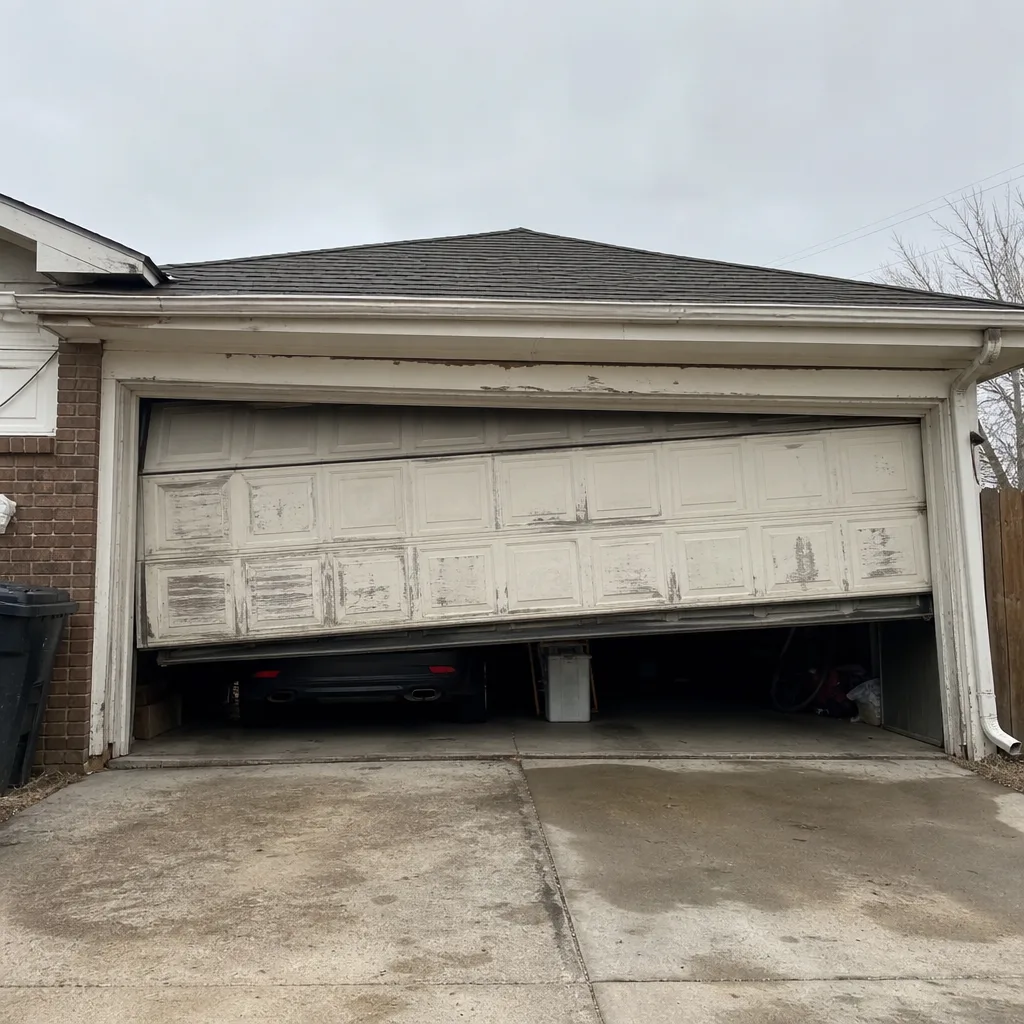
See the difference
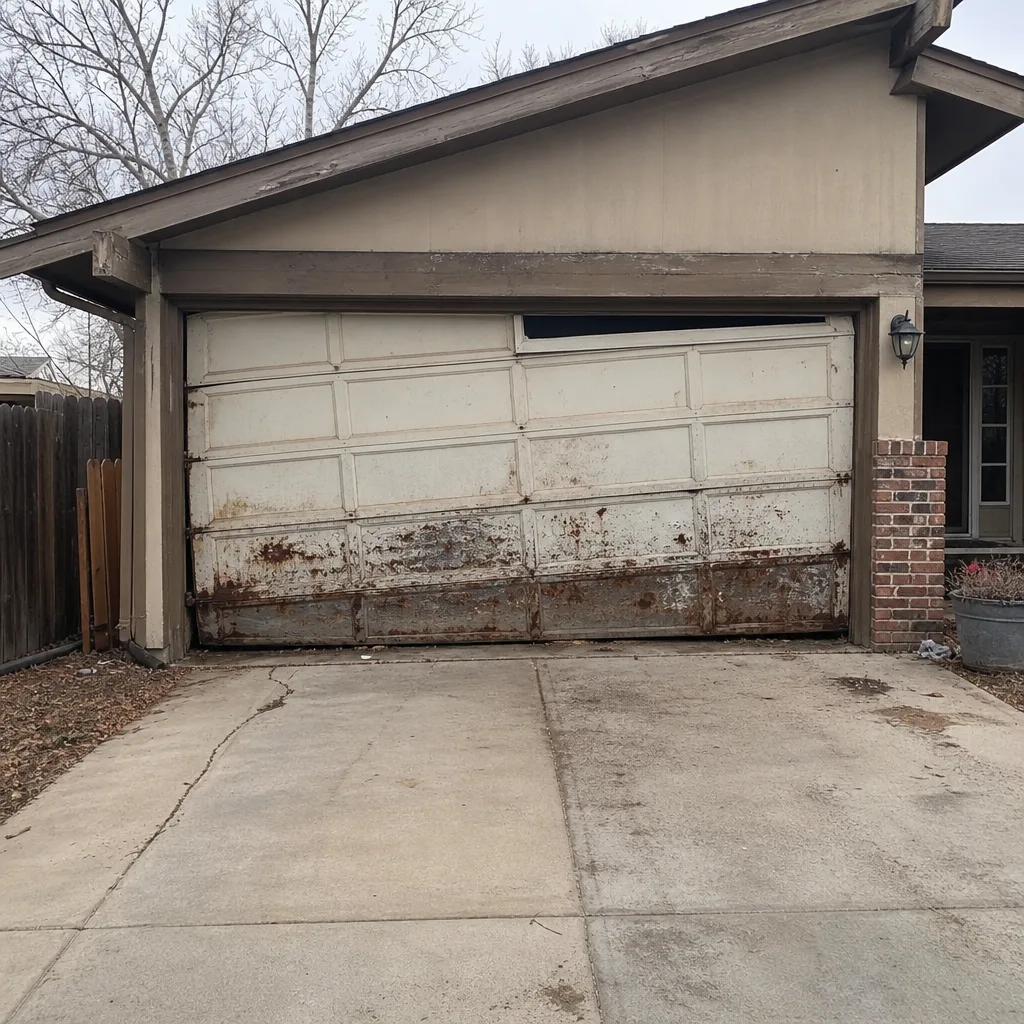 Before
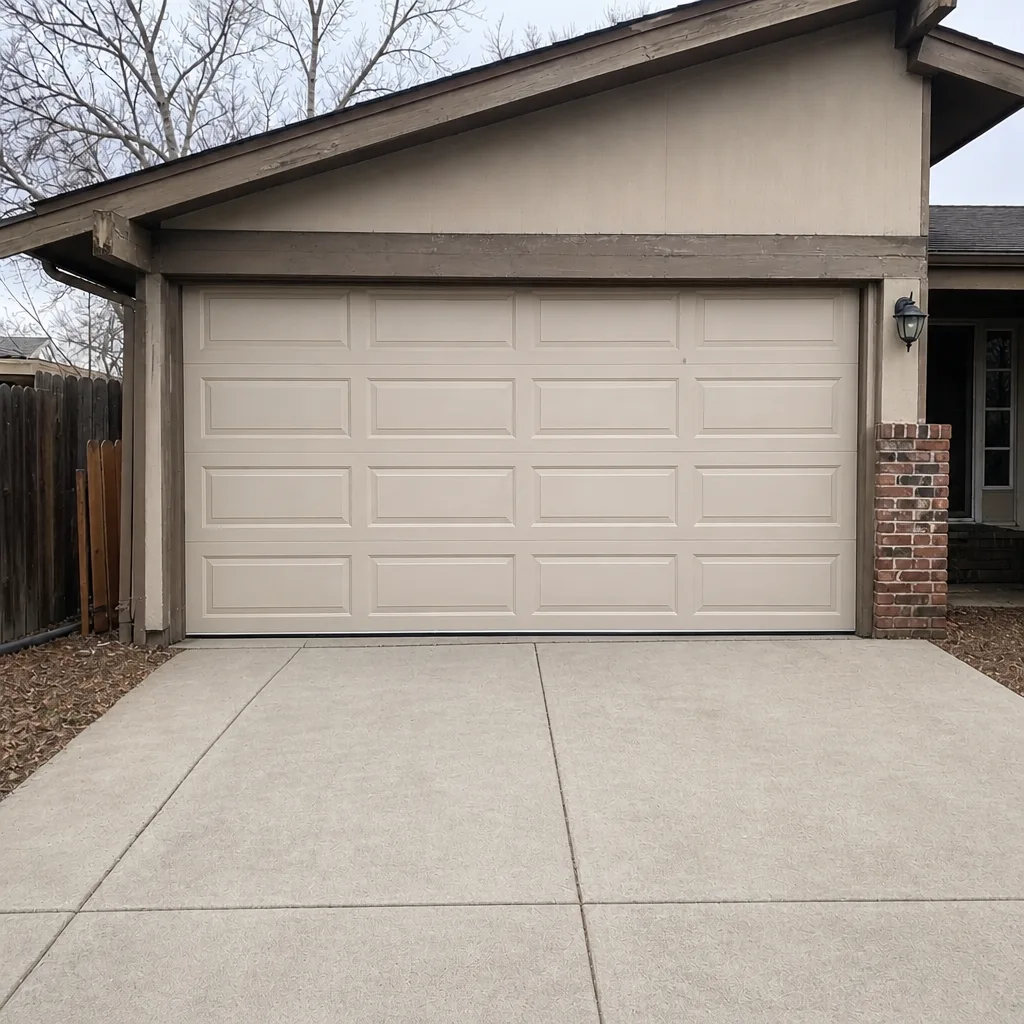 After
 Before
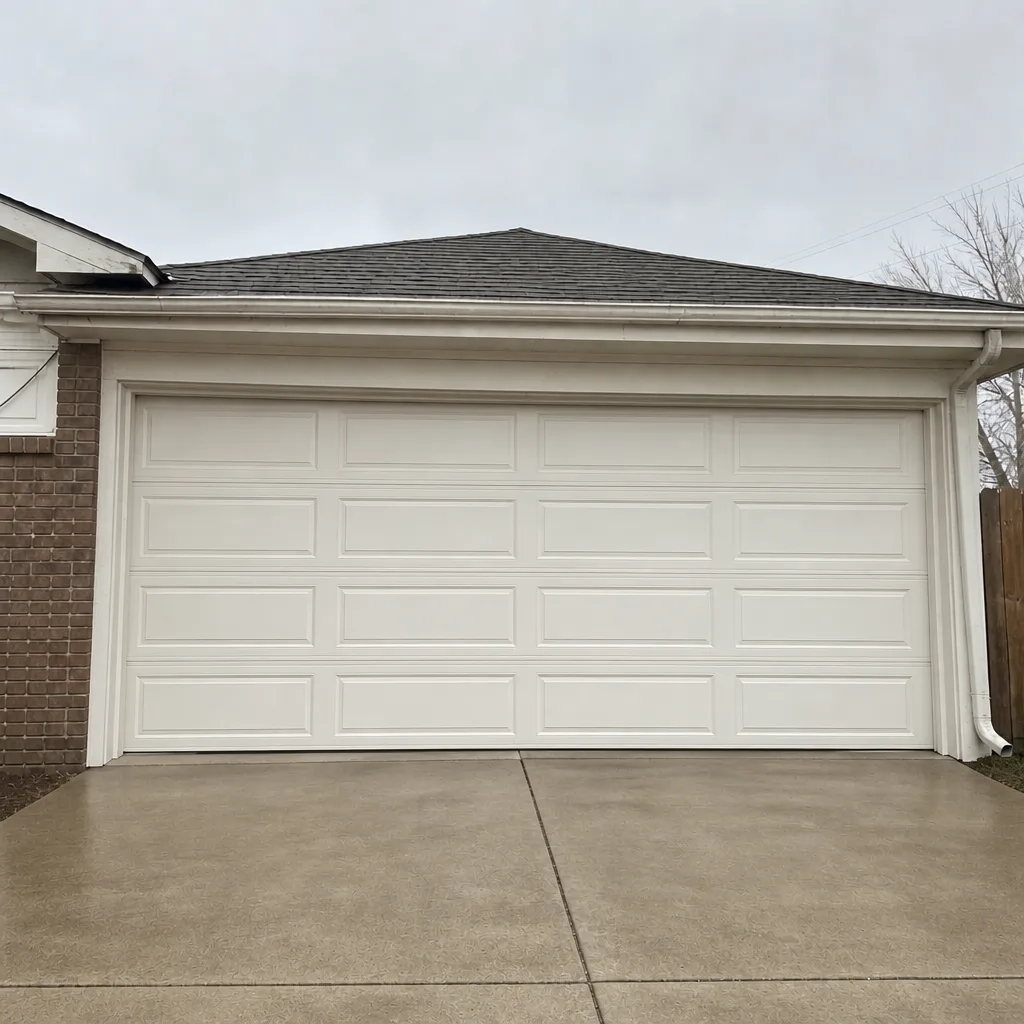 After
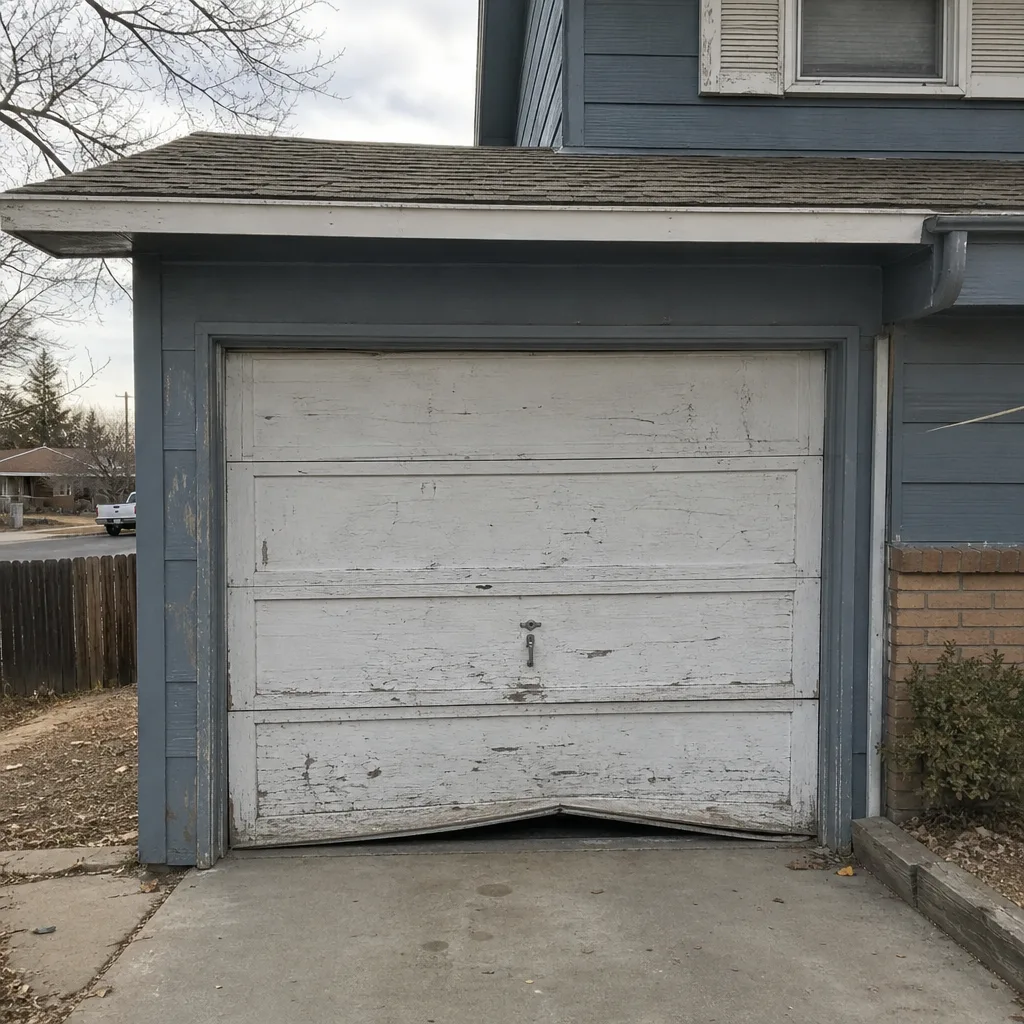 Before
 After
When to Call a Professional
Some things are worth handling yourself. Others have a failure mode you don’t want to meet. Call us when:
- The door won’t lift, won’t close, or is stuck open or closed.
- You hear a loud snap from the garage and the door is suddenly very heavy or won’t lift at all. That’s a spring failure, and the door should not be run until it’s inspected.
- The door is out of balance – it drops, rises, or feels much heavier than usual when lifted by hand.
- The opener grinds, groans, or stops mid-travel. That’s a call for a technician, not a remotes-check.
- The photo-eye sensors won’t stay aligned, or the safety reverse test fails.
- The door is visibly bent, off its track, or has a panel that’s separating.
- A damage assessment points toward spring or full-system repair that needs proper tools and training.
Brighton Garage Door Repair Co offers free estimates in Brighton – call (866) 754-4750. Emergency service is available when the door has left you stuck or secured in the wrong position.
Frequently Asked Questions
For most Brighton homes, a professional inspection every 12 to 24 months, depending on daily use, plus a five-point owner check every month and two seasonal inspections (fall and spring) timed to the freeze cycle. Doors opened more than eight times a day should get an annual professional visit. Call (866) 754-4750 for a free estimate and a schedule matched to your door.
By cycle. Springs are rated for a specific number of open-and-close cycles, and daily usage determines how quickly that count reaches its limit. A door opened twice a day and one opened ten times a day, on the same spring, will have very different lifetimes. Call (866) 754-4750 to have yours assessed against its rated count.
Yes, you can lubricate hinges, rollers, and bearings with white lithium grease and treat rubber seals with silicone spray. That’s safe and useful. What you should not do is adjust, remove, or install torsion springs, or open the opener housing – those are professional jobs. Call (866) 754-4750 if you’re not sure what a part needs.
Colorado’s hard freeze-thaw cycles put stress on springs, seals, and hardware that milder climates don’t. Cold thickens grease, contracts metal, and stiffens seals. A door that was borderline in summer often fails the first hard freeze. A pre-winter inspection and a post-freeze check are the practical answer. Call (866) 754-4750 to schedule one.
White lithium grease on hinges and bearings, PTFE or a quality dry lubricant on tracks and rollers, and silicone spray on rubber seals. Avoid standard WD-40 (a solvent, not a long-term lubricant) and heavy chassis grease (too thick for cold mornings). Call (866) 754-4750 if you want brand-specific recommendations for a LiftMaster, Chamberlain, Genie, Clopay, or Amarr system.
Not required, but worth keeping. It supports warranty claims if a part fails early, informs future service visits, and gives a buyer a documented record when you sell the home. A simple note of dates, work done, and parts replaced is enough. Call (866) 754-4750 if you’d like our technician to leave a service record for your files.
The Bottom Line
A maintenance schedule that actually works is built on how the door ages, not on a calendar someone published. Springs run on cycles, seals run on UV and freeze-thaw, and Brighton’s high-altitude climate pushes both harder than the national average. The five-point monthly check catches most developing problems in under four minutes. The fall and spring inspections cover the seasonal wear that monthly checks can miss. The professional visit – timed to your usage – handles the springs, force settings, and electronic diagnosis that shouldn’t be a home project. Log it all, and the paperwork pays you back when you need it.
Whatever brand is on your door – LiftMaster, Chamberlain, Genie, Clopay, Amarr, Wayne Dalton, Craftsman, Raynor – from a broken spring to a full new installation, one call handles it.
Call (866) 754-4750 for a free estimate. Our technicians have up to 13 years of experience, the price is quoted before work begins, and emergency service is available when your door leaves you stuck.
Written by the team at Brighton Garage Door Repair Co.