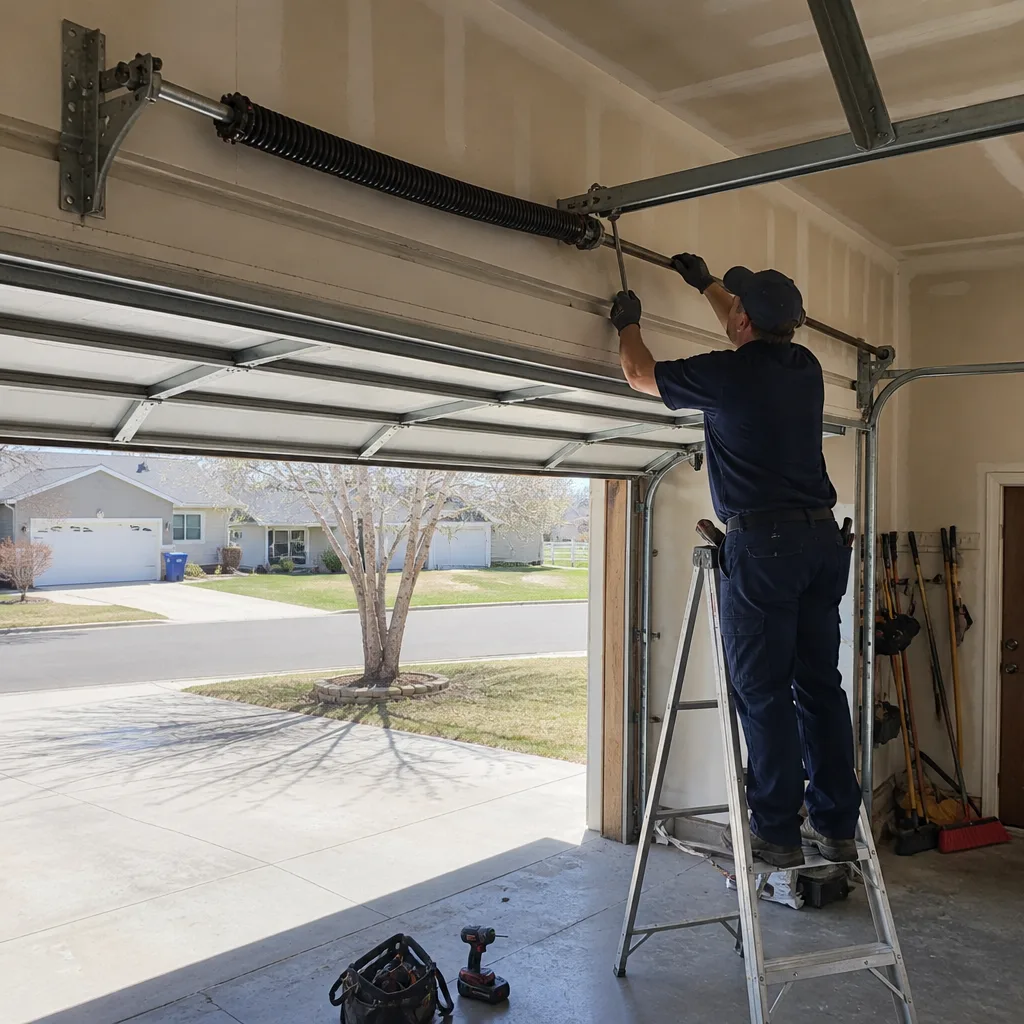
Last updated November 23, 2026
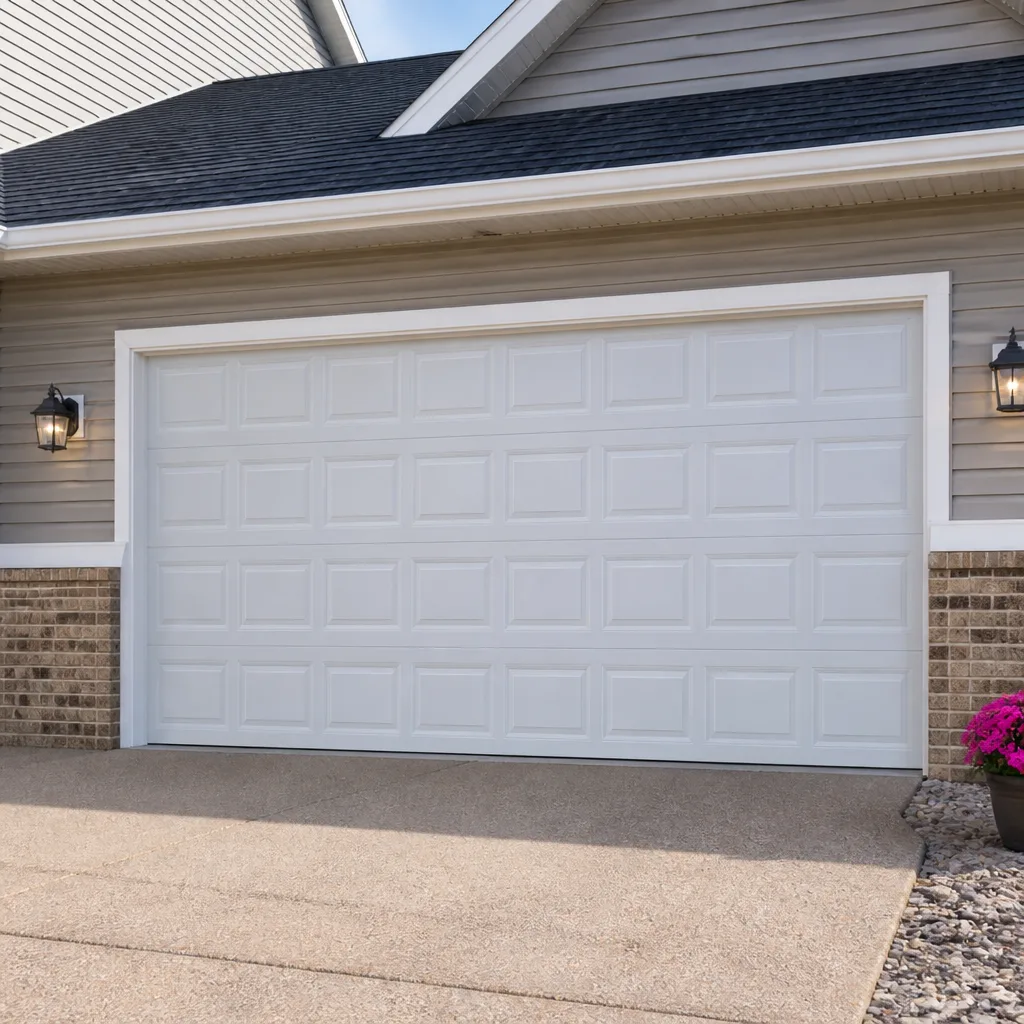 Raised-panel steel
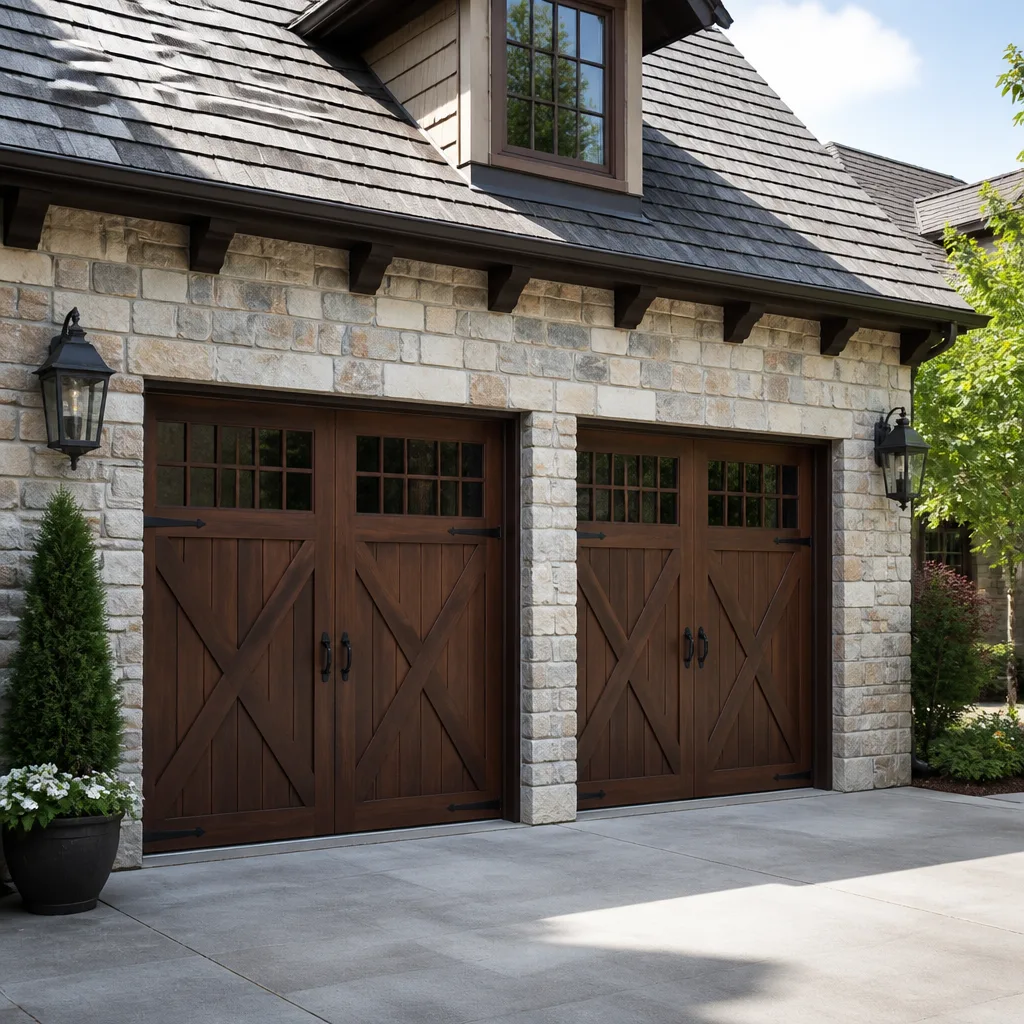 Carriage house
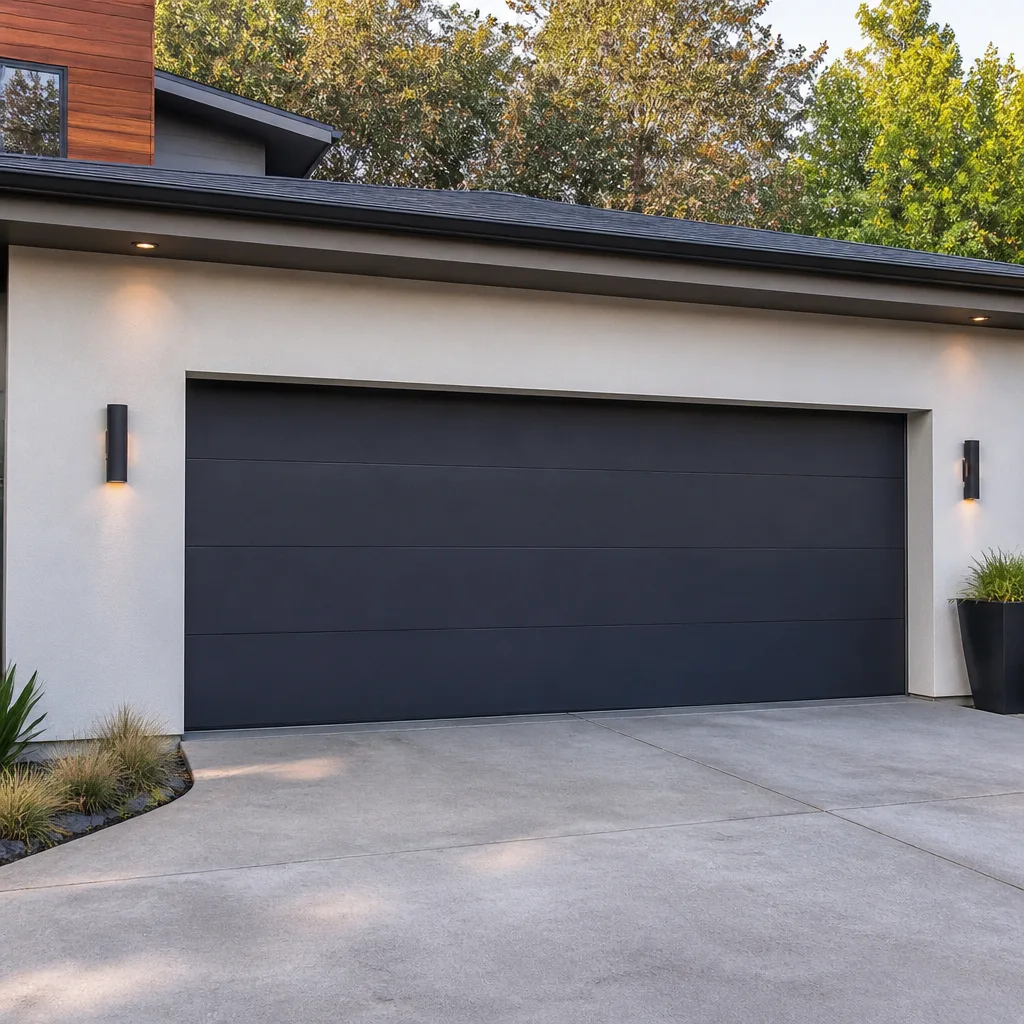 Modern flush
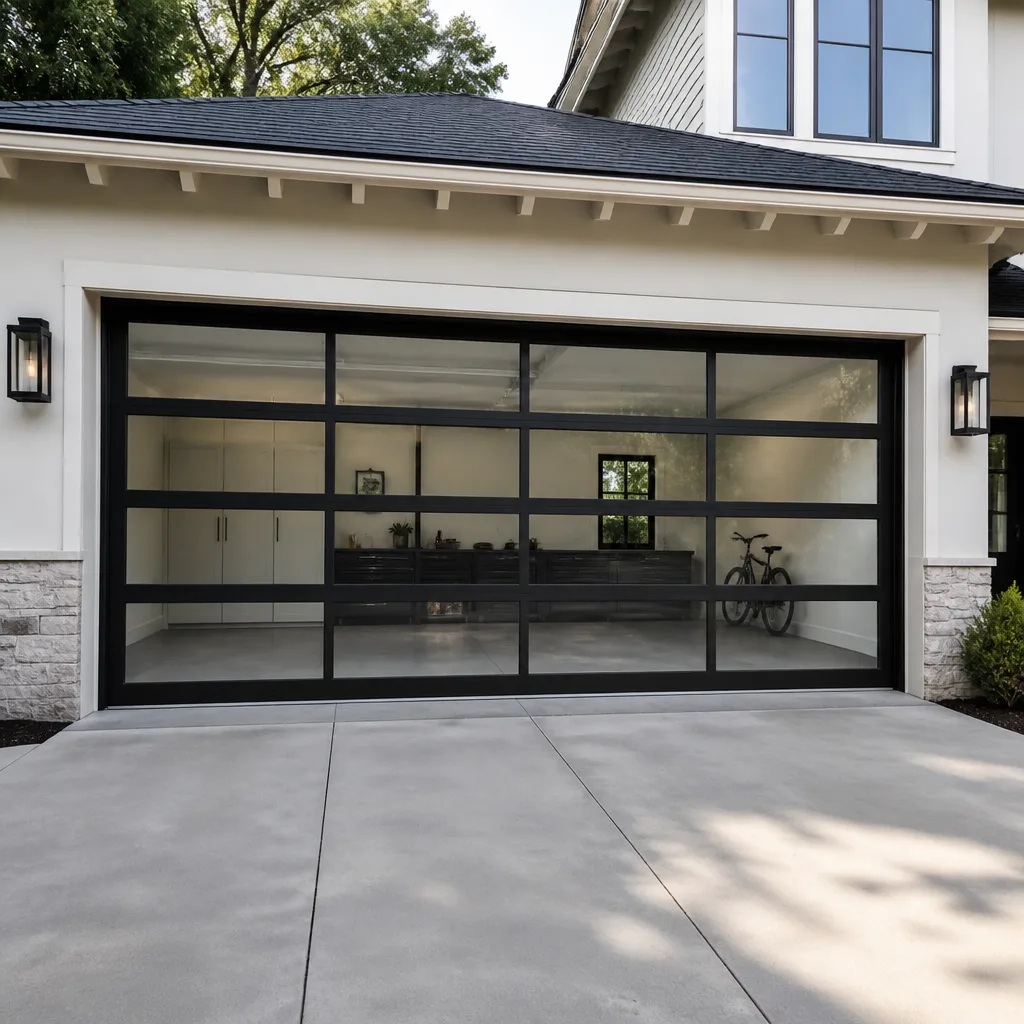 Full-view glass
 LiftMaster openers
 Chamberlain openers
Full 25-point door and opener safety check with every visit - springs, cables, rollers, tracks, and your LiftMaster or Chamberlain opener included
You get a price before we start. It does not change when the pro arrives.
Get your free estimateSeasonal Garage Door Care for Brighton: Year-Round Homeowner’s Guide
October is the most important month for your garage door in Brighton. By the time January hits and your spring snaps at 6 AM in 10-degree weather, the window to prevent it has already closed. Most homeowners treat garage door care as four equal seasons of the same checklist, and that’s where the trouble starts. Brighton’s climate doesn’t divide neatly into quarters. It gives you two high-stakes transition windows – fall and spring – with two quieter monitoring periods between them. This guide maps every month to the actual weather here, so you spend your effort where it prevents real failures instead of spreading it evenly across the calendar.
Styles & brands we work with
- Raised-panel steel
- Carriage house
- Modern flush
- Full-view glass
- LiftMaster openers
- Chamberlain openers
Quick Answer
Seasonal garage door care in Brighton works best as a two-window schedule: a heavy fall transition (roughly late September through November) that winterizes springs, tracks, seals and hardware before the first hard freeze, and a heavy spring transition (April through May) that reverses winter wear and preps for hail season. Summer and mid-winter are monitoring-only periods. Fall is the highest-leverage window, because most winter service calls trace back to tasks that were skipped in October.
Table of Contents
- Why Brighton’s Climate Doesn’t Fit a Four-Season Checklist
- The Month-by-Month Task Map for Brighton
- Why Fall Is the Highest-Leverage Window (Three Tasks That Prevent Most Winter Calls)
- Spring Hail and Your Door Panels: The Damage You Can’t See Yet
- Summer UV at Brighton’s Elevation: Protecting Vinyl and Composite Panels
- Winterizing an Attached Garage That Shares a Wall With Living Space
- What Seasonal Care Looks Like for Different Brands
- Common Mistakes to Avoid
- When to Call a Professional
- Frequently Asked Questions
- The Bottom Line
Why Brighton’s Climate Doesn’t Fit a Four-Season Checklist
Generic garage door maintenance advice gets written for a mild, uniform climate that doesn’t exist here. Brighton sits at elevation on the Front Range, where the temperature swings are wide, the freeze-thaw cycle is relentless, and the sun is intense enough to age exterior materials faster than most homeowners expect. A door that lives through a Brighton year experiences conditions that a door in a low-elevation, humid climate simply never sees.
That matters because garage door components fail on a seasonal rhythm, not a calendar one. Springs, seals, tracks and finishes each respond to different weather triggers, and those triggers cluster into two windows rather than spreading across all four seasons. When you treat every season the same, you spend effort on low-value tasks in July while the tasks that actually prevent January failures get skipped in October.
Here’s how the year actually breaks down for a Brighton door:
- Fall (late September through November): the winterization window. Heavy task load, highest payoff.
- Winter (December through February): the stress period. Monitoring only – watch, listen, don’t disassemble.
- Spring (April through May): the recovery-and-prep window. Reverse winter wear, get ahead of hail season.
- Summer (June through August): the UV and heat period. Monitoring plus one protection step for composite and vinyl doors.
Two of those four periods carry nearly all the maintenance value. The other two carry monitoring. Once you see the year that way, the whole schedule gets simpler – and the odds of a February breakdown drop sharply.
The Month-by-Month Task Map for Brighton
A month-specific map beats a generic seasonal one because the tasks have to happen in the right order and before the right weather. Here’s how the calendar lays out for a Brighton home.
- September: Do a visual inspection of panels, seals and hardware while the weather is still mild. Note anything that looks worn. Book any repair you find now, before HVAC-season demand pushes wait times out.
- October: The critical month. Lubricate springs, hinges and rollers with a garage-door-rated lubricant. Test the balance of the door by hand. Check the bottom weather seal for cracks. Tighten all hinge and bracket bolts. This is the month that sets up a quiet winter.
- November: Check the threshold seal and the gap under the closed door. Seal any daylight you can see. Confirm the safety reverse works. Clear the tracks of debris before snow season.
- December through February: Monitor. Listen for new noises, watch for slow starts or uneven travel, and keep snow and ice off the bottom seal. Don’t attempt spring work – that’s dangerous cold-weather work best left to a professional.
- March: As the last hard freezes pass, walk the full door track and check the rollers. Winter grit is the main cause of rough travel this time of year.
- April: Reverse winter wear. Re-lubricate everything, check the springs for sagging or gaps, and inspect the bottom seal for cold-crack damage.
- May: Prep for hail season. Inspect panel faces for minor dents, look at the finish for paint chips, and check the seal at the bottom and sides. Any damage you spot now is cheaper to address before summer sun bakes it in.
- June through August: Monitor UV exposure on composite and vinyl doors. Apply or touch up exterior finish once during this window. Check track alignment as heat expansion picks up.
If you follow one rule from this whole guide, make it the October rule: everything that matters for the winter gets handled before November. Everything else waits.
Why Fall Is the Highest-Leverage Window (Three Tasks That Prevent Most Winter Calls)
Fall is where the year gets decided. When you call us in January for a door that won’t lift, the failure almost always traces back to one of three things that didn’t get done in October. Address all three and you’ll skip most of the calls that land in our queue during the cold months.
Task 1: Lubricate the springs and moving hardware
Springs and hinges dry out over the summer. By fall they’re running metal-on-metal in a way that shortens their life and adds friction that the opener has to overcome. A proper lubrication pass in October keeps them working smoothly when temperatures drop and metal contracts.
This is a homeowner-safe task on the moving parts only – hinges, rollers, the torsion tube. It never involves touching a spring’s tension or any component under load. That’s a different job entirely and it belongs to a trained technician.
Task 2: Test the door balance by hand
Disconnect the opener, lift the door halfway, and let go. A balanced door stays put. A door that drifts down on its own is telling you the springs are losing tension. Catching that in October means you have time to schedule repair before a break. Finding out in January means an emergency call in poor conditions. If you’d rather have a professional make the call, our garage door spring repair service covers the diagnosis and the fix.
Task 3: Inspect and seal the bottom weather seal
The bottom seal takes the most contact wear of any component. A cracked or compressed seal lets cold air, snow, and moisture straight into the garage – and into the living space behind it if you have an attached garage. Replace the seal in October, not after the first snow has already gotten in.
Do those three tasks and you’ve addressed the root cause of most winter service calls. Skip them and you spend the winter waiting for a spring to fail.
Spring Hail and Your Door Panels: The Damage You Can’t See Yet
Brighton’s spring hail season is hard on garage doors in a way that doesn’t show up immediately. A hailstone that hits a steel panel can leave a dent you can see, but it can also crack or chip the paint layer over a spot you can’t see from standing height. That cracked finish is where the real damage starts. Bare steel that gets exposed to spring rain and summer humidity rusts from the inside of the chip outward, and by the following season you have a corrosion spot that’s spreading.
Composite and vinyl panels take a different kind of hail hit. Hailstones can pit the surface, breaking the outer layer and creating tiny channels where water collects. On a south-facing door with full sun, those pits dry out fast and look fine. On a shaded or north-facing door, they stay moist and the surface breaks down much faster.
The fix is simple if you catch it early. Here’s what to do after any significant spring hail:
- Walk the door from a few angles. Dents and pits are easiest to see in low-angled light – early morning or late afternoon.
- Run your hand along the panel faces (carefully, no sharp edges) to feel for pits or raised areas.
- Look for paint chips, especially on the top and middle panels where hail strikes at full force.
- Check the bottom and side seals for stress tears where the hail hit the door while it was closed.
- Touch up any chips before summer sun and rain get a chance to work on them.
A paint touch-up in June is a fraction of the cost of a panel replacement a year later. If the damage is more than cosmetic – dents deep enough to affect panel structure or the door’s travel – a professional inspection is worth it. Clopay and Amarr panels are common on Brighton homes and both handle hail well when the finish is maintained; the problem is almost always the finish, not the panel itself.
Summer UV at Brighton’s Elevation: Protecting Vinyl and Composite Panels
Brighton’s elevation intensifies UV exposure. At this altitude, the sun delivers more UV per hour than it does at sea level, and vinyl and composite door panels absorb that exposure directly. Over a few summers, unmaintained panels fade, chalk, and eventually craze – fine surface cracks that spread into the panel body and shorten its life.
The single step that extends panel life the most is straightforward: apply a UV-resistant exterior finish – a quality paint or a purpose-made composite sealant – once a year, ideally in early summer before the strongest UV period. A coat of the right product every year adds real years to a composite or vinyl door. Skip it and you’ll be replacing panels sooner than you’d otherwise need to.
What to watch for as summer progresses:
- Chalking: a white powder that comes off when you run a hand over the surface. That’s degraded finish, not dirt.
- Fading: uneven color across the panel, especially on south and west faces.
- Fine surface cracks (crazing): a spiderweb texture that’s a sign of UV breakdown.
- Warping: on the hottest days, vinyl can show slight distortion. If it’s persistent, the panel’s structure is compromised.
Wayne Dalton composite doors are well-represented on Brighton homes and hold up well to sun when the finish is maintained. The panel itself is rarely the weak link – it’s the coating on top, and that’s the part you can protect in an afternoon.
Winterizing an Attached Garage That Shares a Wall With Living Space
Most Brighton homes have an attached garage, and that changes the winter priorities. Heat loss through the garage wall and the door itself pushes the furnace to work harder, and cold air that gets past a worn bottom seal finds its way into the rooms behind the shared wall. Winterizing here is about holding the line between conditioned and unconditioned space.
The high-value tasks for an attached garage, in order of impact:
- Seal the bottom weather strip. This is the single biggest heat-loss point. If you can see daylight under the closed door, you’re losing heated air all winter. Replace any cracked or compressed seal before the first freeze.
- Check the side and top seals. Gaps at the frame let cold air move past the door even when the bottom is tight.
- Insulate the door itself if it isn’t insulated. An uninsulated steel door radiates cold into the garage. Insulated panels or a door with an insulation layer make an obvious difference to the temperature on the shared wall.
- Weatherstrip the door between house and garage. The door from the garage into the house should seal fully. A worn threshold there lets cold air straight into living space regardless of how well the garage door performs.
- Keep snow and ice off the bottom seal. Shovel away any accumulation at the threshold. Ice that builds up under the seal can distort it and hold the door slightly open.
On very cold mornings you may notice the opener struggling more than usual. Cold-thickened lubricant and a slightly tight door are the usual causes. If the door works fine in mild weather and struggles in the cold, the call is a service visit rather than a part replacement, and it’s usually simpler than it feels at 6 AM.
What Seasonal Care Looks Like for Different Brands
The seasonal tasks are largely universal, but the specific components to inspect vary by brand. If you know what’s on your door, you know what to look at more closely each season.
- LiftMaster and Chamberlain openers: the seasonal opener check is the safety reverse and the photo-eye alignment. Both are easy to test and both should be tested twice a year – once in October and once in April.
- Genie openers: belt and screw drive systems hold up well, but the seasonal focus is on the trolley and the limit settings. If the door stops short or reverses in cold weather, the limits need adjusting.
- Craftsman openers: common on older Brighton doors, and the seasonal item is the gear and sprocket wear that shows up in quiet operation. A noise that develops over winter is worth an inspection in spring.
- Raynor doors and openers: the door panels and hardware age well, so the seasonal work is mostly the seals and the spring tension check.
- Clopay and Amarr panels: the seasonal item is the exterior finish. Those spring hail chips and summer UV fade are what shorten panel life, and both are addressed by the same paint touch-up.
- Wayne Dalton panels: the seasonal focus is surface finish and seal integrity, same as other composite panels.
If you don’t know what brand is on your door, look at the label on the opener head and the inside edge of a panel. If neither is visible, the seasonal inspection is still the same – a technician will identify the system and work from there. Our garage door opener repair service covers every major drive system, and the same capability applies to doors across brands.
Common Mistakes to Avoid
- Treating all four seasons the same. Brighton’s fall and spring are where nearly all the value sits. Summertime deep maintenance of springs and hardware is largely wasted effort; the tasks that matter cluster around the two transitions.
- Skipping the October lubrication pass. A door that ran fine all summer will still fail in January if the springs and hinges dry out before winter. October is the last window to prevent that.
- Ignoring spring hail damage until it rusts. A chip you can’t see in May becomes a corrosion spot by fall. Touch-up paint on a warm June afternoon is a five-minute job that prevents it.
- Treating UV fade as cosmetic. Chalking and crazing on composite panels are structural warnings. By the time a panel is visibly cracking, the coating needed attention two summers earlier.
- Leaving the bottom seal until it visibly leaks. A compressed seal lets cold air through long before you notice a draft. Replace it on the schedule, not on the symptom.
- Doing spring work yourself. Springs and cables are under high tension and can cause serious injury. This is one job where the DIY route isn’t a shortcut – it’s an unnecessary risk. Trained technicians have the tools and protocol for a reason.
- Ignoring winter noises until they become failures. A groan in January is a signal. Squealing, grinding, or uneven travel should be assessed by a professional while the door is still working, not after a spring gives out.
When to Call a Professional
Call a professional for anything involving spring tension, cable work, opener electronics you’re not comfortable diagnosing, track alignment that has visibly shifted, or a panel that has structural damage. Call urgently if the door is stuck open (a security issue), stuck closed with a car inside, or making a sudden loud noise paired with loss of lift. Call us for the annual fall and spring inspections if you’d rather not test balance and tension yourself. Brighton Garage Door Repair Co offers free estimates in Brighton – call (866) 754-4750. Our technicians have up to 13 years of experience and are familiar with the full range of residential systems.
Frequently Asked Questions
Twice a year for the professional visit – once in the fall before the first freeze and once in the spring after the last. Beyond that, monthly visual checks are enough to catch developing issues. Our team can schedule the two key seasonal visits for you, and we’ll flag anything that looks likely to fail before it does.
October is the single best month. It’s the last window before winter weather stresses the door, and it sets up a quieter cold season. If you miss it, book the next-best slot in April. Mid-summer and mid-winter are the least valuable times for a scheduled maintenance visit.
Cold shrinks and stiffens the metal in the spring, which increases stress during every lift-and-close cycle. Springs that have lost tension over the summer are the ones most likely to fail in cold weather. A fall balance check is the best way to catch a weakening spring before it breaks. If yours has already snapped, our garage door repair service handles replacements for most major residential brands.
Cosmetic damage – paint chips, minor dents – can be repaired with touch-up paint or a paint blend. Structural dents deep enough to affect the door’s travel or compromise a panel’s rigidity usually mean the panel needs replacing. Have it assessed after any major spring hail, because the damage that matters is often the damage you can’t see from standing height. Call us and we’ll tell you which category you’re in.
Repair is usually the answer unless several panels are damaged or the door is near the end of its structural life. A single dented panel on a Clopay, Amarr, or Wayne Dalton door can often be replaced individually. If the damage is widespread, a scheduled replacement with a written estimate is the better investment. Our team covers new installations as well as repairs, so you don’t have to track down a separate installer if replacement is the recommendation.
Yes – spring repair is one of our core services and it’s the most safety-sensitive work on any door. Springs and cables are under high tension and require specialized tools and protocol. We don’t recommend DIY spring work under any circumstances, and our technicians approach it as the dangerous job it is. Call (866) 754-4750 for an estimate.
The Bottom Line
Brighton’s climate rewards a two-window maintenance schedule, not an even four-season one. Fall is where you prevent winter failures: lubricate the moving parts, test the balance, replace the bottom seal. Spring is where you reverse winter wear and get ahead of hail season: inspect panels, touch up paint chips, re-lubricate everything. Summer and mid-winter are monitoring periods, with one UV protection step for composite and vinyl doors. For an attached garage, the winterizing focus is on the seals and insulation that hold the line between your garage and your living space. If you’d rather have a trained set of eyes on the door twice a year, our Brighton Garage Door Repair Co team is available for free estimates. Call (866) 754-4750 to schedule yours before the October window closes.
Written by the team at Brighton Garage Door Repair Co.
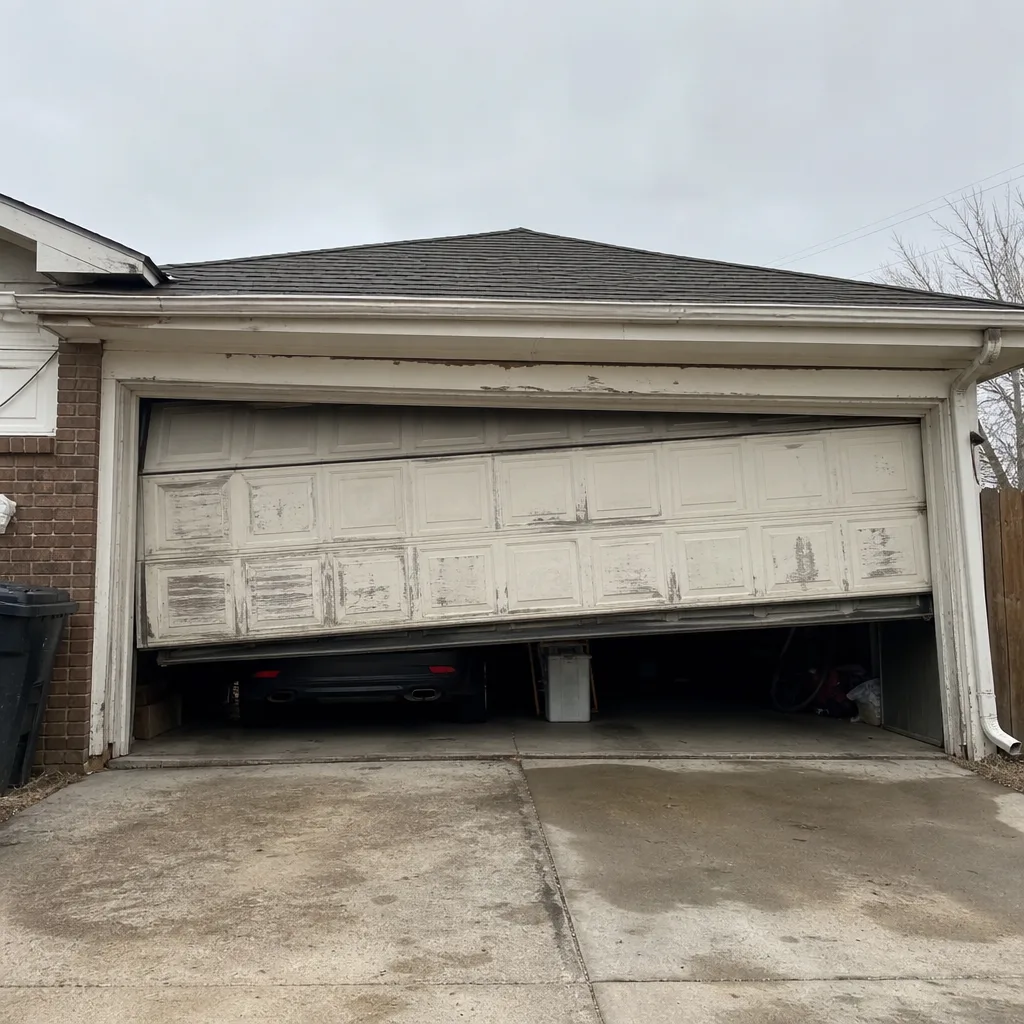
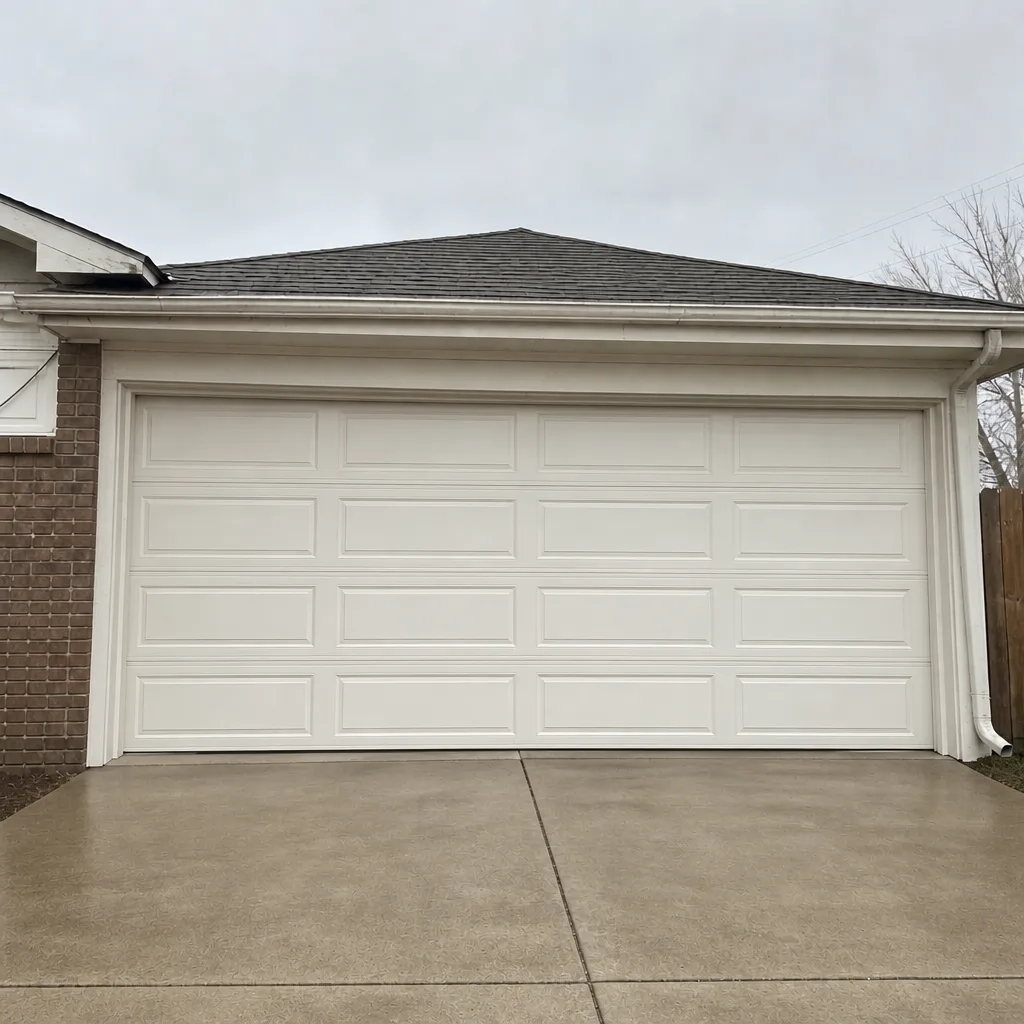
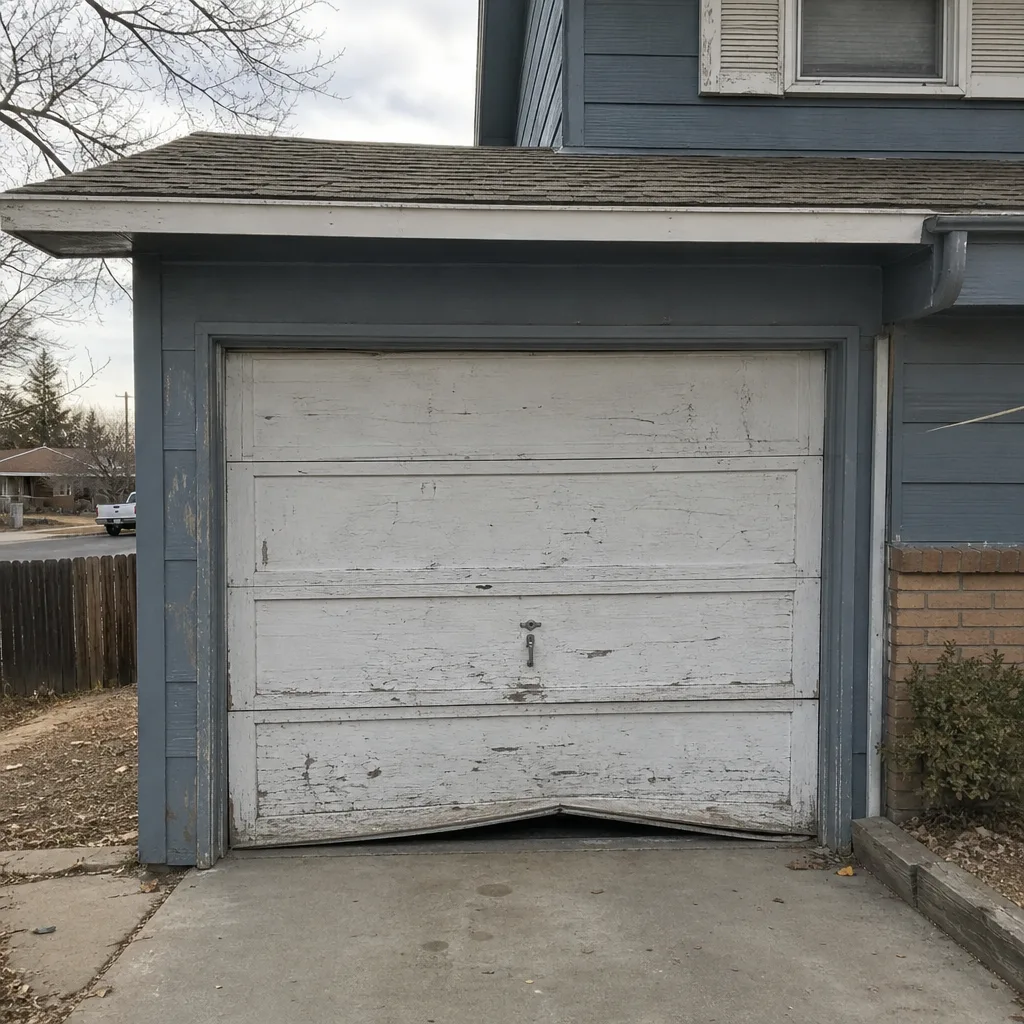
See the difference
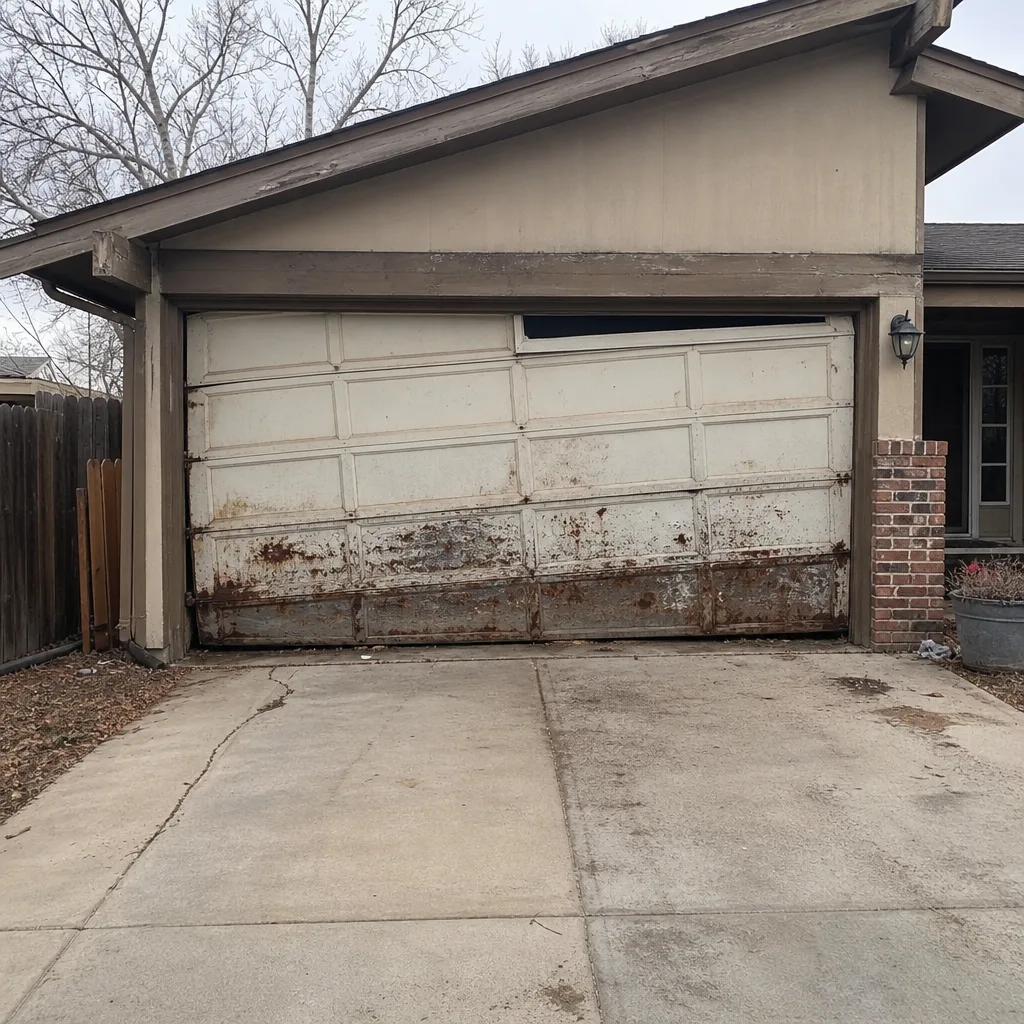 Before
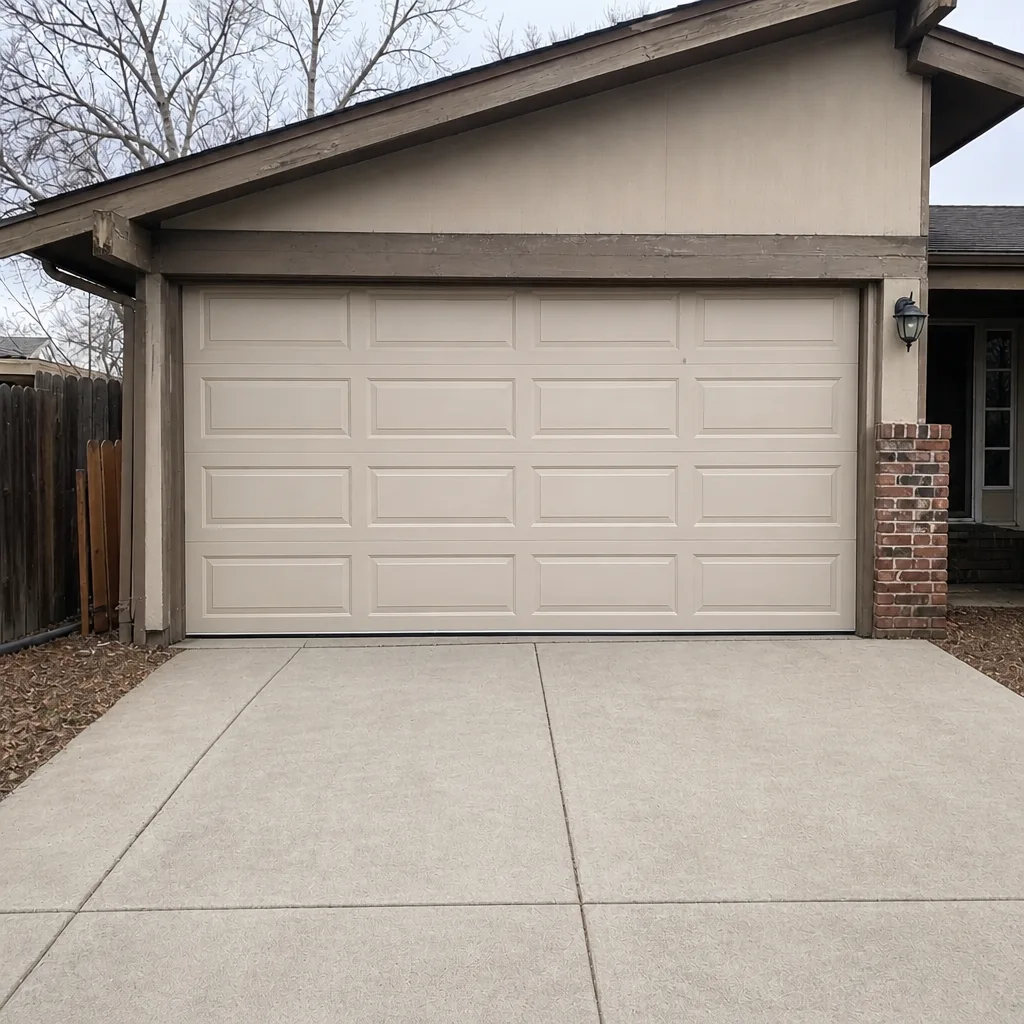 After
 Before
 After
 Before
 After