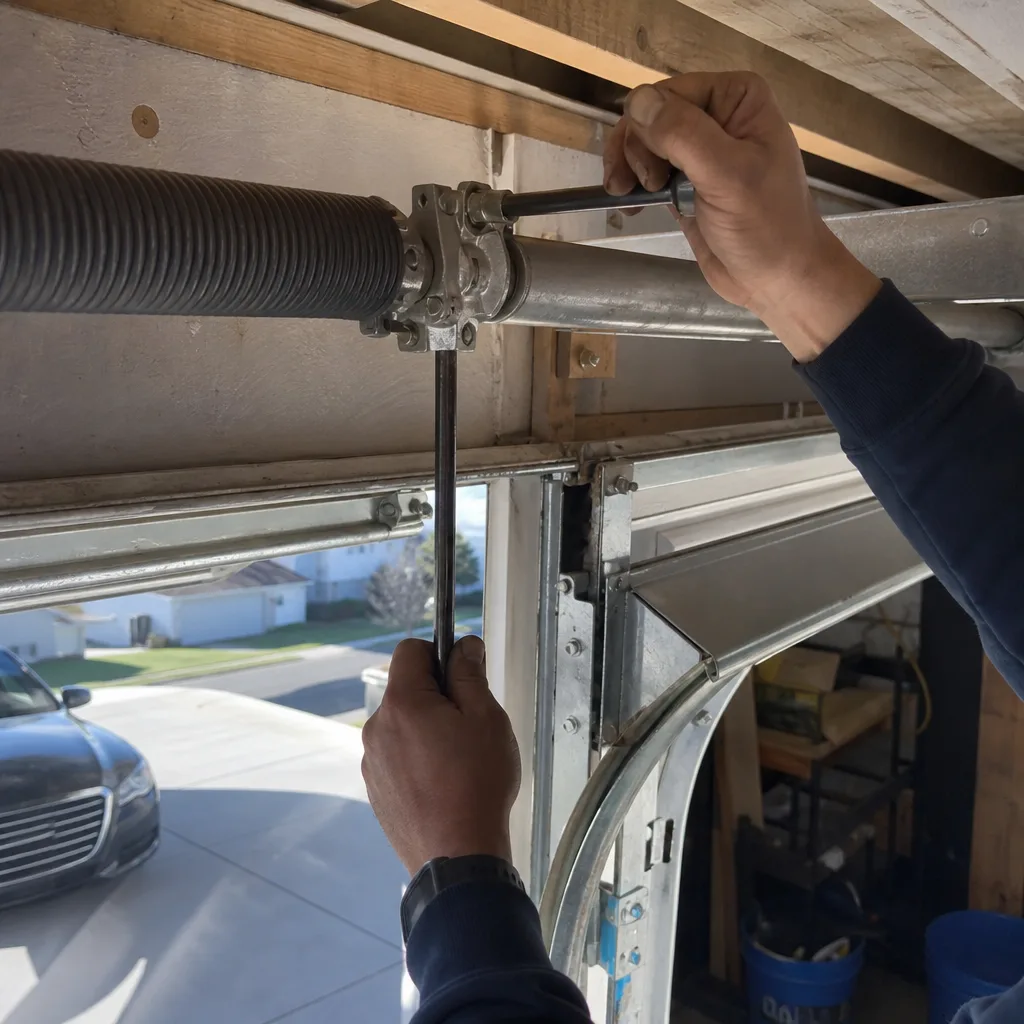
Last updated November 23, 2026
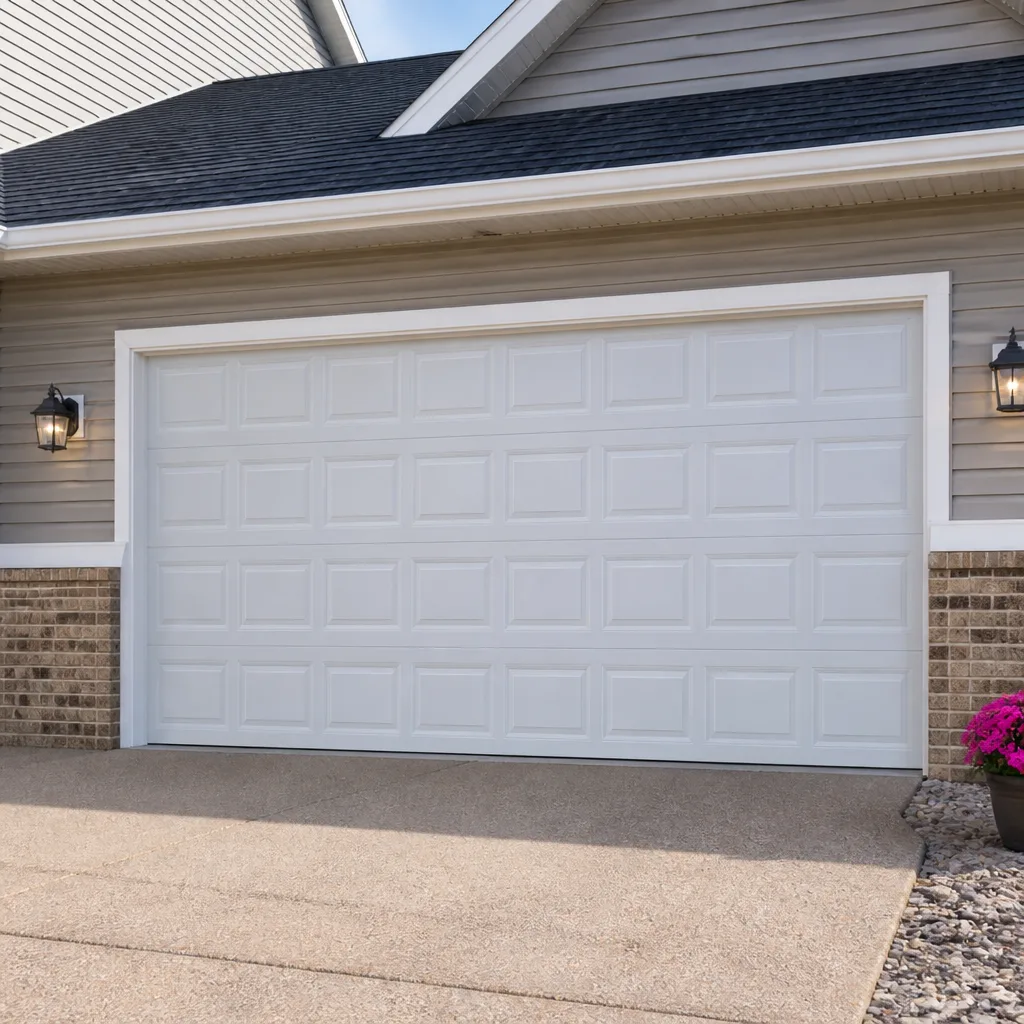 Raised-panel steel
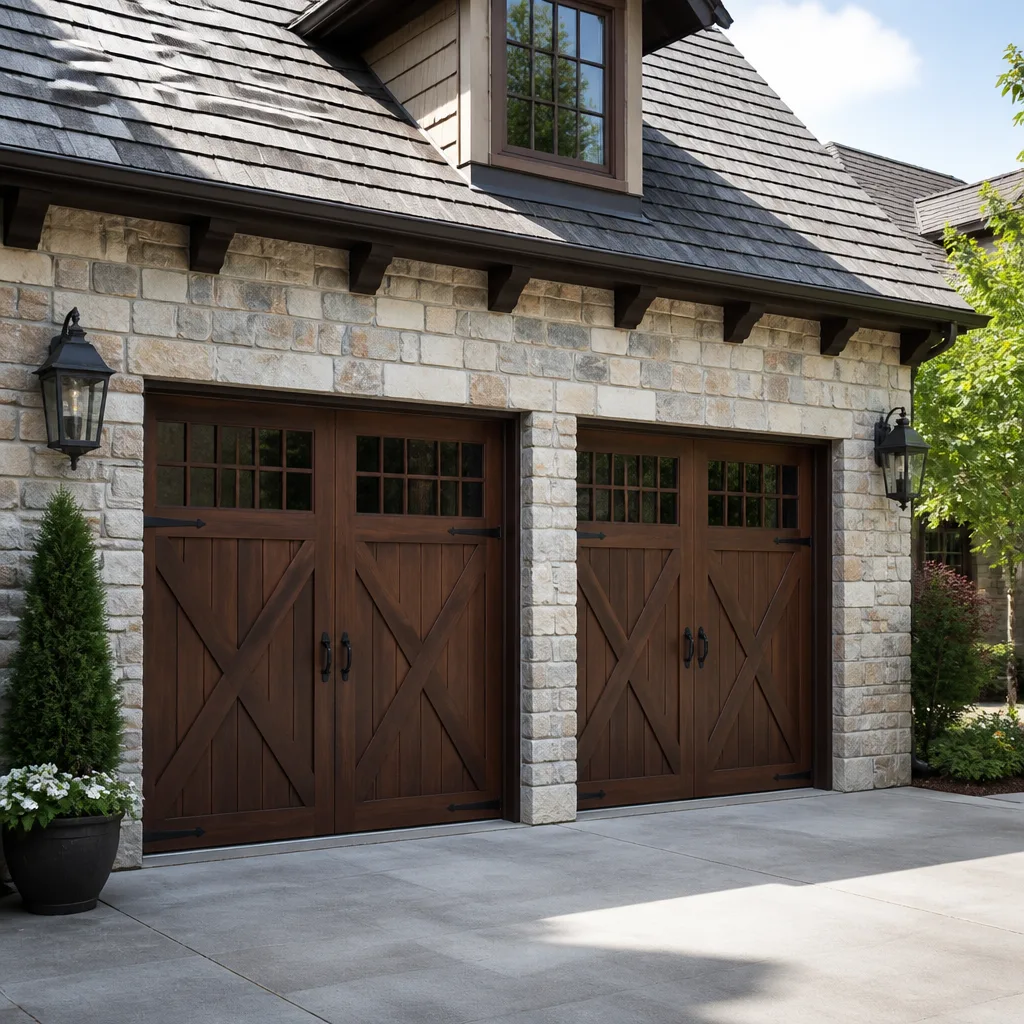 Carriage house
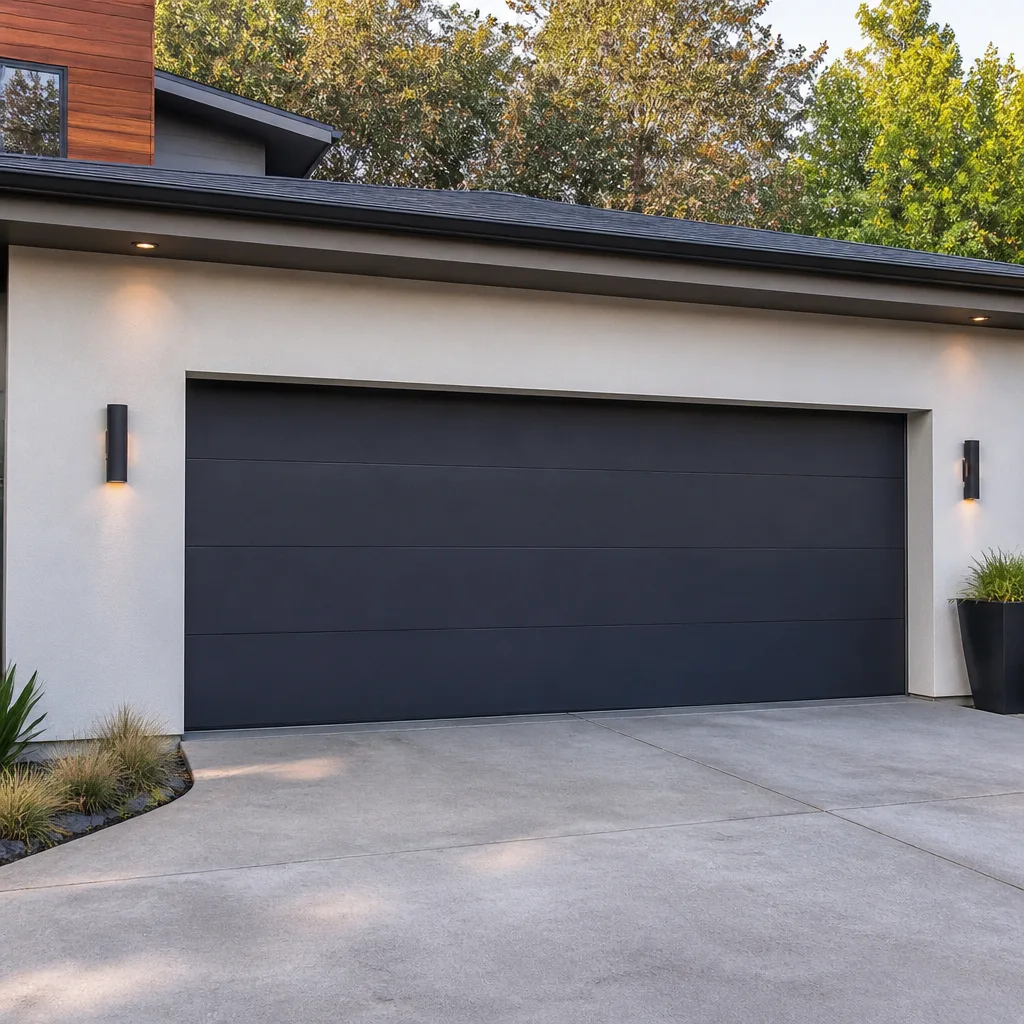 Modern flush
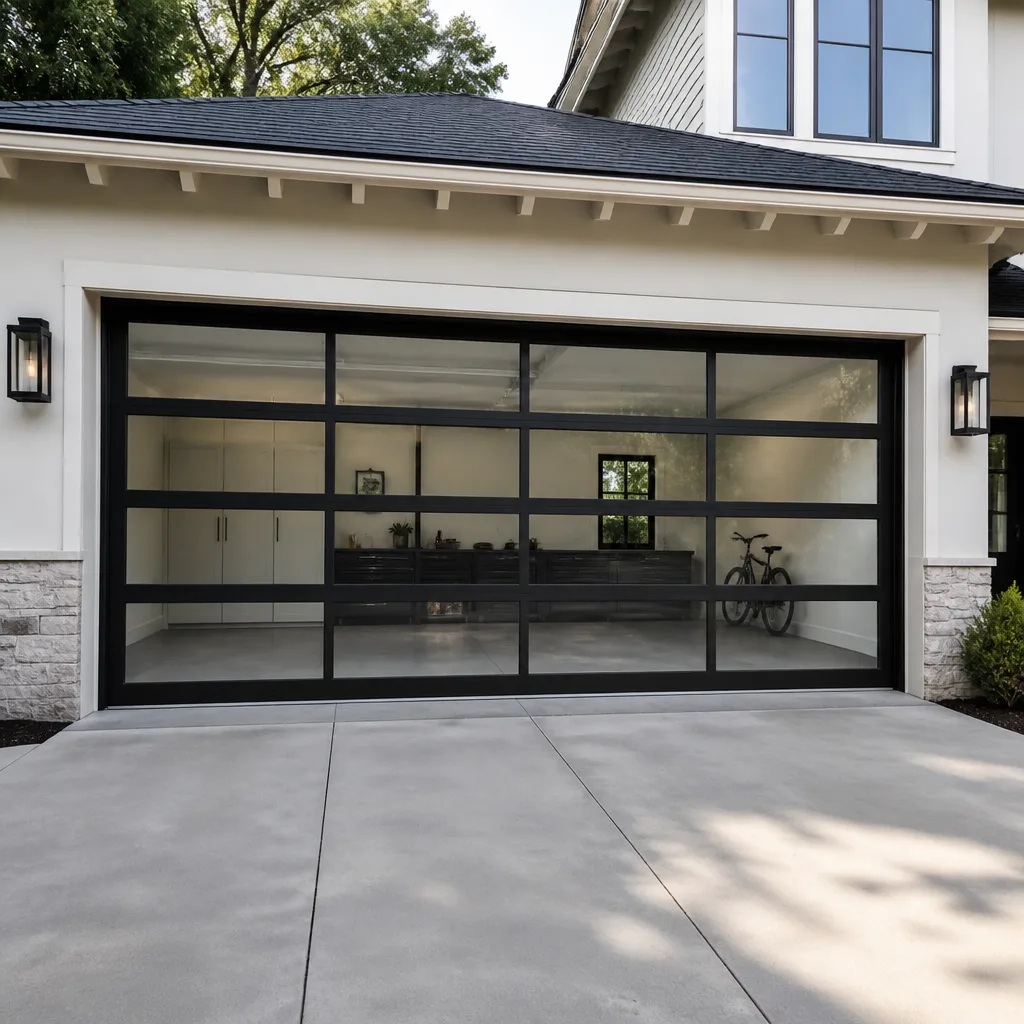 Full-view glass
 LiftMaster openers
 Chamberlain openers
Full 25-point door and opener safety check with every visit - springs, cables, rollers, tracks, and your LiftMaster or Chamberlain opener included
You get a price before we start. It does not change when the pro arrives.
Get your free estimateGarage Door Repair Troubleshooting in Brighton: Common Problems and How to Fix Them
A grinding noise and a snapping noise both make you stop and listen, but they mean completely different things. One often means a few dollars of lubricant and a tightening pass. The other can mean a torsion spring just failed and your door now sits under hundreds of pounds of tension you can’t safely manage yourself. That distinction is the whole point of troubleshooting: chase the symptom back to the system failure, not the noise. In this guide we’ll walk through the diagnostic logic our technicians use on doors across Brighton, from the movement failures to the noise types to the sensor quirks, so you fix the right thing the first time instead of guessing at parts.
Quick Answer
Most garage door problems trace back to one of five systems: springs and cables, the opener and its drive, the tracks and rollers, the safety sensors, or the wiring that connects them. Troubleshooting in Brighton starts by matching the symptom to the system: a door that won’t lift by hand points to springs, a door that hums but doesn’t move points to the opener, and a door that reverses immediately points to sensors or track binding. Spring and cable work is not DIY territory; it’s a high-tension job for a trained technician.
Styles & brands we work with
- Raised-panel steel
- Carriage house
- Modern flush
- Full-view glass
- LiftMaster openers
- Chamberlain openers
Table of Contents
- The Symptom-to-Cause Diagnostic Tree
- What Each Noise Is Telling You
- Movement Failures: Springs, Cables, and Openers
- Sensor and Remote Problems That Stop Normal Operation
- The Two-Minute Inspection Sequence a Technician Runs First
- How Brighton’s Temperature Swings Create False Symptoms
- What’s Safe to Check Yourself vs. What Needs a Technician
The Symptom-to-Cause Diagnostic Tree
When a door misbehaves, the fast way to troubleshoot is to stop listening to the noise and start testing the systems in order. The door is a chain, and the chain breaks at the weakest mechanical link before it breaks anywhere electrical. Here’s how the logic runs.
Start with the manual test. Disconnect the opener using the manual release cord, then try to lift the door by hand. A balanced door should lift with modest effort and stay where you leave it, roughly halfway up. If it’s heavy, won’t lift, or slams down on release, the problem is mechanical: springs, cables, or balance. If it lifts easily and balances, the mechanism is sound and the trouble is upstream in the opener, sensors, or wiring.
Then map the symptom to the system:
- Door won’t move at all, opener silent: power, breaker, wall control wiring, or a dead opener board.
- Opener hums or clicks but the door doesn’t move: stripped opener gear, broken drive chain or belt, or a disengaged manual release.
- Door lifts a foot then stops: binding track, frozen roller, or a torsion spring losing tension.
- Door goes down and reverses on contact: sensor misalignment, sensor blockage, or a force setting that’s too sensitive.
- Door runs slow or laboring: wearing springs, dry rollers, or a sagging track.
Our technicians have up to 13 years of experience running this exact sequence, and it’s almost always faster than swapping parts and hoping. The systematic approach is what separates garage door repair that lasts from a fix that fails again in a month. Whatever brand is on your door – Amarr, Wayne Dalton, Craftsman, Raynor – the diagnostic order is the same.
What Each Noise Is Telling You
The type of noise, not the volume, is the clue. A loud problem isn’t always a serious one, and a quiet problem can be the emergency. Here’s how we read the noise a Brighton door makes.
Grinding or scraping: Usually metal on metal. Dry rollers in dry tracks, a track that’s out of line, or a roller that’s fallen off its stem. This is the “dollars of lubricant” category most of the time, though a badly bent track will need straightening or replacement. The noise gets worse the colder it gets because metal contracts and tolerances tighten, which is why grinding in Brighton often shows up in January and February first.
Squealing or squeaking: Almost always a lubrication problem at the rollers, hinges, or torsion bar. Chronic squealing means the door’s been running dry, and that wears the metal surfaces faster.
Snapping or a loud bang: This one demands attention. A snapping noise from the center or side of the door, followed by a door that suddenly feels much heavier, usually means a torsion spring failed. Don’t keep cycling the opener to find out. Stop using the door and call for spring repair.
Rattling: A loose hinge, a roller stem, or a bolt backing out. Usually a tightening job, but worth checking before the vibration loosens something more important.
Creaking in cold weather: The door’s panels and hardware flexing under temperature change. Often harmless, sometimes a sign of loose brackets or dry hinges. If it happens only on the coldest mornings, note it and have it checked.
The pattern to remember: grinding and squealing are maintenance. Snapping is a mechanical failure. If you hear snapping, that’s when garage door spring repair becomes urgent, not optional.
Movement Failures: Springs, Cables, and Openers
When the door won’t move right, the question is always: is it the mechanism or the motor? Answer that first and you save yourself a wasted service call.
Mechanical failures show up in the manual test. If the door is heavy by hand or won’t stay up, the springs are failing or already broken, or a cable has come off its drum. Cables are also under serious tension, and a frayed or slipped cable can whip if handled wrong. Both springs and cables fall on the “call a professional” side of the line, every time.
Opener failures show up when the mechanism is fine but the door still doesn’t move. The classic signs:
- The opener runs but the door doesn’t, because the manual release is engaged.
- The opener hums or grinds without moving the chain or belt, often a stripped gear or a broken drive.
- The door moves a few inches and reverses, often a force or limit setting out of adjustment.
- The opener works from the wall control but not from the remote, which points to the remote or the receiver, not the motor.
We service LiftMaster, Chamberlain, Genie, and Craftsman openers across every drive system – belt, chain, screw, and jackshaft – so we arrive familiar with your unit instead of guessing at the control logic. If the mechanism checks out and the motor’s the issue, garage door opener repair is the right call, and it often resolves the problem in a single visit.
Sensor and Remote Problems That Stop Normal Operation
The sensor and remote issues are the most common false alarms in troubleshooting. A door that reverses on contact or refuses to close at all is often perfectly healthy mechanically.
The safety sensors are the two small eyes mounted near the floor on each side of the door opening. They shoot an invisible beam across the opening and stop the door if it’s broken. The most common failures:
- One sensor got knocked off alignment by a stray ball, a car bumper, or a broom handle.
- Dust, cobwebs, or a dead bug blocking the lens.
- A weak or dead sensor bulb, indicated by a blinking LED rather than a solid one.
- Spliced or chewed sensor wiring, more common than people expect in a garage that sees temperature cycling.
Sensor alignment is safe to check yourself: look for a solid LED on each sensor and a clear path between them. If the light blinks, the beam isn’t landing.
Remote and keypad problems almost always live in the remote, not the opener. A remote that used to work and now doesn’t usually has a dead battery, a lost programming, or was replaced with one that’s on the wrong frequency. If one remote works and another doesn’t, the opener is fine. If no remote works but the wall control does, it’s the remote or the receiver. If nothing works but the manual release, it’s power or the opener board.
The most important point: a sensor problem and a mechanical problem both look like “the door won’t close.” Test one system at a time before you conclude anything.
The Two-Minute Inspection Sequence a Technician Runs First
Before we touch a single tool, we run the same quick visual pass. It catches most of what’s wrong before any disassembly, and you can follow the same order to describe the problem to whoever you call.
- Look at the door from the driveway. Does it sit level? A door that’s clearly crooked at rest hints at a broken spring or a slipped cable on one side.
- Check the tracks. Run your eye along both tracks for bends, dents, or debris. A single dent in the wrong spot will drag the whole door.
- Check the rollers and hinges. Any roller sitting crooked or off its stem, any hinge visibly loose.
- Check the springs at the center or sides. A visible gap in a torsion spring, or a stretched extension spring, is a confirmed failure. Don’t probe it with your hands.
- Check the sensor eyes. Solid LED on both. Nothing blocking the path.
- Check the manual release. Is it disengaged from a previous use? This single oversight causes countless “the opener is broken” calls.
- Check the wall control and power. Is the unit getting power? Is the wall control lit or responsive?
Two minutes gets you a symptom list and a probable cause. The real value is knowing which parts are safe to touch and which aren’t. That’s the difference between troubleshooting and risking an injury.
How Brighton’s Temperature Swings Create False Symptoms
Brighton’s weather does a lot of the work of confusing people about their doors. The Front Range swings hard between summer heat and winter cold, and metal responds. Here’s what that looks like in practice.
Winter false positives. Cold shrinks metal and stiffens lubricant. Doors that ran smoothly in October start grinding in January because the grease has thickened and the tracks have pulled slightly. A door that lifts slowly in extreme cold may not have a failing spring at all, just pinned rollers and stiff grease. A snapping noise in winter is a different story: cold makes metal brittle, and it’s when aging torsion springs most often let go.
Summer false positives. Heat expands tracks and can cause a door to bind on the hottest afternoons, then run fine the next morning. Heat also softens seals and can make a door chatter as the rubber grabs at the frame. Cycle-counter logic on newer openers can also trip after a run of unusually heavy use during a heat wave, if the force setting was marginal to begin with.
What that means for troubleshooting. Before you replace anything, ask whether the problem is seasonal. A door that grinds only below freezing needs lubrication and adjustment, not a new opener. A door that fails only in the heat needs its tracks checked for expansion binding. And a spring that snaps in a cold snap needs professional repair regardless of the season. The fix is to observe the pattern, not jump to the part.
One more Brighton-specific note: garage doors on the windward side of a house take more force to lift on gusty days, because the door panels flex against the wind load. If the door works on calm days and struggles on windy ones, that’s a clue about the door’s balance, not a sensor fault.
What’s Safe to Check Yourself vs. What Needs a Technician
We’re not going to tell you to do everything yourself, and we’re not going to tell you nothing is safe. There’s a real line, and knowing where it sits prevents both wasted service calls and serious injuries.
Safe for a homeowner to check or do:
- Lubricating the rollers, hinges, and tracks with a garage-door-safe lubricant.
- Clearing obstructions from the sensor path and straightening a knocked sensor.
- Testing the manual release and re-engaging it correctly.
- Replacing a remote battery or reprogramming a remote following the opener’s manual.
- Tightening a visibly loose hinge bolt (hand tools only, and only if the door is closed and supported).
Call a trained technician:
- Anything involving torsion or extension springs. These parts store enormous force, and a failed spring can release it in an instant. Replacing a spring with the wrong tool or insufficient technique can cause severe injury. This is the single most dangerous job in the trade, and we handle it with the right winding bars and safety protocol, not a pair of pliers.
- Anything involving the cables, cable drums, or bottom brackets. Same tension, same danger.
- Track straightening or realignment that requires loosening the track brackets, because the door can fall if the geometry shifts.
- Opener board, capacitor, or wiring work that requires opening the electrical housing.
- Any door that’s stuck open or stuck closed as a security concern, where leaving it overnight isn’t an option.
If you’re not sure which side of the line your problem falls on, describe it to us. We’ll tell you what’s likely wrong and whether it’s a quick visit or an emergency. Brighton Garage Door Repair Co offers free estimates in Brighton – call (866) 754-4750 and we’ll get it diagnosed.
Common Mistakes to Avoid
The same handful of mistakes account for most of the doors we see in Brighton that need more work than they should. Each of these tends to turn a small fix into a bigger one.
- Pulling the manual release and forgetting to re-engage it. The opener runs but the door doesn’t, and the diagnosis is a five-second check. Homeowners then conclude the opener is dead and call for a replacement they don’t need.
- Cycling a door after a spring snaps. The opener then has to lift the full weight of the door, which burns out the gear or the motor. Stop using the door and call for spring repair; it protects the opener too.
- Lubricating an already-worn track to quiet a grinding noise. The grease hides the problem for a week, but the real cause is a bent track or a thrown roller, and it comes back worse.
- Adjusting force settings to force a door to close through a sensor fault. That defeats the safety system that stops the door on a child or pet. The correct fix is sensor alignment or track work, not a force override.
- Blaming the remote for an opener problem, or the opener for a remote problem. Test the wall control first. It isolates the remote and receiver from the motor in seconds.
- Ignoring the seasonal pattern. A grinding noise that only shows up below freezing in Brighton is usually a lubrication problem, not a failing mechanism, and replacing parts based on one cold morning is a waste.
- Handling torsion springs without the right tools. Spring winding is not a screwdriver job. The stored force is enough to break bones, and no amount of online research substitutes for training and the correct winding bars.
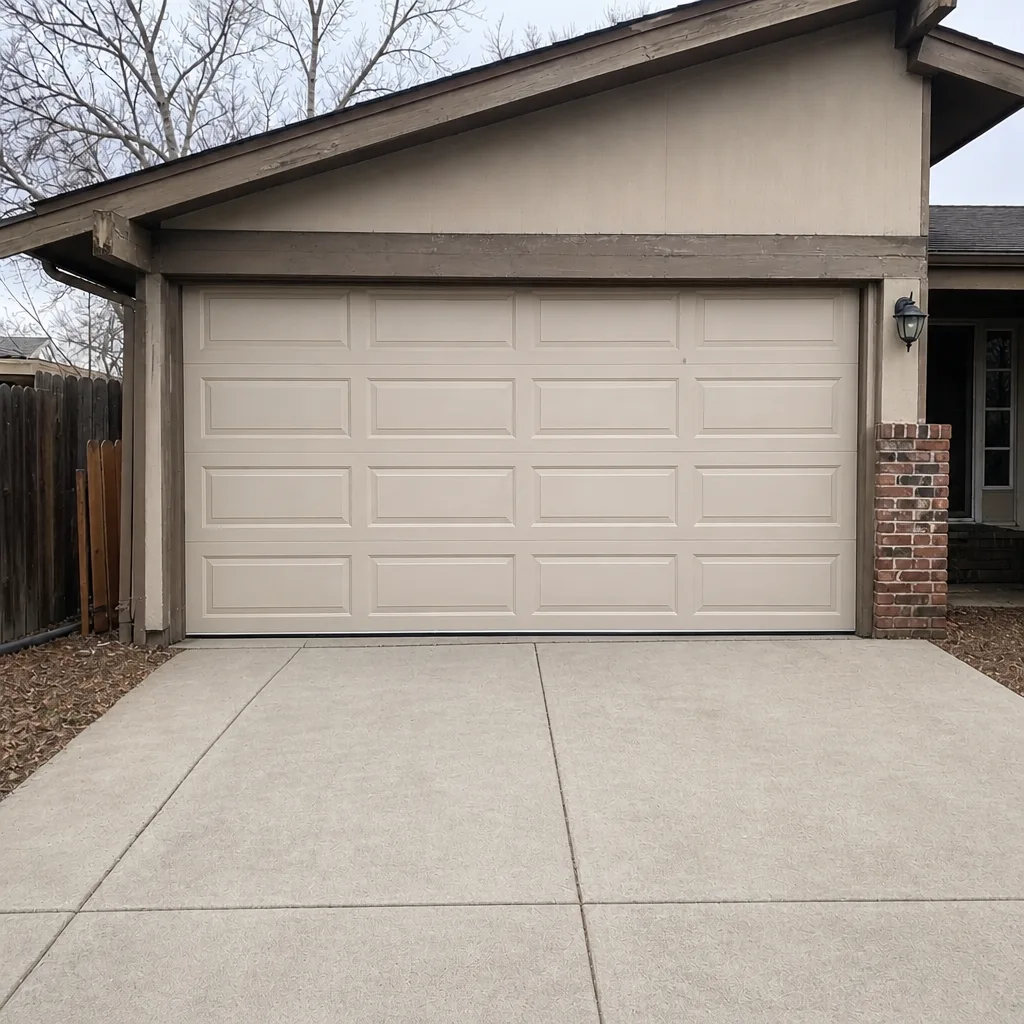
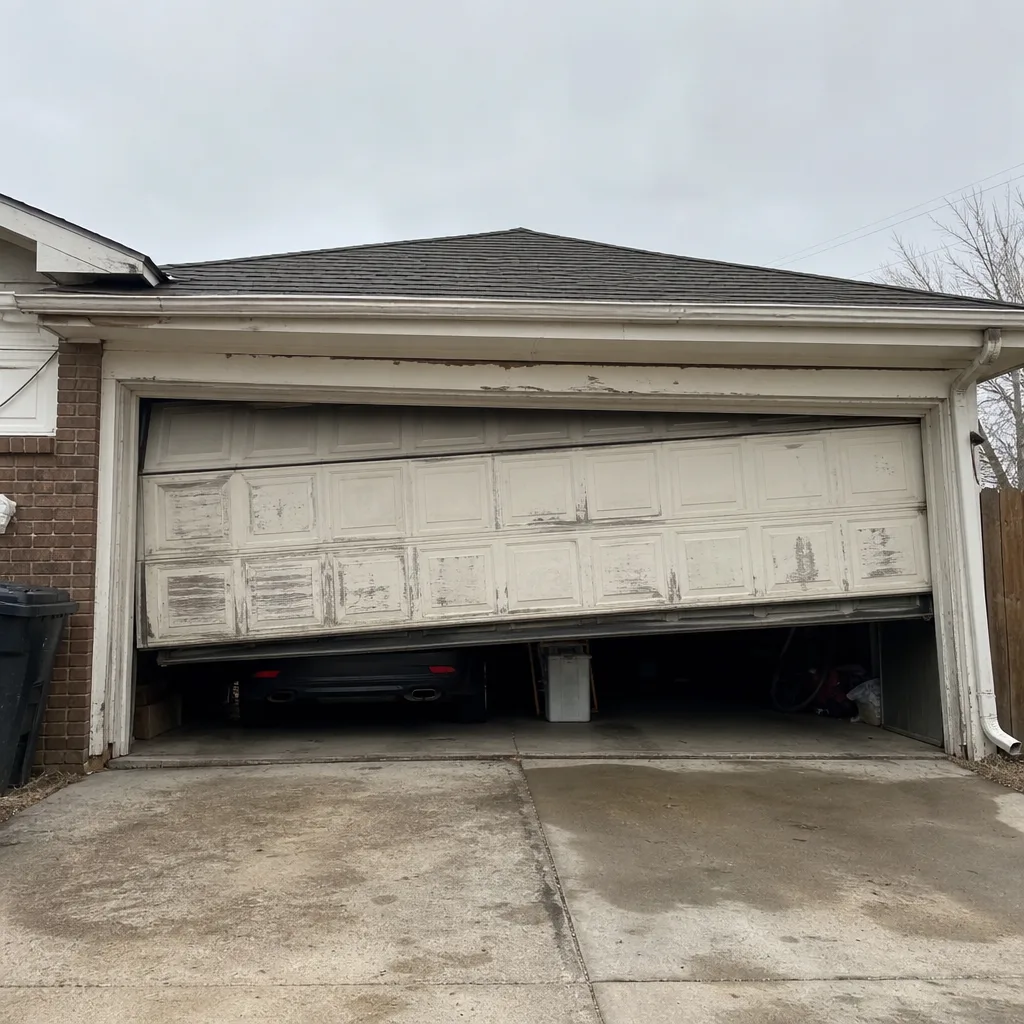
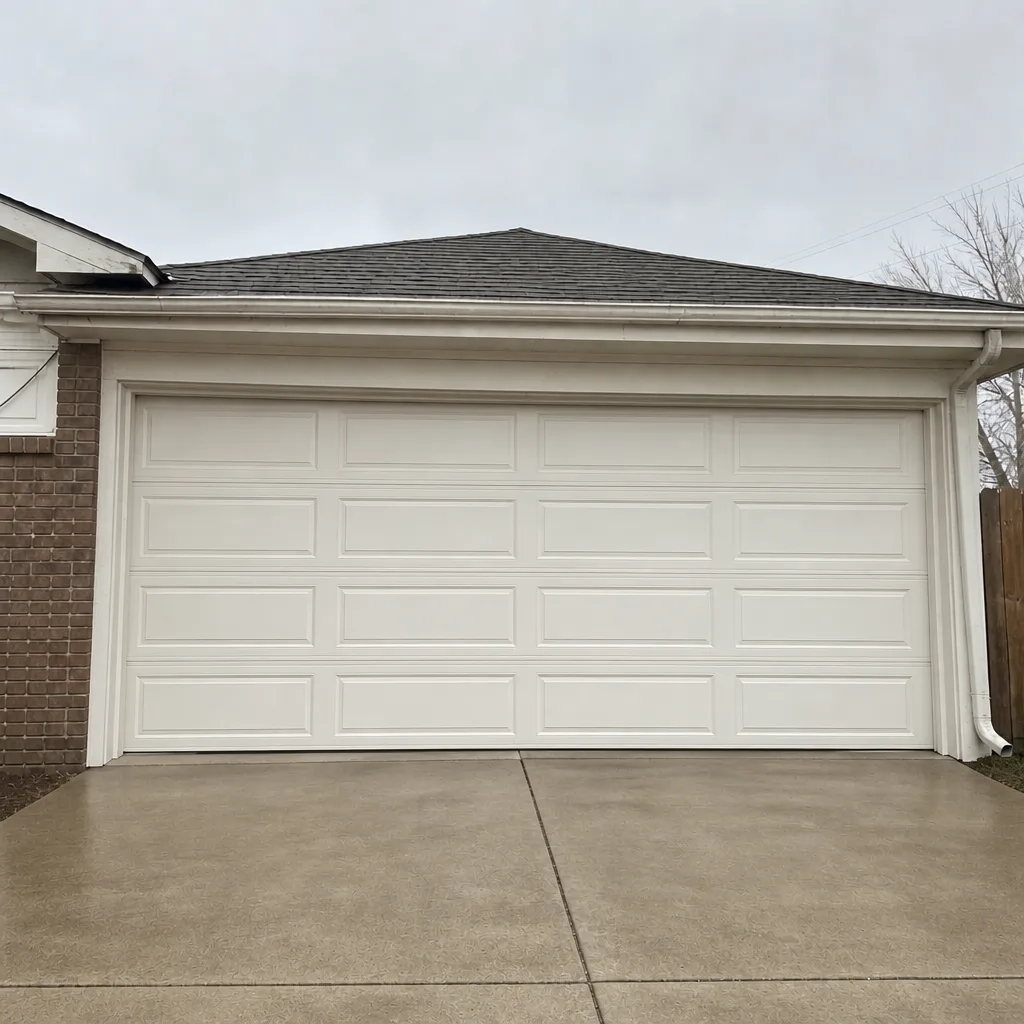
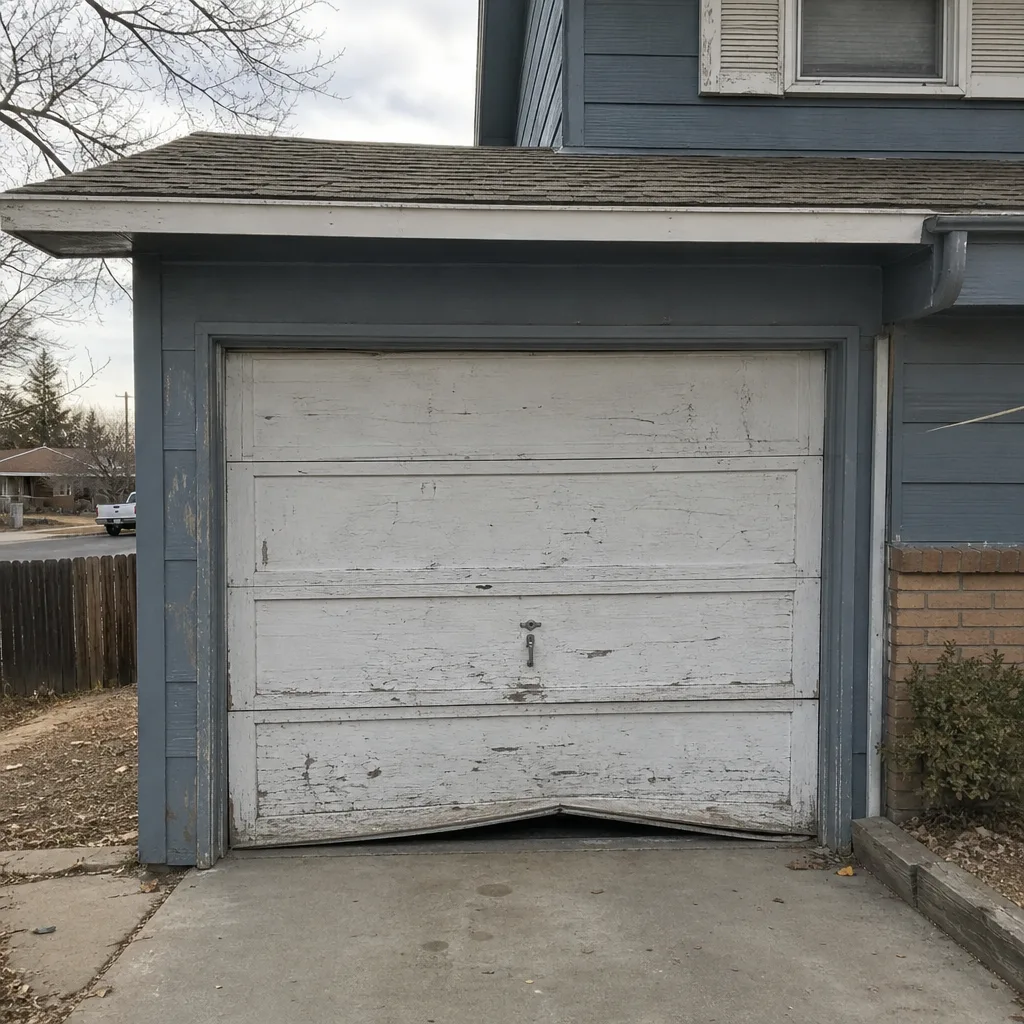
See the difference
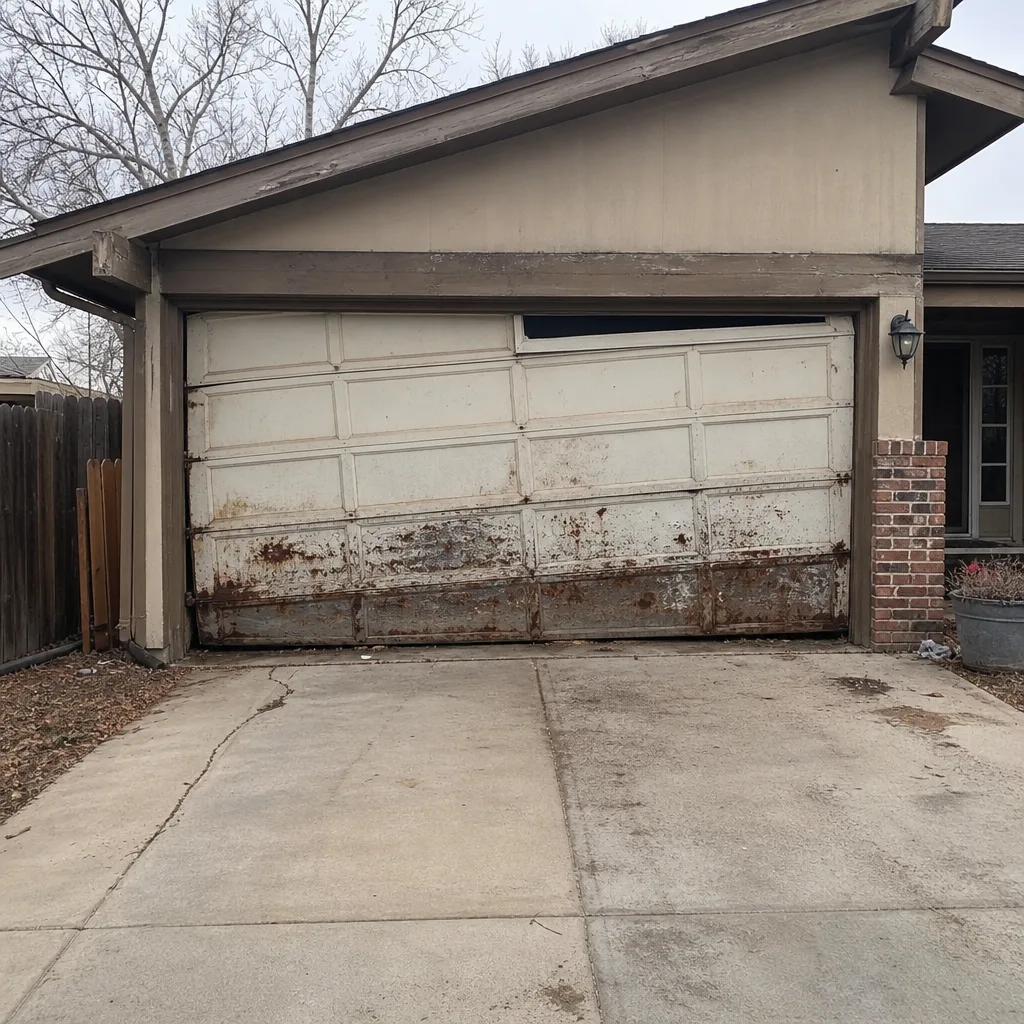 Before
 After
 Before
 After
 Before
 After
When to Call a Professional
Call a professional when you hear the snap of a spring, when a cable is visibly frayed or off its drum, when the door won’t lift by hand, or when the door gets stuck open and you need it secured. Call for anything involving the opener’s internal wiring or a board-level fault. Call when a sensor problem persists after you’ve cleared the path and checked the alignment. And call when a door has shifted visibly out of level, because balance problems get worse and eat the opener in the meantime. Brighton Garage Door Repair Co offers free estimates in Brighton and can handle both the mechanical and electronic sides of the job in one visit – call (866) 754-4750.
Frequently Asked Questions
Garage door repair in Brighton depends entirely on which system failed. A sensor alignment or lubrication job is at the low end; a torsion spring replacement is a mid-range job because the part and the labor both carry real risk; a full opener replacement runs higher. We give you the price in writing before any work starts, so the estimate you approve is the price you pay. Call (866) 754-4750 for an exact quote – estimates are free.
For urgent problems like a broken spring, a stuck door, or a security concern, call and we’ll get you booked as fast as we can, including emergency service. For routine maintenance and sensor alignment, a scheduled appointment is usually the right call. Either way, the fastest way to know is to call (866) 754-4750 and describe the problem.
No. We quote the job in writing and agree on the price before we start. If we find something additional that needs attention, we walk you through it and get your approval before touching it. You should never get a surprise invoice for work you didn’t agree to. Call (866) 754-4750 to get your estimate started.
The local professionals we connect you with are licensed and insured as their state requires. Our technicians have up to 13 years of experience and are trained on spring repair, opener service, and full installation. If you want specifics before booking, ask when you call. Reach us at (866) 754-4750.
Do the manual test: disconnect the opener with the release cord and try to lift the door by hand. If it’s heavy or won’t stay up, the problem is the spring or cable. If it lifts easily, the problem is in the opener, sensors, or wiring. Never try to inspect a torsion spring by hand once you suspect it’s broken. Call (866) 754-4750 if you’re not sure what you’re looking at.
Yes. We service all the major residential brands and systems, including Amarr, Wayne Dalton, Craftsman, and Raynor, along with LiftMaster, Chamberlain, Genie, and Clopay. Whatever brand is on your door, we know the platform and the parts. If you’re not sure which brand you have, tell us what it looks like and we can identify it. Call (866) 754-4750 to book.
It is if the door is stuck open and leaves your home exposed, stuck closed with a car inside, or hanging on a cable. A door that leaves you stuck or unsecured is worth calling on right away, and Brighton Garage Door Repair Co provides emergency service for exactly those situations. A grinding noise or a slow door can usually wait for a scheduled visit. When in doubt, call (866) 754-4750.
The Bottom Line
Troubleshooting a garage door well comes down to one habit: match the symptom to the system before you match it to a part. Noise types point to lubrication and tracking. Movement failures point to springs, cables, and the opener, and the manual release test separates them in seconds. Sensor and remote problems look mechanical but almost never are. Brighton’s temperature swings make the picture murkier, so factor in season before you conclude. Knowing which work is safe for you and which needs a trained hand is the rest of the job, and that line runs right through the springs and cables. Call (866) 754-4750 for a free estimate and we’ll help you fix the right thing the first time.
Written by the team at Brighton Garage Door Repair Co.